A strained calf that still hurts weeks later, a shoulder that never quite settled after a gym injury, or persistent tendon pain that keeps flaring with work or sport – these are the cases where soft tissue healing therapy becomes more than a vague wellness term. It needs to mean something practical, evidence-based and medically useful. For patients dealing with ongoing pain, the real question is not whether an injured area will eventually calm down on its own, but whether healing can be supported in a way that reduces pain, restores function and avoids a long cycle of medication, rest and recurrence.
What soft tissue healing therapy actually means
Soft tissue healing therapy refers to treatment aimed at helping the body repair structures such as muscles, tendons, ligaments, fascia and other connective tissues. These tissues are involved in most everyday pain problems, from sprains and strains to overuse injuries and chronic inflammatory conditions.
The term covers more than one approach, which is where confusion often starts. Some therapies focus mainly on symptom relief. Others are designed to influence the healing process itself by reducing inflammation, improving local circulation and supporting cellular repair. That distinction matters. If pain eases briefly but the tissue remains irritated or slow to recover, the problem often returns once normal activity resumes.
In clinical practice, effective soft tissue management usually depends on three things – an accurate diagnosis, a clear understanding of whether the injury is acute or chronic, and treatment that matches the biology of the tissue involved. A tendon does not heal like a muscle. A fresh ankle sprain does not behave like a long-standing rotator cuff tendinopathy.
Why soft tissue injuries can be slow to recover
Soft tissue injuries are common, but recovery is not always straightforward. Some tissues have a limited blood supply, particularly tendons and ligaments, which can make repair slower than patients expect. Others are repeatedly stressed by daily movement, posture or work demands, so the tissue is never given a genuine chance to settle.
Age, general health, biomechanics and the length of time symptoms have been present also shape recovery. A younger athlete with a recent hamstring strain may improve relatively quickly. An older adult with chronic Achilles tendon pain, joint stiffness and altered gait may need a more structured treatment plan.
This is one reason generic advice can fall short. Rest may help in the early phase, but too much rest can weaken tissue and delay return to function. Exercise is often necessary, but loading an irritated tendon too early or too aggressively can make symptoms worse. Soft tissue healing is rarely a one-size-fits-all process.
How laser-based soft tissue healing therapy works
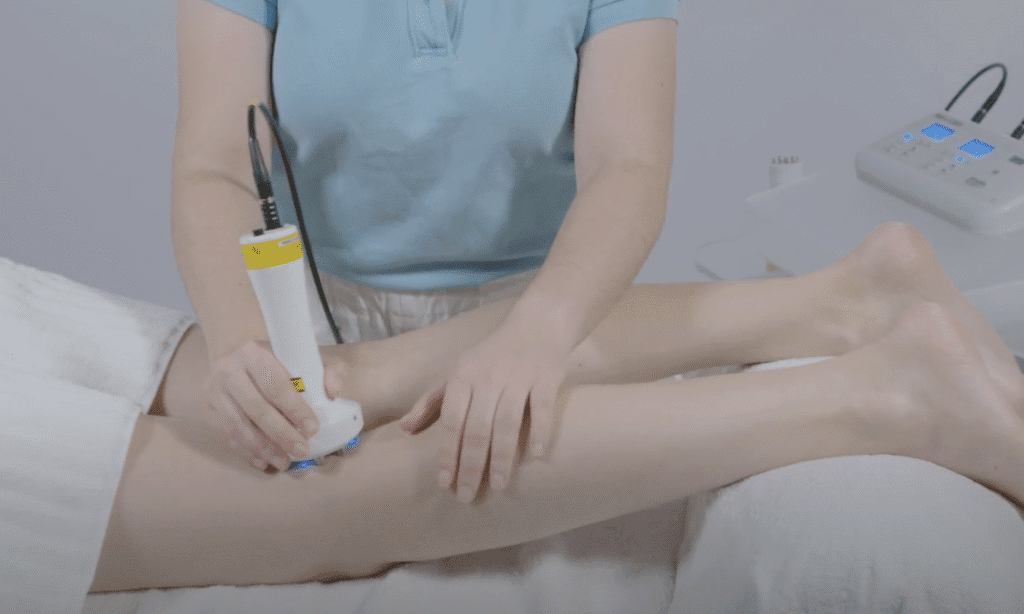
One evidence-based option for soft tissue healing therapy is Photobiomodulation Therapy, also known as Low-Level Laser Therapy. This is a non-invasive treatment that uses specific wavelengths of light to stimulate biological activity within injured or inflamed tissue.
Rather than masking pain, the goal is to influence the healing environment at a cellular level. Research has shown that laser therapy can assist with reducing inflammation, improving microcirculation, supporting tissue repair and modulating pain. For patients, that often translates into less tenderness, better movement and a more manageable recovery process.
The science matters here. Injured tissue requires energy to repair. Photobiomodulation is understood to support mitochondrial activity, which can improve cellular energy production. In practical terms, that may help soft tissue function more effectively during healing. It can also reduce inflammatory mediators and help settle pain pathways, which is particularly relevant in chronic injuries where irritation has persisted beyond the expected healing window.
That does not mean every sore muscle or tendon will respond identically. Treatment response depends on the condition being treated, the chronicity of symptoms, dosage parameters and whether the underlying diagnosis is correct. Used appropriately, however, laser therapy offers a drug-free option that fits well within a medically supervised rehabilitation plan.
Which conditions may benefit from soft tissue healing therapy
Soft tissue problems appear in many forms. Some are caused by sudden trauma, such as a ligament sprain, muscle tear or sporting injury. Others build over time through repetitive strain, poor movement patterns or sustained mechanical load.
Laser-based soft tissue healing therapy may be considered for conditions such as tendinopathy, bursitis, muscle strains, ligament sprains, plantar fasciitis, tennis elbow, rotator cuff irritation, shin splints, neck and shoulder tension, and post-injury swelling or inflammation. It may also have a role in managing chronic pain where tissues remain sensitised long after the original injury.
For office workers, this might mean persistent forearm, wrist or shoulder pain linked to repetitive use. For active adults, it may be a calf strain that keeps recurring or a tendon that never fully recovered after training. For older patients, it may be soft tissue overload around arthritic joints, where pain and stiffness reduce confidence in movement.
The key point is that treatment should be matched to the tissue problem, not just the pain location. Pain at the knee, for example, might come from tendon overload, ligament irritation, referred muscular dysfunction or joint degeneration affecting nearby soft tissue. Each scenario calls for different clinical reasoning.
What to expect from a clinically guided approach
A medically guided soft tissue treatment plan should begin with assessment, not assumptions. Before any therapy starts, the diagnosis needs to be reviewed carefully. That includes the history of the injury, aggravating factors, previous treatments, imaging where relevant and how symptoms affect daily function.
This matters because not all pain labelled as a soft tissue injury is actually a simple strain or sprain. Some cases involve nerve irritation, referred pain from the spine, inflammatory joint disease or more than one pain generator at once. If treatment begins without clarity, valuable time can be lost.
Once the diagnosis is established, treatment can be tailored to the stage of healing and the patient’s goals. In some cases, the priority is reducing acute inflammation and pain so normal movement can resume. In others, the focus is on improving tissue tolerance over time while settling long-standing irritation.
Laser therapy is typically painless and comfortable. Sessions are brief, and most patients can continue with normal daily activities unless advised otherwise. Depending on the condition, treatment may be combined with activity modification, stretching, strengthening or changes to load. That combination often produces better results than relying on any single therapy in isolation.
The trade-offs patients should understand
There is no credible medical treatment that works for every patient, every time. Soft tissue healing therapy is no exception. The most honest approach is to recognise where it fits well and where expectations need to be realistic.
Laser therapy is attractive because it is non-invasive and drug-free, but it is not a substitute for diagnosis, and it does not override poor biomechanics or repeated aggravation. If a patient continues the same overload pattern that caused the injury, healing may still be delayed. Likewise, if a tendon has been degenerative for years, improvement may be gradual rather than immediate.
Some patients notice pain relief early, while others improve more steadily over a course of treatment. Acute conditions can respond faster than chronic ones, but not always. A fresh muscle strain may settle quickly. A new ligament sprain with significant swelling and instability may require longer management. Chronic pain may involve both tissue dysfunction and nervous system sensitisation, which can make recovery less linear.
That is why proven treatment should still be individualised treatment. Good care is not about promising the same outcome to everyone. It is about using evidence-based therapy in the right patient, at the right time, with the right plan around it.
When to consider soft tissue healing therapy
If pain has persisted beyond the expected recovery period, if medication is only providing temporary relief, or if movement remains limited despite rest and standard care, it may be time to consider a more targeted approach. The same applies when recurring injuries interfere with work, exercise or sleep.
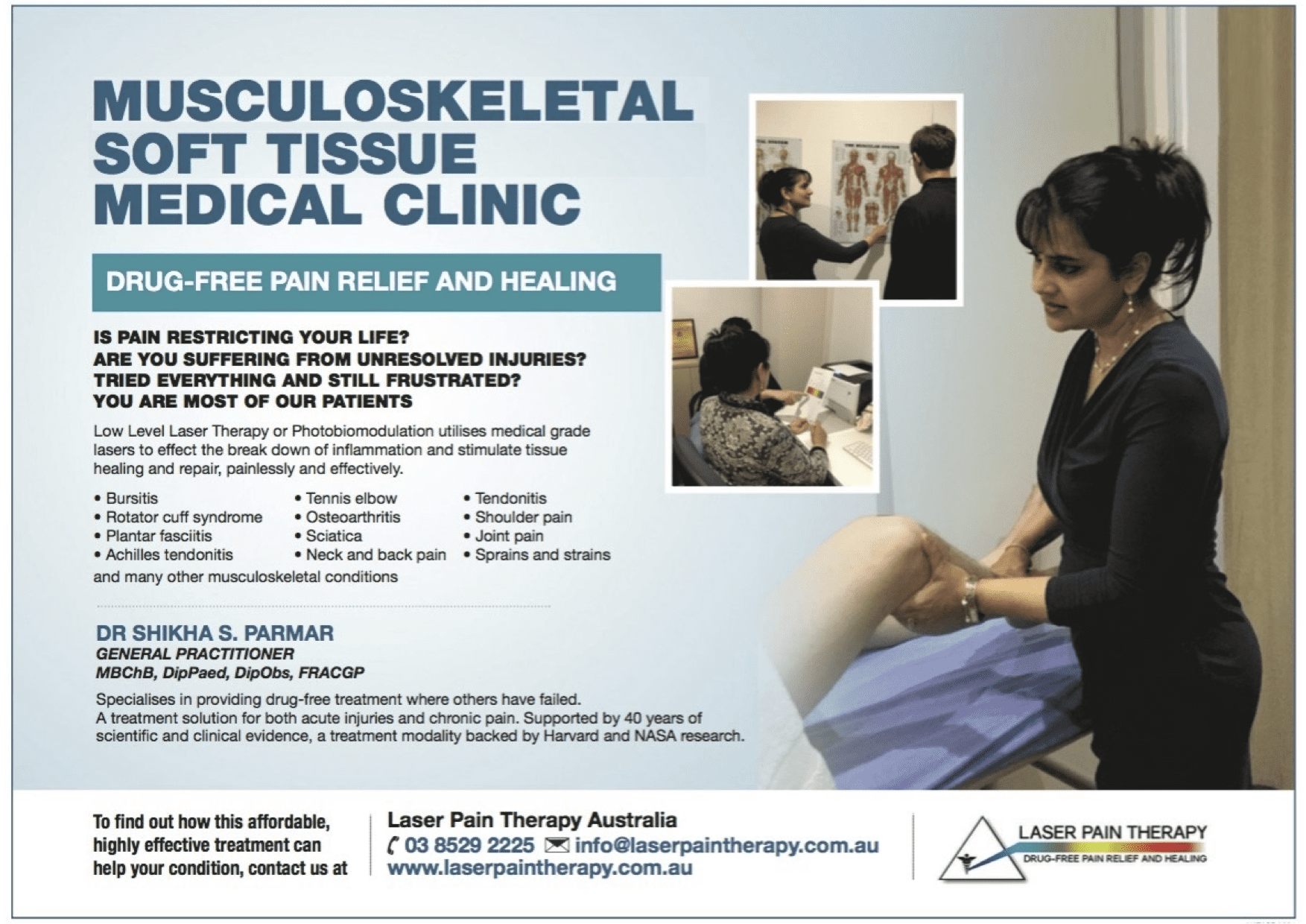
Patients in Melbourne often seek care after trying several options without lasting improvement. What they usually want is straightforward – an explanation that makes sense, a treatment plan grounded in evidence, and a realistic path back to function. That is where a clinic such as Laser Pain Therapy can add value through medical assessment combined with research-backed laser treatment.
Soft tissue injuries are easy to dismiss when they are called minor, but anyone who has lived with persistent tendon, muscle or ligament pain knows they can reshape daily life quickly. The right therapy should not just quiet symptoms for a few days. It should support healing in a way that helps you move with more confidence, rely less on medication and get back to the things your pain has been interrupting.
Contact us today to arrange your consultation and take the first step towards recovery.
Located in Melbourne
(03) 8529 2225 Contact Us