What is PBMt/LLLT?
What is Photobiomodulation (PBM) or Low Level Laser Therapy (LLLT)?
Drug-free pain relief and healing
“The use of low levels of visible or near infrared light for reducing pain, inflammation and edema, promoting healing of wounds, deeper tissues and nerves, and preventing cell death and tissue damage has been known for over forty years”
Prof. Michael Hamblin, Harvard-MIT Division of Health Science & Technology Mechanisms of Low Level Light Therapy. (Hamblin, M. R., & Demidova, T. N. (2006). Mechanisms of low level light therapy. Proceedings of SPIE, 6140, https://doi.org/10.1117/12.646294)
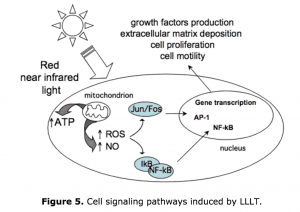
A light source (low intensity diode array) is placed in contact with the skin allowing the photon energy to penetrate tissue cells. Light energy absorbed by the cell becomes biochemical energy, thus supporting tissue repair processes. Normally-functioning cells are not usually the treatment target.
Low Level Laser Therapy does not heat or cut tissue, unlike high intensity lasers.
Many pharmacological treatments (medications) mask pain or only address the symptoms of the disease. Low Level Laser Therapy is used with the aim of addressing local tissue processes that contribute to pain, including inflammation, and supporting recovery in both acute and chronic presentations. This means the treatment aims to support pain relief and longer-term functional improvement where the presentation is suitable.
L-A-S-E-R is an acronym that stands for Light Amplification by Stimulated Emission of Radiation. In simple terms this refers to light waves of a specific wavelength.
Sunlight is a mixture of seven different colours, is disorderly and is not parallel.
Low level laser light is compressed light of a wavelength from the cold, red part of the spectrum of electromagnetic radiation. It’s different from natural light in that it’s one precise colour, coherent (it travels in a straight line), runs parallel (collimated), monochromatic (a single wavelength) and polarised (it concentrates its beam in a defined location or spot). The biological effects of Laser Light come from these differences.
Laser Pain Therapy
Low level laser therapy is a Western form of treatment used for over 40 years internationally. It is not the same as laser acupuncture. Its mechanisms and clinical applications have been discussed in scientific research and controlled trials, including research associated with Harvard University and NASA. NASA Light-Emitting Diode Technology Brings Relief In Clinical Trials. NASA Light-Emitting Diode Technology Brings Relief In Clinical Trials
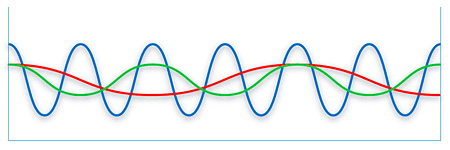
Sunlight – many different colours
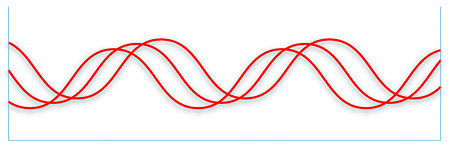
LED Light – one colour (monochromatic) and waves not in phase (non-coherent)
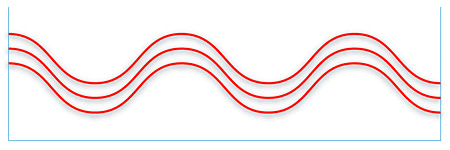
Laser – one colour (monochromatic) and waves in phase (coherent)
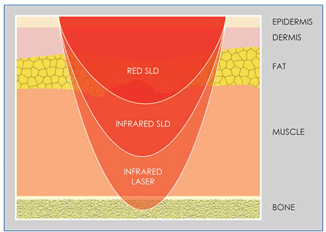
These properties allow laser light to penetrate the surface of the skin with no heating effect and without cutting tissue. The wavelengths of light can create physiological changes within the cells of the body, a process called photobiomodulation. Laser light directs biostimulative light energy to the body’s cells, which the cells can convert into chemical energy involved in natural healing and pain relief.
LLLT utilises low powered wavelengths of light in the infra-red and far infrared spectrum. It is intended to act where there is injury or inflammation, with minimal intended effect on normal tissue.
Red and near-infrared light wavelengths of 600-1070nm penetrate tissue maximally. The technology utilises superluminous (light emitting) and laser diodes to irradiate diseased or traumatised tissue with photons.
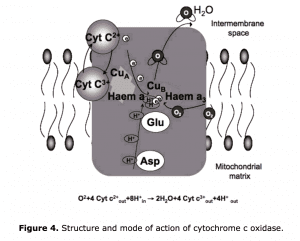
One important way in which laser therapy adds energy is through photon absorption by mitochondria. These tiny organelles which have been called the “powerhouses” of the cell, are found in most plants and animals. Mitochondria are able to absorb red and near-infrared light, which can activate cellular signalling pathways involved in increased ATP production.
By increasing energy available in this readily accessible form, laser light can stimulate biological activity within cells and tissues. This is the basis of photobiomodulation: light-induced modulation of biological activity.
“Bio” stimulation refers to stimulation of biological processes.
When cellular energy is available, the body has a more favourable environment for natural tissue recovery.
Research has investigated laser therapy’s effects on bone, blood, the lining of blood vessels, cartilage, nerve, muscle and other tissues. It has also documented effects on markers relevant to tissue quality and recovery. Laser therapy can be considered a useful treatment approach in selected conditions where local pain, inflammation or tissue irritation are contributing to symptoms.
The process is aimed at supporting tissue recovery and reducing symptoms, including pain. In addition, PBMT/LLLT may influence immune and inflammatory responses involved in natural healing.
LLLT may support healing processes, as well as helping reduce inflammation and pain where tissue irritation is present.
LLLT works at the cellular level rather than only modulating symptomatology.
Intracellular biomolecules can respond to light exposure, influencing cellular function and tissue recovery processes.