
Pain that lingers changes more than comfort. It alters how you move, how well you sleep, what work feels manageable, and whether simple tasks start to feel like a chore. That is why a personalised pain treatment plan matters. It should not be a generic set of exercises, a repeat prescription, or a one-size-fits-all recommendation. It should be a medically guided plan built around your diagnosis, your symptoms, your goals, and how your body is responding over time.
For some people, pain started after a clear injury. For others, it built slowly through overuse, joint degeneration, poor loading patterns, or unresolved inflammation. Two people can both say they have shoulder pain or knee pain and still need very different care. Effective treatment starts by identifying what is actually driving the problem, not just naming the body part that hurts.
Why a personalised pain treatment plan matters
A useful plan does more than reduce pain in the short term. It should aim to improve function, support tissue healing where possible, reduce inflammation, and lower the risk of the same issue becoming chronic. This is especially important in musculoskeletal conditions, where pain often reflects a combination of tissue irritation, altered movement, muscle guarding, and reduced confidence in using the affected area.
Generic treatment can miss these layers. Rest alone may reduce irritation but leave weakness and stiffness behind. Medication may dull symptoms without addressing the source of ongoing strain. Standardised exercise sheets can help some patients, but they are not enough when the diagnosis is unclear or the condition has not responded to previous care.
A personalised plan recognises that pain exists in context. Age, activity levels, work demands, medical history, previous injuries, imaging findings, sleep, recovery capacity, and treatment response all influence what is likely to help.
What should be included in a personalised pain treatment plan?
The first requirement is a proper clinical assessment. That means understanding when the pain started, what aggravates it, what eases it, whether there is swelling or weakness, and whether there are signs of nerve involvement or deeper structural irritation. It also means reviewing any scans or previous diagnoses carefully rather than assuming they tell the whole story.
A good plan should then define clear treatment goals. In some cases the priority is settling acute inflammation so walking, lifting, or sleeping becomes easier. In others, the goal is improving joint movement, reducing flare-ups, or helping a patient return to sport or work with more confidence. These goals should be practical and measurable, not vague.
The treatment approach itself should match both the condition and the person. For many patients with musculoskeletal pain, non-invasive options are especially valuable when they want to avoid surgery, limit reliance on medication, or have not improved with conventional treatment alone. This is where a medically supervised approach can make a significant difference.
Why diagnosis alone is not enough
A label such as bursitis, tendonitis, osteoarthritis, sciatica, tennis elbow, or plantar fasciitis can be helpful, but it does not automatically tell you what treatment will work best. Severity varies. Duration matters. Tissue healing potential differs from one condition to the next. Some pain presentations are driven mainly by active inflammation, while others are more related to degenerative change, overload, nerve sensitivity, or incomplete rehabilitation.
That is why the same diagnosis may lead to different recommendations for different patients. A younger athlete with an acute tendon injury will not need the same pacing, monitoring, or treatment intensity as an older adult with a long history of joint pain and reduced mobility. A parent seeking care for a child with a sports injury will also have different priorities around safety, comfort, and recovery timelines.
A personalised pain treatment plan should account for these differences from the beginning.
The role of Photobiomodulation Therapy in a personalised plan
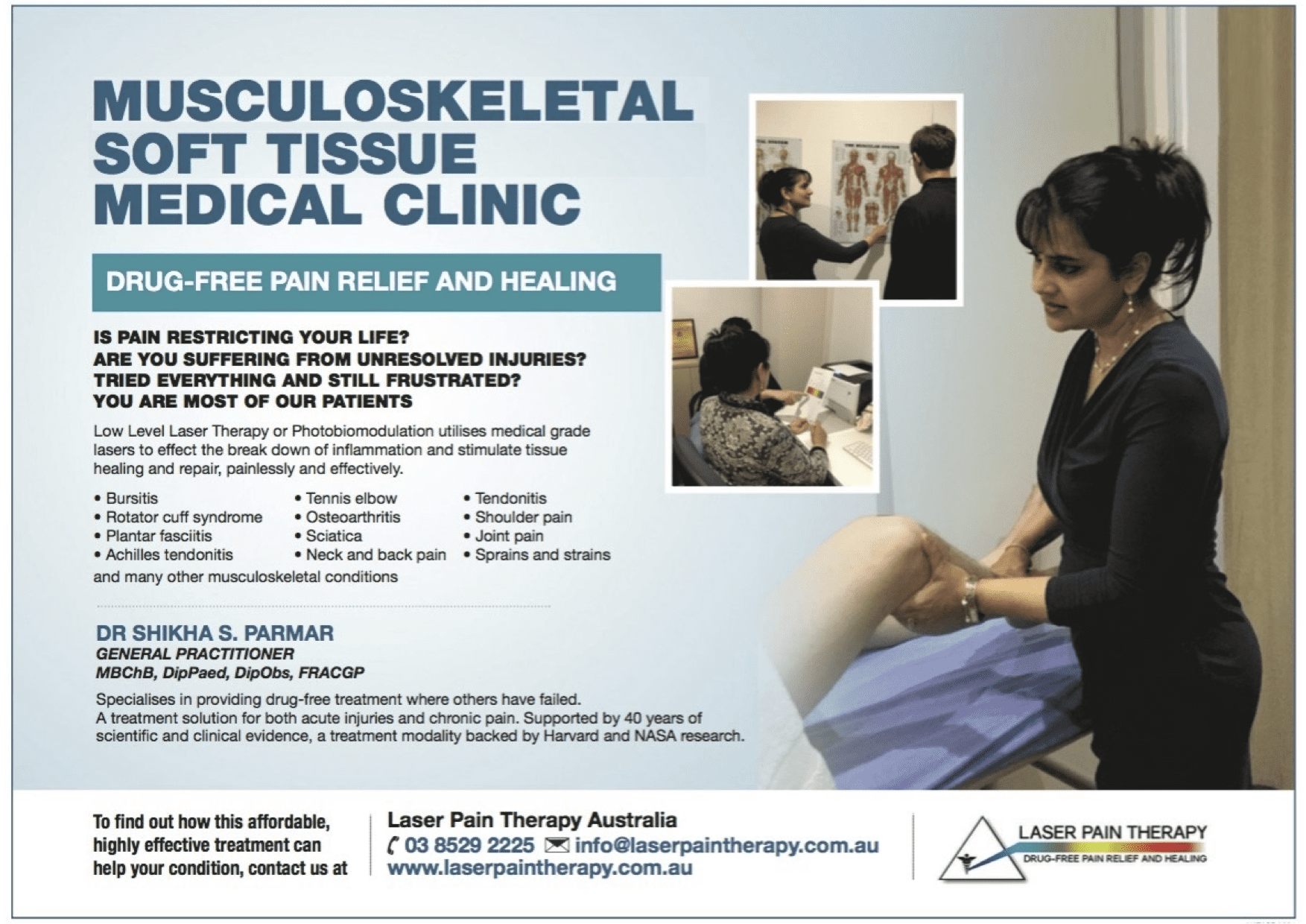
For suitable musculoskeletal conditions, Photobiomodulation Therapy, also known as Low-Level Laser Therapy, can form part of a targeted treatment plan. This is not a wellness trend or a passive add-on. In a clinical setting, PBMT is used to support pain reduction, reduce inflammation, and promote tissue repair through specific light-based therapeutic effects.
That matters because many painful conditions involve irritated soft tissue, delayed healing, or ongoing inflammatory activity. PBMT may be considered when the goal is to improve healing without injections, reduce dependence on anti-inflammatory medication, or support recovery in patients who need a non-invasive option.
The value of PBMT is strongest when it is used as part of a broader medical plan rather than in isolation. Treatment settings, timing, treatment frequency, and expected response need to be aligned with the diagnosis and stage of recovery. An acute ankle sprain, chronic neck pain, osteoarthritic knee, and post-surgical soft tissue irritation may all respond differently and require a different schedule.
How treatment should change over time
One of the clearest signs of a well-designed plan is that it is reviewed and adjusted. Pain management is rarely static. If a patient improves quickly, treatment intensity or frequency may be reduced. If pain settles but function remains limited, the focus may shift toward movement restoration and load tolerance. If progress is slower than expected, the diagnosis may need to be revisited.
This review process is particularly important in chronic pain. Longstanding pain often involves more than one contributing factor, and improvement may occur in stages. Early gains may include better sleep, less morning stiffness, or reduced flare-up intensity before major changes in strength or mobility are seen. These changes still matter. They show whether treatment is moving in the right direction.
A personalised pain treatment plan should give patients a realistic understanding of this process. It should be hopeful, but not simplistic.
When a standard approach may fall short
Many patients seek more tailored care after trying several common options without enough relief. They may have cycled through rest, medication, physiotherapy, stretching, massage, braces, injections, or periods of waiting for it to settle. Sometimes these treatments were reasonable but incomplete. Sometimes they were applied before the problem was properly understood.
This does not mean standard care is wrong. It means pain is often more complex than a single intervention can solve. A practical example is persistent tendon pain. If inflammation has eased but tissue repair is incomplete, symptoms may continue with load. Another example is osteoarthritis, where pain may be influenced by inflammation, joint mechanics, muscle weakness, and reduced confidence in movement all at once.
In these situations, a medically guided, non-invasive plan can offer a more coherent path forward.
Who benefits most from an individualised approach?
Patients with chronic musculoskeletal pain often benefit most because their symptoms have already shown that time alone has not solved the issue. This includes people with arthritis-related pain, repetitive strain injuries, back and neck pain, tendon injuries, sports injuries, nerve irritation, and post-injury pain that keeps returning.
It is also highly relevant for people who want to reduce medication use, avoid invasive procedures where possible, or understand whether there are evidence-based options they have not yet tried. Older adults may need a plan that balances symptom relief with mobility and independence. Busy workers may need care that supports function without prolonged downtime. Children and adolescents with sports injuries may need treatment that is gentle, safe, and carefully supervised.
The common thread is simple. Better outcomes usually come from treatment that fits the person, not just the condition name.
What patients should expect from good care
Patients should expect clarity. They should understand what the likely diagnosis is, what the treatment is trying to achieve, how progress will be monitored, and what realistic improvement looks like. They should also know when a treatment is suitable, when it is not, and what other factors could affect results.
At a clinic such as Laser Pain Therapy, that means care should be grounded in medical assessment, clinical reasoning, and evidence-based treatment selection. It should feel professional and reassuring, but also practical. People in pain do not just want theory. They want to know whether they can walk more comfortably, return to work, get through the night, or lift their arm without that familiar catch of pain.
A good plan respects both the science and the lived experience of pain. If your treatment still feels generic after multiple appointments, it may be worth asking whether the plan is truly built around your condition, your body, and your recovery goals. The right personalised pain treatment plan should help you see a path forward – not just another way to cope.