
That stubborn tendon pain that flares when you walk up stairs, lift a shopping bag or reach overhead is rarely just a matter of resting for a week and hoping for the best. When symptoms have dragged on for months, the best options for chronic tendon pain are usually not quick fixes but a combination of accurate diagnosis, appropriate loading, and treatment that supports tissue repair rather than simply masking pain.
Chronic tendon pain behaves differently from an acute strain. In many cases, the tendon is not simply inflamed. It may have undergone degenerative change, become thickened, more sensitive to load, and less able to tolerate the demands of work, sport or daily movement. That distinction matters because treatments aimed only at short-term symptom suppression often fail to address why the pain keeps returning.
Why chronic tendon pain is so persistent
Tendons heal more slowly than muscle because their blood supply is relatively limited. Once a tendon has been irritated for a prolonged period, the problem often becomes a mix of mechanical overload, impaired tissue recovery and nervous system sensitisation. This is why pain can persist even after someone has stopped the activity that triggered it.
Common examples include Achilles tendinopathy, tennis elbow, golfer’s elbow, rotator cuff tendinopathy, patellar tendinopathy and gluteal tendinopathy around the hip. Although these conditions affect different areas, the pattern is similar. Pain builds with repeated strain, function declines, and people start changing the way they move to avoid discomfort. Over time, those compensations can create further stress elsewhere.
This is also why a generic approach rarely works. A sore Achilles in a runner is not managed the same way as lateral elbow pain in an office worker or shoulder tendon pain in an older adult with joint degeneration. The underlying tissue, the provoking load and the patient’s goals all matter.
Best options for chronic tendon pain start with the right diagnosis
One of the most overlooked steps is confirming that the tendon is truly the source of pain. Tendon symptoms can overlap with bursitis, arthritis, nerve irritation, referred pain from the neck or back, and partial tears. If the diagnosis is off, treatment may be ineffective from the outset.
A proper clinical assessment should look at pain history, movement patterns, strength deficits, aggravating activities and relevant medical factors. In some cases, imaging can help, but scans do not tell the whole story. Many people have tendon changes on ultrasound or MRI without significant pain, while others have substantial symptoms with less dramatic imaging findings. Clinical correlation is essential.
This is where medically guided care has an advantage. A diagnosis review can prevent months of ineffective self-management and can also identify red flags such as tendon rupture risk, significant weakness or conditions that need further investigation.
Load management matters more than complete rest
People with long-standing tendon pain are often given two pieces of conflicting advice: keep pushing through, or stop using it completely. Neither approach is usually ideal.
Tendons need load to recover, but they need the right kind of load at the right stage. Complete rest may settle pain temporarily, yet it also reduces the tendon’s capacity. The result is familiar – symptoms return as soon as normal activity resumes. On the other hand, repeatedly provoking a painful tendon with high-impact or high-volume activity can keep it in an irritated state.
Load management means reducing the specific movements that are overloading the tendon while maintaining as much safe function as possible. For an Achilles tendon, that might mean temporarily reducing hills, sprinting or prolonged walking. For a painful elbow tendon, it may involve modifying gripping tasks, lifting technique or workstation setup. The aim is not inactivity. The aim is controlled recovery.
Progressive rehabilitation is one of the best long-term options
Exercise-based rehabilitation remains one of the best-supported options for chronic tendon pain, but it must be tailored. The most helpful programmes generally involve progressive strengthening rather than random stretching or general exercise.
Isometric exercises can sometimes reduce pain early on. Heavier slow resistance and eccentric loading are often used to improve tendon capacity over time. The exact programme depends on the tendon involved, symptom severity, age, baseline function and how irritable the tissue is.
This is where trade-offs matter. A strong rehabilitation plan can be highly effective, but it requires consistency and progression. It is not unusual for improvement to take weeks or months rather than days. Patients who expect instant results can become discouraged too early. At the same time, exercise that is too aggressive can flare symptoms and set progress back.
The goal is not just pain reduction. It is restoring the tendon’s ability to tolerate normal daily load without repeated relapse.
Where medications and injections fit in
Pain relief has a role, particularly when symptoms are interfering with sleep, mobility or the ability to participate in rehabilitation. However, medications are rarely the full answer in chronic tendon problems.
Anti-inflammatory medication may help some people, especially if there is a short-term inflammatory component around the tendon. But in established tendinopathy, the issue is often more degenerative than inflammatory. That means the benefit may be limited, while gastrointestinal, kidney or cardiovascular side effects remain relevant, particularly for older adults or those using these medications regularly.
Corticosteroid injections can reduce pain in some situations, but they are not always ideal for tendon disorders. Relief may be short-lived, recurrence can be common, and repeated steroid exposure may weaken tendon tissue in certain cases. For some patients, an injection is reasonable as part of a broader management plan. For others, it delays more effective treatment.
This is one of the key it depends areas in tendon care. The right decision depends on the tendon involved, the stage of the condition, rupture risk, and whether short-term pain reduction will genuinely help progress recovery.
Photobiomodulation Therapy as a non-invasive treatment option
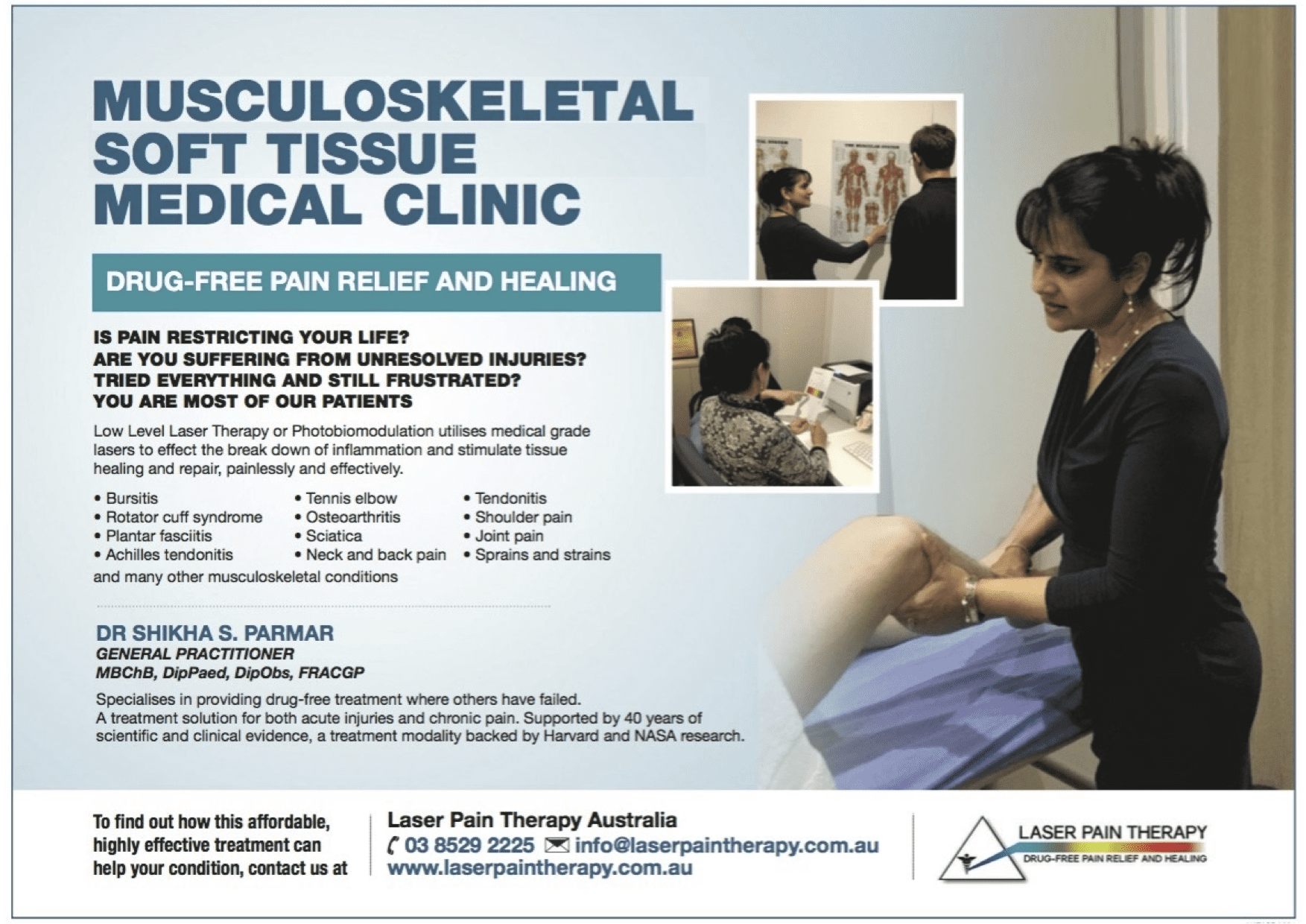
For patients seeking drug-free, non-surgical care, Photobiomodulation Therapy, also known as Low-Level Laser Therapy, is one of the more promising options for chronic tendon pain. This treatment uses specific wavelengths of light to stimulate cellular activity within injured tissue.
Clinically, the goal is not to numb the area. It is to support the biological repair process. Research has shown PBMT can help reduce inflammation, improve microcirculation, promote cellular energy production and support tissue healing. In practical terms, that may translate to reduced pain, improved movement and better tolerance to rehabilitation.
This matters because chronic tendon pain often sits in the frustrating gap between simple self-care and invasive intervention. Patients may have already tried rest, massage, braces or medication with only partial relief. PBMT offers a non-invasive option that can be used as part of a medically supervised treatment plan, particularly when healing has stalled.
It is not magic, and it is not a substitute for proper diagnosis or load management. Tendons still need an appropriate rehabilitation plan. But laser therapy can be a valuable adjunct by settling pain and supporting tissue recovery enough for patients to move more normally and participate more effectively in strengthening.
When surgery is considered
Surgery is usually not the first-line treatment for chronic tendon pain. Most tendon conditions improve without it when managed well. However, there are situations where surgical opinion becomes appropriate, such as significant tendon tears, persistent disability despite comprehensive conservative care, or structural problems that continue to overload the tendon.
Even then, surgery comes with trade-offs. Recovery time can be substantial, rehabilitation is still required, and outcomes vary depending on the tendon, the procedure and the patient’s overall health. For many people, the more sensible pathway is to exhaust evidence-based non-surgical options first.
What the best approach looks like in practice
The best options for chronic tendon pain are usually layered, not isolated. A person with a painful rotator cuff tendon may need diagnosis clarification, temporary activity modification, progressive strengthening and a non-invasive therapy that helps reduce pain and improve tissue healing. Someone with chronic Achilles pain may need footwear review, calf loading, advice on walking and exercise volume, and treatment support to settle a tendon that has become reactive and deconditioned.
In a clinical setting, this means asking better questions than what is the fastest pain relief. The more useful question is what will improve pain while also increasing the tendon’s capacity to function next month and three months from now.
For patients who have been going in circles with recurring pain, medically supervised care can make the difference between trial-and-error treatment and a plan built around the actual condition. At Laser Pain Therapy, that approach centres on diagnosis review, personalised treatment planning and evidence-based laser therapy for patients who want a practical alternative to repeated medication use or simply waiting for the pain to settle on its own.
If your tendon pain has been lingering well past the point where it should have healed, that is a sign to stop guessing. The right treatment is often less about doing more and more about doing the right things, in the right order, with enough support for the tissue to recover properly.
Contact us today to arrange your consultation and take the first step towards recovery.
Located in Melbourne
(03) 8529 2225 Contact Us