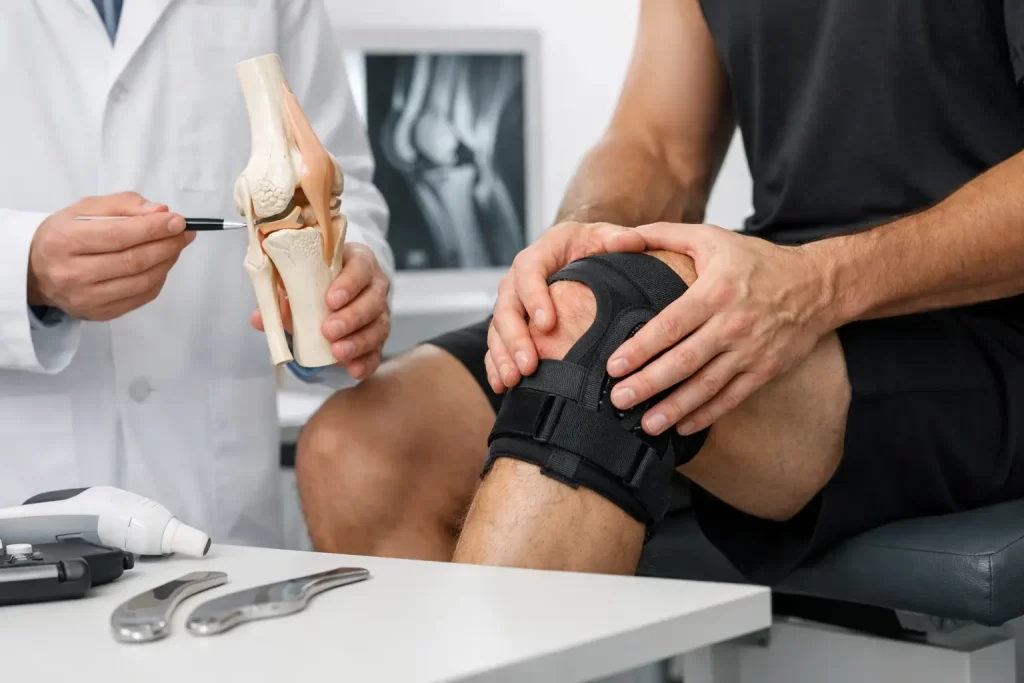
A twisted knee on the netball court, an ankle rolled off a kerb, a thumb bent back in a fall – ligament injuries often happen in a second, then linger for weeks or months. Finding the best treatment for ligament injuries is not about chasing the fastest fix. It is about matching the treatment to the grade of injury, the joint involved, your pain level, and how well the tissue is actually healing.
What is the best treatment for ligament injuries?
The short answer is that there is no single best treatment for every ligament injury. Mild sprains may recover well with protection, guided movement and time. More significant tears may need bracing, imaging, structured rehabilitation, or in some cases surgical review. The best treatment is the one that controls inflammation without shutting down healing, protects the ligament while it repairs, and restores stability so the joint can function normally again.
Ligaments are strong bands of connective tissue that stabilise joints by connecting bone to bone. When they are overstretched or torn, the result can be pain, swelling, bruising, weakness and a sense that the joint is unreliable. Some injuries are obvious and dramatic. Others seem minor at first, then turn into ongoing pain because the tissue never heals properly or the joint remains unstable.
That is why a proper assessment matters. A sore ankle is not always just a simple sprain, and a painful knee may involve more than one structure.
The first phase matters more than most people think
In the first 48 to 72 hours, the main priorities are protection and inflammation control. That does not mean complete rest for everyone, and it does not mean pushing through pain either. Early management usually involves reducing load on the joint, avoiding movements that worsen the injury, using compression if appropriate, and elevating the area to limit swelling.
Ice can help some people with pain in the very early stage, but it is not a cure and it should not be overused. Anti-inflammatory medication may reduce discomfort, but it also needs to be considered carefully, especially in older adults, people with stomach or kidney issues, or anyone hoping to avoid medication where possible. More importantly, if pain and swelling are severe, if you cannot bear weight, or if the joint feels unstable, it is worth seeking medical review early rather than assuming it will settle.
Why diagnosis changes treatment
Not all ligament injuries are equal. Clinicians generally classify them from grade 1 to grade 3. A grade 1 injury is a mild stretch with microscopic tearing. A grade 2 injury is a partial tear. A grade 3 injury is a complete rupture. The difference matters because treatment decisions, recovery time and prognosis all change with severity.
The joint involved matters too. An ankle sprain, an ACL injury in the knee, a wrist ligament tear and a thumb ulnar collateral ligament injury each behave differently. Some need short-term immobilisation. Others do better with early controlled movement. Some require imaging such as ultrasound or MRI to clarify the diagnosis. If treatment is delayed or poorly matched to the injury, healing can become slow, incomplete or complicated by chronic instability.
Best treatment for ligament injuries in the recovery phase
Once serious fracture or complete rupture has been ruled out or appropriately managed, the focus shifts from protection to repair. This is where many people either do too little or too much. Both can be a problem.
Too little movement can lead to stiffness, weakness and poor tissue remodelling. Too much too soon can keep the ligament irritated and prevent proper healing. The best treatment for ligament injuries in this phase usually combines graduated loading, joint support where needed, and therapies that encourage tissue repair rather than simply masking symptoms.
Rehabilitation is central. The exact plan depends on the injury, but it may include range of movement work, muscle strengthening, balance retraining and progressive return to activity. For ankle and knee injuries especially, balance and proprioception training are important because the ligament does not just provide stability – it also helps the body sense joint position. If that system is not retrained, re-injury becomes more likely.
Where Photobiomodulation Therapy fits
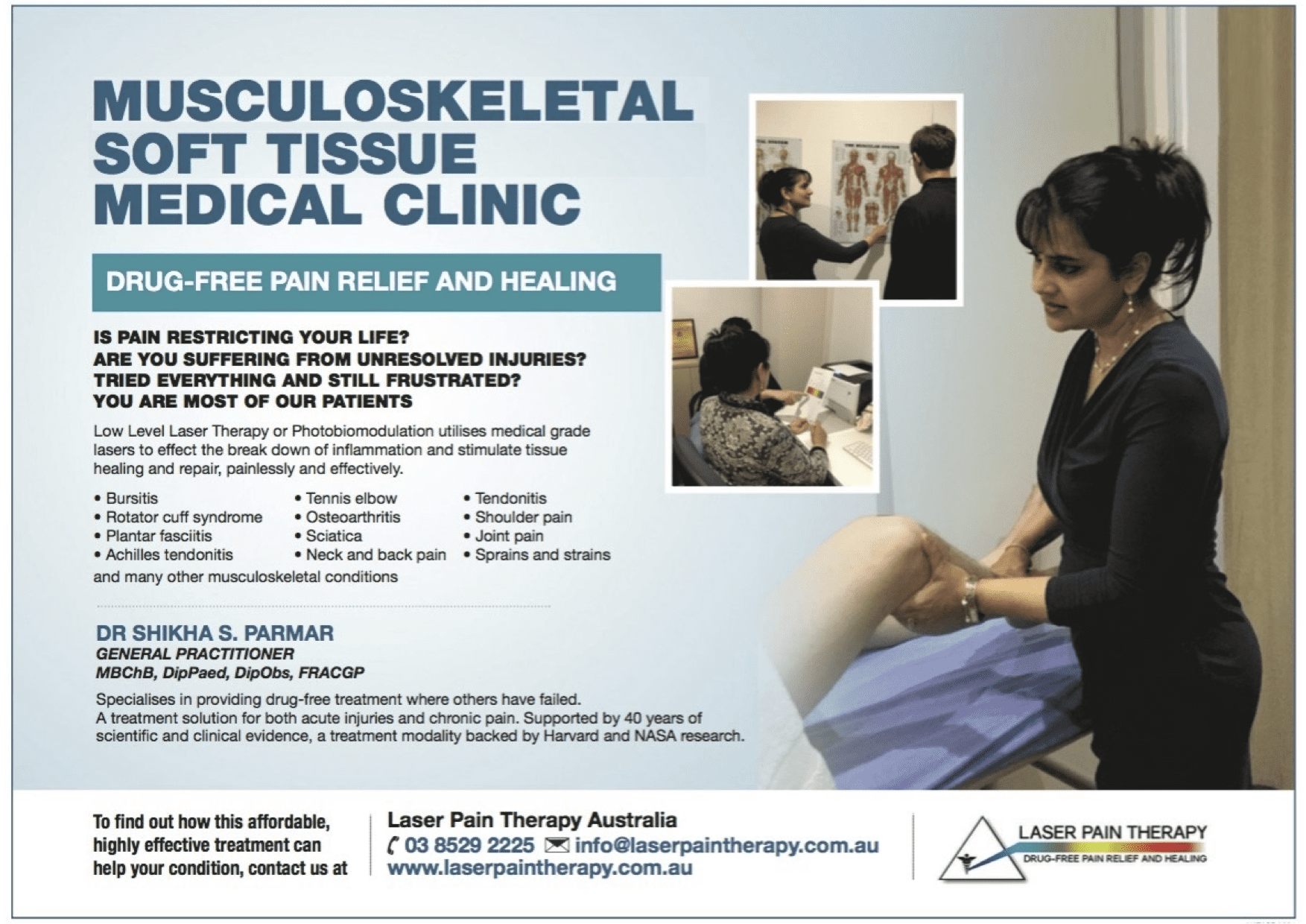
For patients looking for a non-invasive, drug-free option, Photobiomodulation Therapy, also known as Low-Level Laser Therapy, can be a valuable part of ligament injury treatment. This is not a wellness trend or a heat-based therapy. It is a medically used treatment that applies specific wavelengths of light to support cellular repair, reduce inflammation and assist the healing process.
Ligament tissue has a relatively limited blood supply compared with muscle, which is one reason healing can be slow. Photobiomodulation Therapy is used to stimulate cellular activity, helping improve tissue repair at a local level while also reducing pain and swelling. In practical terms, that can mean a more comfortable recovery, better tolerance for rehabilitation and a clearer path back to daily movement.
This approach can be particularly useful for people who cannot tolerate anti-inflammatory medication, want to reduce reliance on pain relief, or have had symptoms dragging on longer than expected. It can also suit older adults, active individuals and children because the treatment is non-invasive and generally well tolerated when provided under appropriate clinical supervision.
When standard care is not enough
Most people know they should rest a sprain. Fewer realise that persistent pain after a ligament injury is a sign the original problem may not have fully resolved. If swelling keeps returning, if the joint repeatedly gives way, or if your progress stalls after a few weeks, it may be time to reconsider the treatment plan.
Chronic ligament injuries can be more complex than fresh sprains. The tissue may be partially healed but weak. Surrounding muscles may have switched off. Compensatory movement patterns can start affecting other areas, such as hip pain after an ankle injury or back pain after a knee problem. In these cases, treatment has to address more than the ligament alone.
A doctor-led assessment can help identify whether the issue is ongoing inflammation, joint instability, scar tissue, poor movement mechanics or an associated injury that was missed early on. For patients in Melbourne seeking a medically supervised, non-surgical option, this is where a clinic such as Laser Pain Therapy may be relevant, particularly when standard rest, medication or basic rehab has not delivered lasting improvement.
When surgery might be part of the best treatment
A balanced answer has to acknowledge that some ligament injuries do need orthopaedic review. Complete ruptures, high-grade joint instability, associated fractures, or injuries in people with specific sporting or work demands may require surgical management. An ACL rupture in a younger pivoting athlete is a different scenario from a mild medial knee sprain in a less active adult.
Surgery is not automatically the best treatment, and in some cases conservative care works very well. But avoiding surgical assessment when it is clearly indicated can lead to more joint damage over time. The key is not to assume every ligament injury needs an operation or to assume none ever do.
What to expect from a sensible treatment plan
A well-structured treatment plan should explain what has been injured, how severe it appears to be, how long recovery is likely to take and what milestones matter. It should also be realistic. Ligaments do not heal overnight, and even when pain settles early, tissue strength takes longer to return.
For many patients, the best results come from combining medical assessment, activity modification, targeted rehabilitation and supportive therapies that promote healing. The plan should be individualised. A parent trying to help a child return to sport safely needs different advice from a retiree who simply wants to walk confidently again. Both deserve treatment that is evidence-based, practical and clear.
The question to ask is not just what helps pain
Pain relief matters, but it is only one part of recovery. The better question is whether the ligament is healing, whether the joint is stable, and whether you are restoring normal function without increasing the risk of another injury. That is what separates temporary symptom relief from proper treatment.
If your ligament injury is not improving as expected, or if it keeps flaring up when you return to normal activity, it is worth looking beyond short-term fixes. The best treatment for ligament injuries is usually the one that respects the biology of healing, supports the tissue as it repairs and gives you the best chance of returning to movement with confidence, not caution.
Contact us today to arrange your consultation and take the first step towards recovery.
Located in Melbourne
(03) 8529 2225 Contact Us