
Pain that lingers changes more than comfort. It alters how you work, sleep, move, exercise and manage ordinary tasks such as getting out of a chair, lifting shopping bags or turning your head while driving. When people start searching for pain management Melbourne services, they are rarely looking for vague wellness advice. They want a clear diagnosis, realistic options and treatment that addresses the source of pain rather than masking it.
That distinction matters. Pain management is not one thing. It can range from medication prescribing and injections through to rehabilitation, manual therapies, surgery referrals and newer non-invasive treatments designed to support tissue repair and reduce inflammation. The right approach depends on what is driving the pain, how long it has been present, which tissues are involved and how much it is affecting function.
What good pain management in Melbourne should include
Effective care begins with clinical reasoning, not assumptions. A patient with shoulder pain may have bursitis, rotator cuff tendinopathy, referred pain from the neck, early arthritis or more than one issue at once. Likewise, knee pain might stem from osteoarthritis, tendon overload, a ligament injury or post-surgical irritation. If treatment starts before the problem is properly assessed, it is easy to waste time and money.
A strong pain management plan should include a review of symptoms, history, aggravating factors, previous treatment, imaging where relevant and the patient’s day-to-day goals. For one person, success may mean returning to golf or walking the dog without limping. For another, it may mean getting through a workday without relying on painkillers.
The best plans are also individualised. Acute sports injuries, repetitive strain from office work, nerve irritation, persistent back pain and degenerative joint conditions do not respond in exactly the same way. Some patients need short-term symptom control. Others need a structured strategy focused on reducing inflammation, improving healing and rebuilding function over time.
Why many patients want an alternative to medication
Medication has a role in pain care, but it is not always the answer patients want or tolerate well. Anti-inflammatory drugs can irritate the stomach or affect other medical conditions. Stronger analgesics may cause sedation, constipation or dependence concerns. Even when medicines help in the short term, they do not necessarily improve tissue healing.
This is one reason non-invasive, drug-free treatment options are receiving more attention. Patients are increasingly asking whether their pain can be managed in a way that supports recovery while reducing reliance on pharmaceuticals. That is a sensible question, particularly for chronic musculoskeletal pain where the goal is not simply to get through the day, but to restore movement and quality of life.
For seniors, this can be especially relevant. Osteoarthritis, tendon pain and lower back conditions often coexist with other health issues and medications. Parents may ask similar questions when a child or teenager has a sports injury and they want a safe treatment pathway that does not begin and end with rest and pain relief alone.
Where photobiomodulation therapy fits into pain management Melbourne options
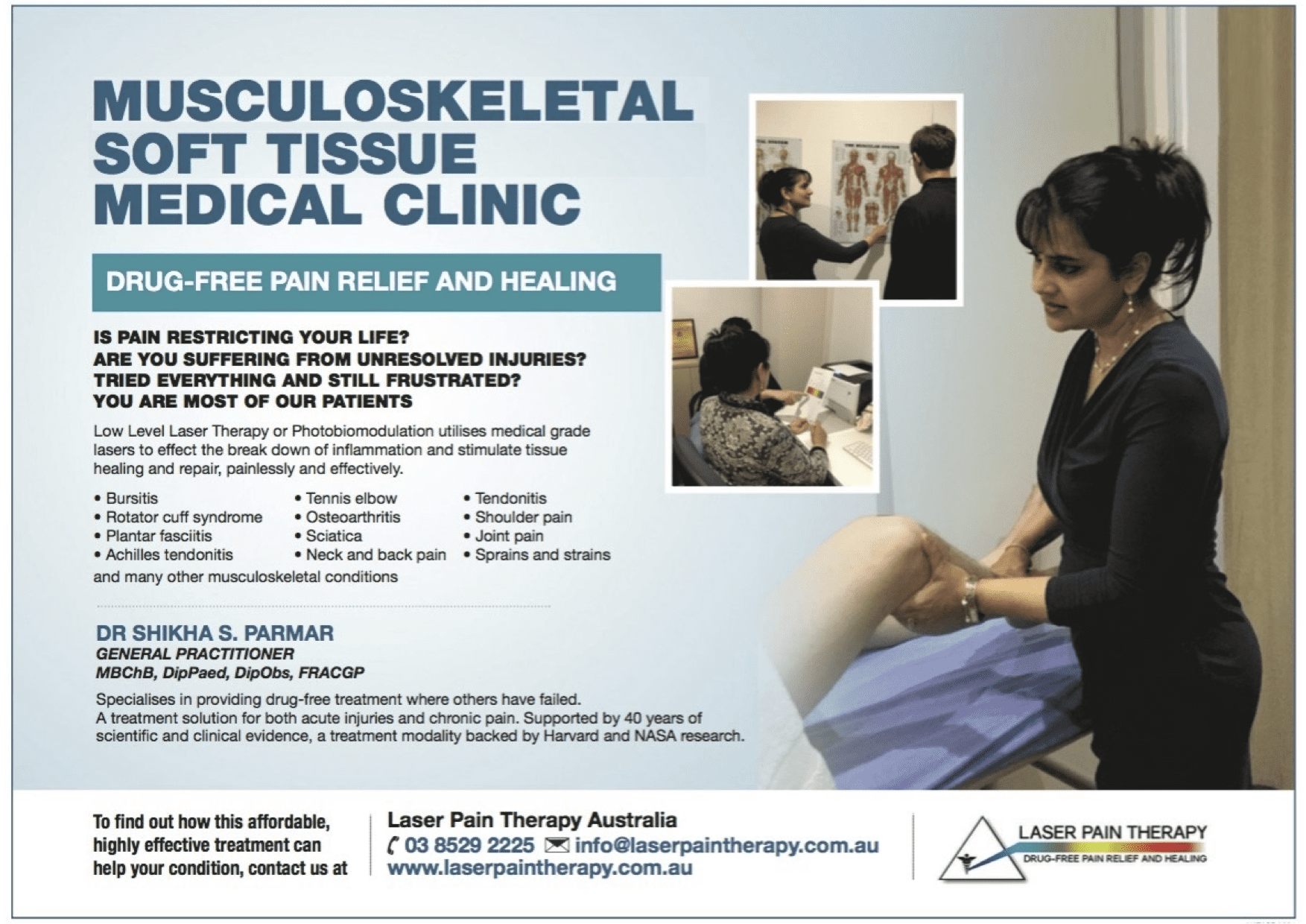
Among the newer evidence-based approaches available within pain management Melbourne clinics, photobiomodulation therapy, also known as low-level laser therapy, stands out because it is non-invasive, drug-free and designed to work at a cellular level. Rather than forcing the body through a harsh intervention, it uses specific wavelengths of light to stimulate biological processes associated with healing.
In practical terms, this means treatment aims to reduce inflammation, improve circulation, support tissue repair and ease pain. Patients often ask whether it is painful. It is not. Treatment is generally comfortable and does not involve needles, heat damage or recovery downtime.
That does not mean it is a miracle fix for every case. Results depend on the diagnosis, severity, duration of symptoms and consistency of treatment. A fresh ankle sprain may respond differently from longstanding plantar fasciitis. A patient with neck pain from muscle tension may progress faster than someone with advanced degenerative change and multiple pain drivers. Good clinics are upfront about that.
What makes photobiomodulation clinically useful is that it can be applied across a wide range of musculoskeletal conditions, including joint pain, tendon injuries, ligament sprains, muscle strains, nerve-related pain and soft tissue inflammation. It is particularly relevant for people who have tried conventional options with limited benefit and are looking for something medically guided but less invasive than injections or surgery.
The value of doctor-led assessment
One of the biggest differences between a medical clinic and a general wellness setting is the quality of assessment. Pain is often described by where it is felt, but diagnosis depends on why it is there. A doctor-led model helps separate these two things.
This matters because pain can be deceptively complex. Hip pain may be coming from the lower back. Elbow pain may involve both tendon overload and nerve irritation. Persistent foot pain may have been treated as plantar fasciitis for months when the true issue is different. Without a proper diagnosis review, patients can spend a long time pursuing treatment that is only partly relevant.
A medically supervised approach also helps identify who is suitable for conservative treatment and who needs further investigation. If there are red flags, unusual symptoms or signs that suggest something more serious, that should be recognised early. Reassurance is valuable, but only when it is clinically justified.
For patients who do suit non-invasive care, personalised treatment planning usually leads to better decisions about frequency, expected progress and realistic outcomes. That is far more useful than a generic recommendation to simply wait, stretch or keep taking medication.
Who may benefit from this type of care
Patients often assume pain clinics are only for severe or end-stage problems. In reality, non-invasive pain management can be appropriate much earlier. Acute injuries may benefit from prompt treatment that targets inflammation and supports tissue recovery before secondary stiffness and compensation patterns develop.
Chronic pain sufferers are another major group. These are people whose shoulder, back, knee, wrist or foot pain has persisted despite rest, physiotherapy, massage, medication or repeated stop-start attempts at self-management. By this stage, frustration is usually as significant as the pain itself. They are tired of short-term relief that fades as soon as normal activity resumes.
Active adults, tradies, office workers and older patients with osteoarthritis can all fall into this category. So can children and adolescents with sports-related strain or overuse injuries, provided treatment is properly assessed and medically guided. A clinic such as Laser Pain Therapy appeals to these patients because the focus is on evidence-based care, transparent treatment planning and meaningful functional outcomes.
What to expect from treatment
Patients deserve clarity before they begin. A quality consultation should explain the likely diagnosis, whether photobiomodulation therapy is appropriate, how many sessions may be needed and what level of improvement is realistic. Some people notice change quickly, especially in acute inflammation. Others improve more gradually as damaged or irritated tissue settles and function returns.
Treatment itself is typically straightforward. The affected area is assessed, the laser is applied according to the condition being treated and sessions are usually brief. There is no surgical wound, no sedation and no recovery period that forces you off your feet afterwards. That makes it easier to fit treatment around work, family commitments and normal life.
Still, expectations should remain sensible. Longstanding pain rarely resolves because of one appointment alone. Healing takes time, and the body responds best when treatment is matched to diagnosis, delivered consistently and reviewed properly.
Choosing a pain management clinic in Melbourne
If you are comparing providers, look beyond broad claims about pain relief. Ask whether assessment is medically led, whether treatment recommendations are personalised, whether the therapy is evidence-based and whether the clinic is clear about costs and expected outcomes. Those factors tell you much more than polished marketing language.
It is also worth considering whether the clinic focuses on symptom suppression or functional recovery. The most meaningful improvements are often simple ones – sleeping through the night, walking with less stiffness, getting back to exercise, working without constant flare-ups or needing fewer pain medications to manage the day.
For patients living with ongoing musculoskeletal pain, that kind of progress is not minor. It is the difference between coping and actually getting part of your life back.
Pain has a way of making people lower their expectations. Good care should do the opposite – give you a clinically sound reason to believe that improvement is possible, and a treatment plan that makes sense for your body, your condition and your stage of recovery.
Contact us today to arrange your consultation and take the first step towards recovery.
Located in Melbourne
(03) 8529 2225 Contact Us