
Chronic muscle pain rarely responds well to guesswork. If you have been stretching, resting, taking pain relief and hoping it will settle, only to find the ache keeps returning, the real question is not simply what helps chronic muscle pain, but what is driving it in the first place.
Persistent muscle pain is often treated as though it is a single problem. In practice, it can come from several overlapping issues – local muscle overload, tendon strain, joint dysfunction, nerve irritation, poor movement patterns, inflammation, or incomplete healing after an old injury. That is why one person improves with exercise, another needs targeted manual treatment, and another does not progress until the underlying tissue irritation is addressed.
What helps chronic muscle pain depends on the cause
Muscle pain that lasts weeks or months is not always caused by the muscle alone. Tightness in the neck may relate to posture and desk work, but it can also be linked to shoulder mechanics, cervical joint irritation, tension headaches, or nerve sensitivity. Ongoing calf pain may be from a strain that never fully healed, but it can also reflect lumbar nerve involvement or altered walking mechanics.
This matters because treatment that is sensible for one cause can be ineffective for another. Rest may help if tissue is acutely irritated, but prolonged inactivity usually leads to deconditioning and more stiffness. Massage can ease protective muscle guarding, but if the deeper issue is inflammation around a tendon or joint, the relief may be short-lived. Strengthening is often valuable, but pushing too early into painful tissue can keep the cycle going.
A proper assessment is the starting point. Clinically, the most useful questions are when the pain began, whether it followed injury or built gradually, what makes it worse, what time of day it is most severe, and whether there are symptoms such as weakness, pins and needles, disturbed sleep, or reduced function.
The treatments that commonly help
For many people, chronic muscle pain improves when treatment combines symptom reduction with tissue healing and movement restoration. That combination is usually more effective than relying on a single approach.
Targeted exercise is one of the most consistently useful treatments. The key word is targeted. Gentle strengthening, mobility work and graded loading help muscles tolerate normal activity again, improve circulation and reduce the fear of movement that often builds when pain persists. But the programme must match the tissue involved. A shoulder with rotator cuff overload needs a different plan from chronic gluteal pain or recurrent forearm strain.
Hands-on therapy can also help, particularly when there is muscle guarding, reduced range of motion or compensatory movement patterns. Soft tissue treatment, joint mobilisation and guided stretching may reduce pain enough for patients to move more normally again. It is rarely the whole answer on its own, but it can be a useful part of a broader plan.
Sleep, stress and workload also affect symptoms more than many people realise. Poor sleep increases pain sensitivity. Ongoing psychological stress can increase muscle tension and slow recovery. Repetitive work, heavy training loads or long hours in one position can continually re-irritate tissue that is trying to heal. Addressing these factors is not dismissing the pain as lifestyle-related. It is recognising that chronic pain is influenced by the entire recovery environment.
Medication may have a role, but usually as a temporary support rather than a long-term solution. Anti-inflammatory medication and analgesics can reduce pain for some patients, particularly during flares. The limitation is that they do not directly repair injured tissue, and prolonged use may not be suitable for everyone. For people seeking to reduce reliance on medication, non-invasive therapies become especially relevant.
Where Photobiomodulation Therapy fits
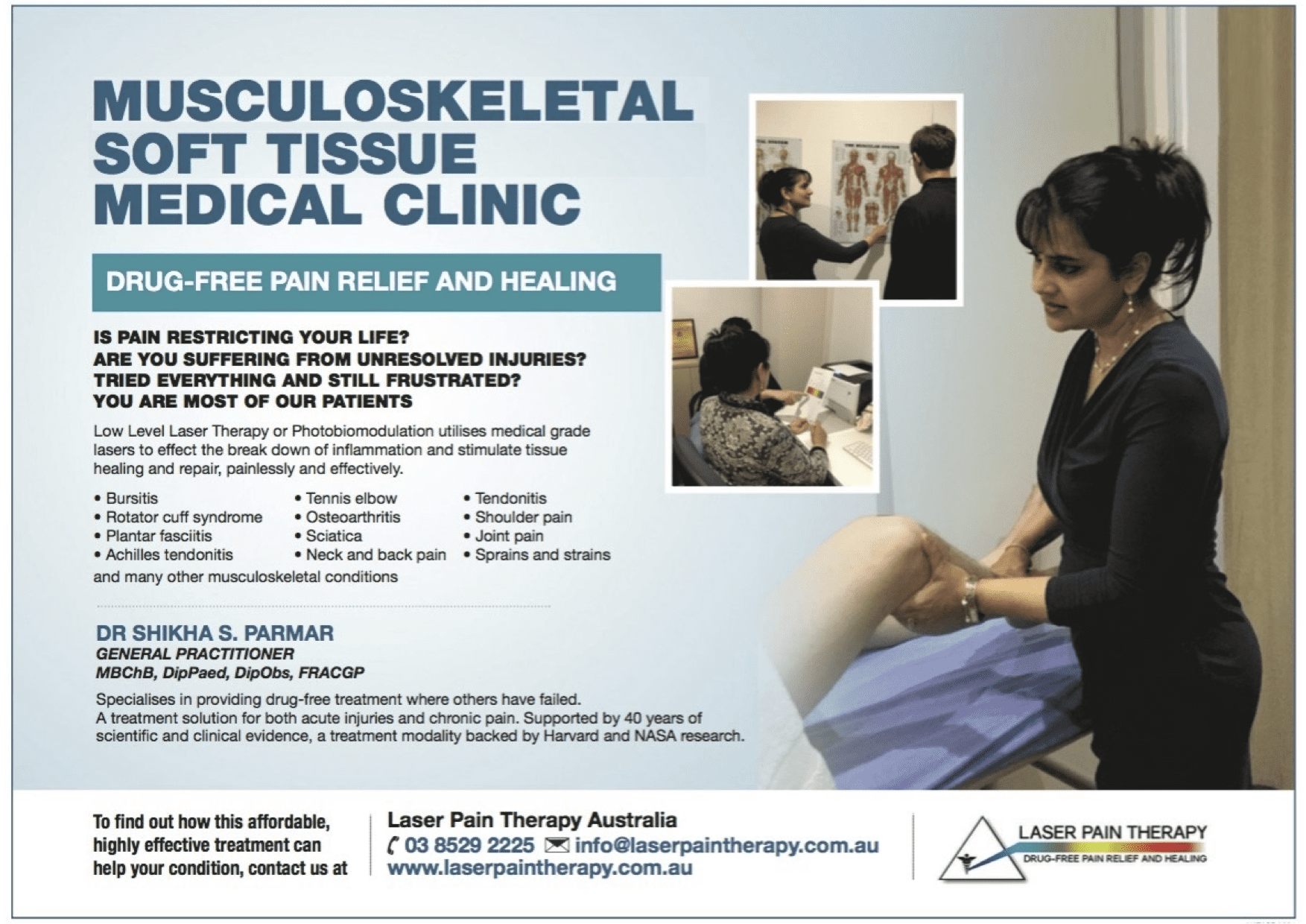
One evidence-based option for persistent musculoskeletal pain is Photobiomodulation Therapy, also known as Low-Level Laser Therapy. This is a non-invasive treatment that uses specific wavelengths of light to stimulate cellular repair processes, reduce inflammation and support tissue healing.
For patients asking what helps chronic muscle pain when standard approaches have not delivered lasting results, PBMT can be particularly valuable because it does not simply mask symptoms. The goal is to improve the biological environment within the affected tissue. Research has shown beneficial effects in reducing pain, modulating inflammation and supporting recovery in soft tissue injuries and chronic musculoskeletal conditions.
Clinically, this matters when muscles remain painful because surrounding tissue has not healed properly, inflammatory signalling is ongoing, or the area is too sensitive to tolerate more aggressive treatment. PBMT is painless, drug-free and suitable for a wide range of patients, including older adults and those who want to avoid more invasive interventions.
That said, it is not a magic fix for every type of pain. If chronic muscle pain is mainly driven by severe biomechanical overload, poor ergonomics or an untreated spinal issue, laser therapy works best as part of a personalised treatment plan rather than in isolation. The strongest outcomes usually come when treatment is matched to diagnosis and combined with activity modification and progressive rehabilitation.
When chronic muscle pain needs a more careful review
There are times when persistent muscle pain should not be managed as a routine strain. Pain that is worsening rather than stabilising, pain associated with significant weakness, numbness, unexplained swelling, fever, weight loss, or marked night pain warrants medical review. The same applies if symptoms continue despite reasonable treatment or keep recurring in the same area.
Chronic pain also deserves closer attention when it starts changing the way you move. A sore hip that leads to limping can start affecting the lower back and knee. Neck pain can trigger headaches and reduced shoulder function. At that point, the issue is no longer just discomfort. It is affecting mechanics, confidence and daily capacity.
A medically guided assessment can help distinguish between myofascial pain, referred pain, tendon involvement, joint-related pain and nerve irritation. That distinction is often the difference between temporary relief and a treatment plan that actually moves recovery forward.
What helps chronic muscle pain at home
Self-management still matters, especially between appointments, but it needs to be realistic. Helpful home strategies usually include relative activity modification rather than complete rest, gentle mobility within tolerance, heat or cold depending on what the body responds to, and gradual return to normal movement.
People often make the mistake of either doing too much or too little. Pushing through a pain flare can prolong irritation. Avoiding movement completely can lead to more stiffness, weakness and pain sensitivity. The middle ground is usually best – enough movement to keep the area functional, without repeatedly aggravating it.
Pacing is particularly important for chronic pain. If a task predictably causes a flare, it may need to be broken into shorter periods with recovery in between. Ergonomic changes at work, better lifting mechanics, supportive footwear or changing training load can also make a meaningful difference. These adjustments are not glamorous, but they often reduce the repeated stress that keeps pain active.
Heat can help when pain is linked to muscle guarding and stiffness, and may help during inflammatory flares or after overuse. It is a cure, but can be a practical symptom-management tool. What matters more is the overall pattern. If you depend on short-term relief measures every day and function is not improving, the condition likely needs a more structured treatment approach.
Why long-term improvement is different from short-term relief
The reason chronic muscle pain is so frustrating is that short-term relief is common, but durable improvement is harder to achieve without addressing the full picture. A rub, tablet, stretch or massage may reduce symptoms for a few hours or a few days. Long-term improvement usually requires the tissue to calm down, recover properly and regain load tolerance.
That often means combining several elements: an accurate diagnosis, evidence-based pain reduction, support for tissue repair, improved movement, and a plan that matches the patient rather than a generic protocol. For someone with longstanding musculoskeletal pain, that is a far more rational path than cycling through temporary fixes and hoping the next one will hold.
If your pain has persisted beyond the expected healing time, it is reasonable to stop asking whether you should just put up with it. Chronic muscle pain is common, but it is not something you need to normalise. With the right assessment and treatment, many people can reduce pain, move more freely and get back to daily life with less limitation.
The most useful next step is often the simplest one: stop treating persistent pain as a mystery, and start treating it as a clinical problem that deserves a proper answer.
Located in Melbourne
(03) 8529 2225 Contact Us