Treatment of Cervicogenic Headache & Neck-Related Migraine Using Low Level Laser/Photobiomodulation Therapy
Low Level Laser Therapy (LLLT), also known as Photobiomodulation Therapy (PBMT), uses red and near-infrared light applied over targeted areas. In our clinic it is used as part of a GP-led treatment approach for selected musculoskeletal pain and injury presentations, including cervicogenic headache and neck-related migraine or headache presentations
PBMT/LLLT is non-invasive and generally well tolerated. Suitability and response vary, and treatment recommendations depend on the diagnosis, severity, duration of symptoms and individual clinical factors. PBMT/LLLT has been studied for a range of musculoskeletal pain and injury conditions. See our references page for supporting literature.
Gentle. Drug-Free. Evidence-Informed
Key Points
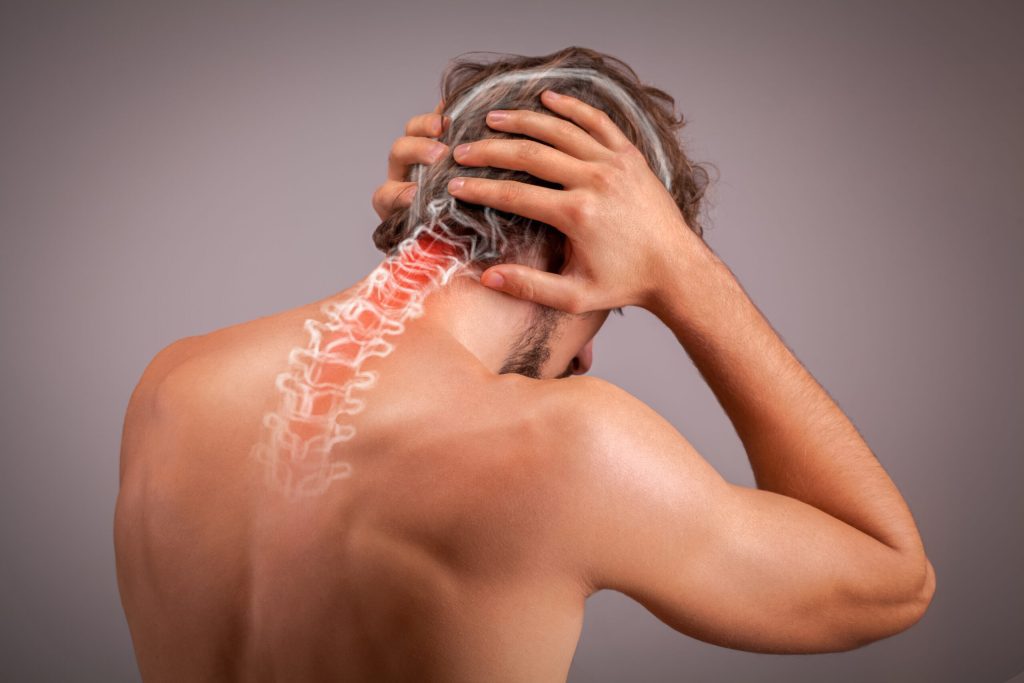
- Cervicogenic headaches originate from dysfunction in the cervical spine, including joints, discs, ligaments and muscles, and can mimic migraines or tension-type headaches.
- Common causes include postural strain, cervical disc bulges, muscle tightness, past trauma such as whiplash, and chronic inflammation or irritation in the neck.
- Symptoms typically begin in the neck and radiate to the head, are often one-sided, aggravated by neck movement or posture, and may include dizziness, neck stiffness, or reduced range of motion.
- Some migraine presentations may be triggered or aggravated by cervical spine dysfunction, especially when headache episodes are associated with neck pain, stiffness, or restricted movement.
- Low Level Laser Therapy (LLLT), or Photobiomodulation Therapy (PBMT), may be considered for selected cervicogenic headache and neck-related headache presentations where inflammation, soft tissue irritation or nerve sensitivity is contributing to symptoms.
- LLLT may be particularly relevant for sensitive or persistent neck-related headache presentations where pressure, stretching, repeated movement or some other interventions can aggravate symptoms.
- Some commonly used approaches, such as medication, injections, repeated loading, stretching or manual pressure, may not be suitable for every stage of recovery. We provide advice based on the diagnosis, symptom severity and clinical assessment.
- Treatment is GP-led by Dr Shikha Parmar and delivered under medical supervision as part of a structured, six-week program tailored to your needs.
- PBMT/LLLT has been studied in a range of musculoskeletal pain and injury conditions and is generally well tolerated. Individual responses vary, and outcomes depend on the condition being treated and the stage of recovery.
- May be helpful to consider for people with persistent cervicogenic headache or neck-related headache symptoms who have not improved with usual conservative care, after appropriate medical assessment.
What are Cervicogenic Headaches?
Cervicogenic headaches are a type of headache that originates from the neck, typically caused by dysfunction or damage in the cervical spine, including joints, discs, ligaments, and muscles. Although the pain is felt in the head, the source lies in the upper cervical spine and surrounding tissues. This type of headache is often mistaken for migraine or tension-type headaches but has a distinct musculoskeletal origin.
Many patients also experience migraines triggered by neck dysfunction, particularly from prior injuries or chronic strain, blurring the line between classic migraine and cervicogenic headache.
Common Causes:
Cervicogenic headaches commonly arise from:
- Cervical disc bulges or degenerative changes irritating local tissues
- Postural strain from prolonged computer or mobile device use
- Neck muscle dysfunction or tightness from whiplash, falls, or sports injuries
- Chronic inflammation in cervical joints or ligaments
- Referred pain from deep neck structures
- Intermittent migraine attacks triggered by flare-ups in chronic neck dysfunction
Symptoms
Bulging cervical discs may compress or irritate nerves and soft tissues, causing tightness and soreness in the neck muscles. These muscles are directly connected to the scalp and head, contributing to headache and migraine symptoms.
Cervicogenic headaches are referred pain from structures in the neck, such as joints, discs, muscles and nerves. They are secondary headaches, meaning the headache is a symptom of a cervical or neck problem.
Common Symptoms of Cervicogenic Headache & Migraine:
- Pain that starts in the neck and radiates to the head
- Often begins in the base of the skull, known as the suboccipital region, and may spread to the forehead, temple, eye area, or top of the head
- One-sided head pain, typically affecting only one side, although it can occasionally switch sides
- Often described as throbbing or pulsating pain in migraine
- Reduced neck range of motion
- Turning or moving the neck may increase the headache or feel restricted or painful
- Headache triggered or worsened by neck movement or posture
- Prolonged sitting, looking down, or certain sleeping positions can exacerbate the headache
- Tenderness over the upper cervical spine
- Palpation of the upper neck, especially the C1–C3 vertebrae, may reproduce the pain
- Pain that may be deep, dull, aching, non-throbbing, and steady, rather than pulsating like a migraine
- Associated neck symptoms, including stiffness, muscle tightness, or shoulder/arm discomfort on the affected side
- Sometimes associated with dizziness or light-headedness, especially if the upper cervical spine is involved
Cervicogenic Migraines
These are essentially migraines with cervical musculoskeletal contributors which may be triggered or aggravated by neck dysfunction. They present as migraines, a primary headache disorder, but with clear neck involvement.
In addition to the symptoms mentioned above there may be:
- Sensitivity to light, sound, and/or smell
- Nausea or vomiting
- Visual disturbances or aura
- Headache attacks lasting 4-72 hours
- Triggers including neck strain, poor posture, or cervical spine irritation
How are Cervicogenic Headaches & Migraines diagnosed?
Diagnosing cervicogenic headache involves a thorough assessment by a healthcare professional to identify any underlying cervical spine dysfunction. Dr Shikha Parmar will begin by reviewing your medical history, including any recent neck injuries, posture-related habits, and the onset of symptoms. The following diagnostic methods are commonly used to assess cervicogenic headache:
Key Diagnostic Steps:
- Medical History: A detailed inquiry into the onset of headaches, frequency, triggers, neck pain, and any previous injuries such as whiplash.
- Physical Examination: Palpation and movement tests to assess neck muscle tension, tenderness, and restricted movement. A specific test for cervicogenic headache involves applying pressure to certain areas in the cervical spine, such as the C1–C3 vertebrae, to see if it reproduces the headache.
- Imaging: In some cases, X-rays, MRI, or CT scans may be used to rule out other causes, such as disc herniations, arthritis, or bone spurs, that might be contributing to nerve irritation or compression in the cervical spine.
- Nerve Testing: If nerve involvement is suspected, such as in cervical radiculopathy, an EMG or nerve conduction study may be used to evaluate nerve function.
The diagnosis of cervicogenic headache typically relies on clinical criteria, where the headache originates from the neck, and symptoms are reproduced through neck movement or pressure on the cervical spine.
Cervicogenic Headaches & Migraines – Treatment Overview
Why Consider Low Level Laser Therapy (LLLT)?
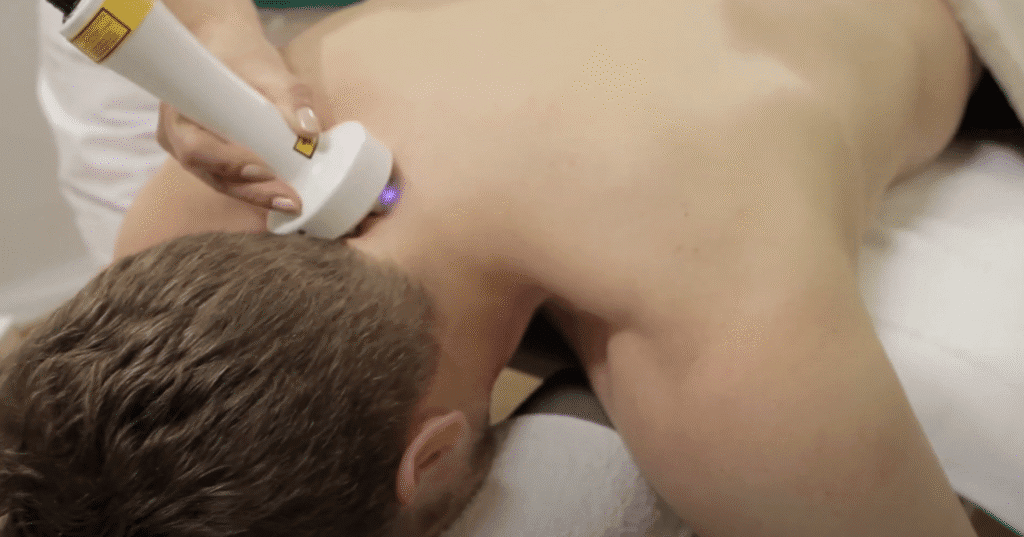
Low Level Laser Therapy (LLLT), also known as Photobiomodulation Therapy (PBMT), is a gentle, non-invasive treatment approach that may help modulate inflammation, calm irritated nerves and support tissue recovery. It may be suited to selected cervicogenic headache and neck-related migraine presentations where sensitive cervical tissues are aggravated by pressure, stretching, or repeated movement.
Why We Use LLLT
Many patients present after limited relief from medications, physiotherapy, or massage. These approaches may reduce symptoms temporarily, but may not be suitable for every stage of recovery, especially if stretching, pressure or exercise aggravates sensitive neck tissues.
Why ice, anti-inflammatories, cortisone, and PRP may not support long-term recovery. Read more
How LLLT Supports Healing
LLLT uses red and near-infrared light to:
- Help modulate inflammation and oxidative stress
- Support local circulation and oxygenation
- Support lymphatic drainage
- Support cellular energy production (ATP)
- Support soft tissue and nerve recovery processes where irritation is present
- Assist pain reduction without mechanical loading or stressing the cervical spine
Treating the Symptoms vs Supporting Recovery
- Botox™: May help reduce chronic migraine or tension-type headache symptoms by relaxing targeted muscles. Its role is different from LLLT/PBMT, which is directed at local cervical tissue irritation and inflammation where these are contributing to symptoms.
- Cervical Support: Soft collars may help short-term in selected cases. They are usually used as a temporary support rather than a long-term treatment.
- Low Level Laser Therapy (LLLT): May assist recovery by helping to modulate inflammation, support tissue repair processes and reduce pain sensitivity without mechanical strain on the cervical spine.
Non-Invasive and Supported by Research
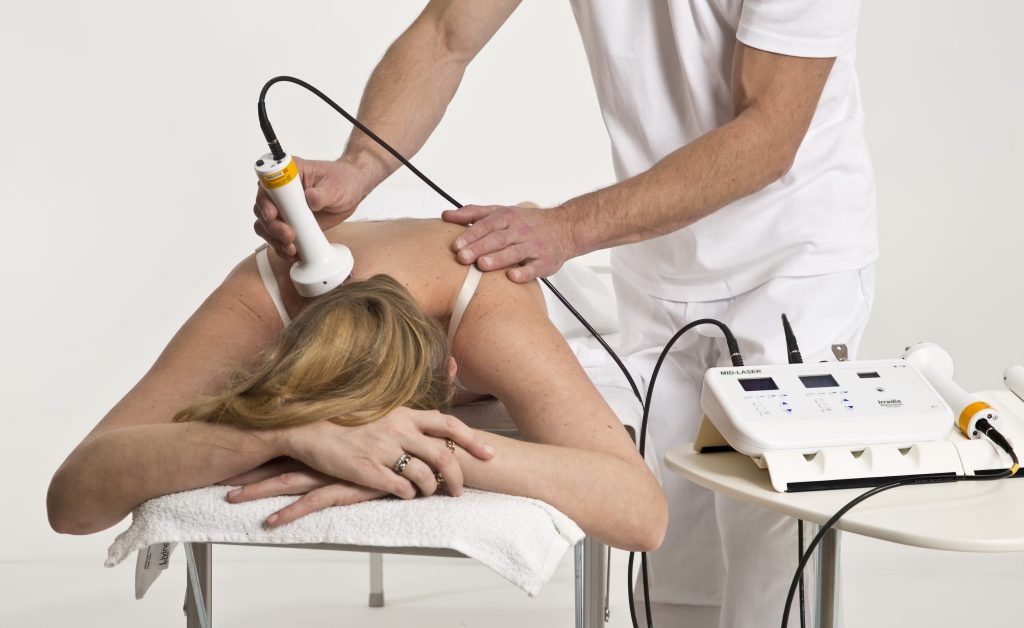
PBMT/LLLT is non-invasive and generally well tolerated. It has been studied for a range of musculoskeletal pain and injury conditions. See our references page for supporting literature.
See how LLLT may support the cellular environment involved in tissue recovery here
Our Treatment Program
Every patient receives a medical assessment with Dr Shikha Parmar (GP) to confirm the diagnosis and assess whether LLLT is suitable. Our structured six-week program includes:
- Up to 12 LLLT sessions
- Early progress review after the first 6 treatments
- Personalised injury and activity advice
- A guided rehabilitation plan to support longer-term function
Progress is reviewed during the program. Many patients notice appreciable improvement after the first 6 treatments. If there has not been sufficient improvement by this review point, further treatment may not be recommended.
View the full treatment protocol and expected outcomes here
Ready to Discuss Your Cervicogenic Headache or Neck-Related Migraine Treatment Options?
If you are struggling with cervicogenic headache or neck-related migraine symptoms, we invite you to contact our team at Laser Pain Therapy to discuss whether LLLT may be suitable for your presentation. Treatment suitability and outcomes vary, and assessment is required before recommendations can be made.
Contact us to arrange your consultation. Located in Melbourne
 (03) 8529 2225 Contact Us
Clinical content reviewed by Dr Shikha Parmar, MBChB, DipPaed, DipObs, FRACGP
Last reviewed: August 2026