A tendon injury rarely feels dramatic at first. It often starts as a niggle – a sore Achilles after walking, a painful shoulder when reaching overhead, or elbow pain that flares every time you lift the kettle. Then the pattern changes. What was once annoying becomes limiting, and simple daily tasks begin to hurt.
Effective tendon injury treatment needs to do more than settle symptoms for a few days. It should address inflammation, support tissue repair, reduce strain on the injured tendon and help you return to normal movement without repeatedly setting the problem off again. That matters whether the injury is new, has been building for months, or keeps coming back despite rest, anti-inflammatories or previous therapy.
Why tendon injuries can be slow to recover
Tendons are strong fibrous tissues that connect muscle to bone. They help transfer force so you can walk, grip, reach, lift and climb stairs. When a tendon is overloaded, irritated or damaged, healing can be slower than many people expect.
One reason is blood supply. Tendons generally have less circulation than muscle, so repair can take longer. The other issue is that tendons are constantly being used. Even when you try to rest, your rotator cuff still works when you get dressed, your patellar tendon still loads when you stand up, and your wrist extensors still activate when you hold a bag or type on a keyboard.
This is why persistent tendon pain should not be dismissed as something you simply need to push through. The right treatment plan depends on what tendon is involved, how long symptoms have been present, how severe the injury is and whether there are contributing factors such as poor biomechanics, repetitive loading, weakness or age-related tissue change.
What tendon injury treatment usually involves
In a clinical setting, tendon injury treatment begins with an accurate assessment rather than a generic exercise handout. Not all tendon pain is the same. Acute tendon irritation, chronic tendinopathy and partial tearing can present differently, and the management approach may need to change accordingly.
Early treatment often focuses on calming pain and reducing excessive load through activity modification. This does not always mean complete rest. In many cases, absolute rest can lead to stiffness, weakness and delayed recovery. More often, the goal is controlled loading – enough movement to support healing, but not so much that the tendon is repeatedly aggravated.
Once the tendon is less reactive, rehabilitation usually includes progressive strengthening. This is one of the most important parts of treatment, because tendons respond to appropriate mechanical load over time. However, exercise alone is not always enough, especially when pain has become chronic or the tissue remains highly irritable.
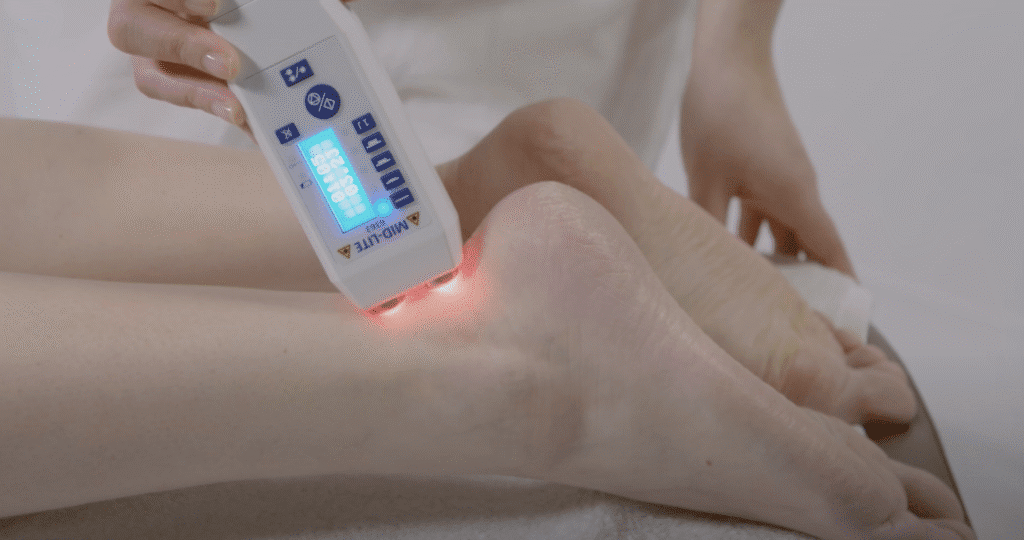
That is where adjunctive therapies may be considered. Depending on the diagnosis, these can include bracing, taping, manual therapy, shockwave therapy or medically supervised photobiomodulation therapy, also known as low-level laser therapy.
When pain relief is not enough
Many people seek help after trying the usual first steps at home. They may have used ice, rested for a week, taken pain relief or reduced activity, only to find the pain returns as soon as normal life resumes. This is common with Achilles tendinopathy, tennis elbow, rotator cuff tendinopathy and patellar tendon pain.
Temporary pain reduction is useful, but it is not the same as tissue recovery. If treatment only masks symptoms while the tendon remains irritated or structurally compromised, the cycle tends to continue. You feel better briefly, do more, then flare again.
A more useful approach is to combine symptom control with strategies that encourage repair and restore function. That may include reducing inflammation where appropriate, improving tissue metabolism, supporting collagen remodelling and guiding a safe progression back to activity.
Where laser therapy fits in tendon injury treatment
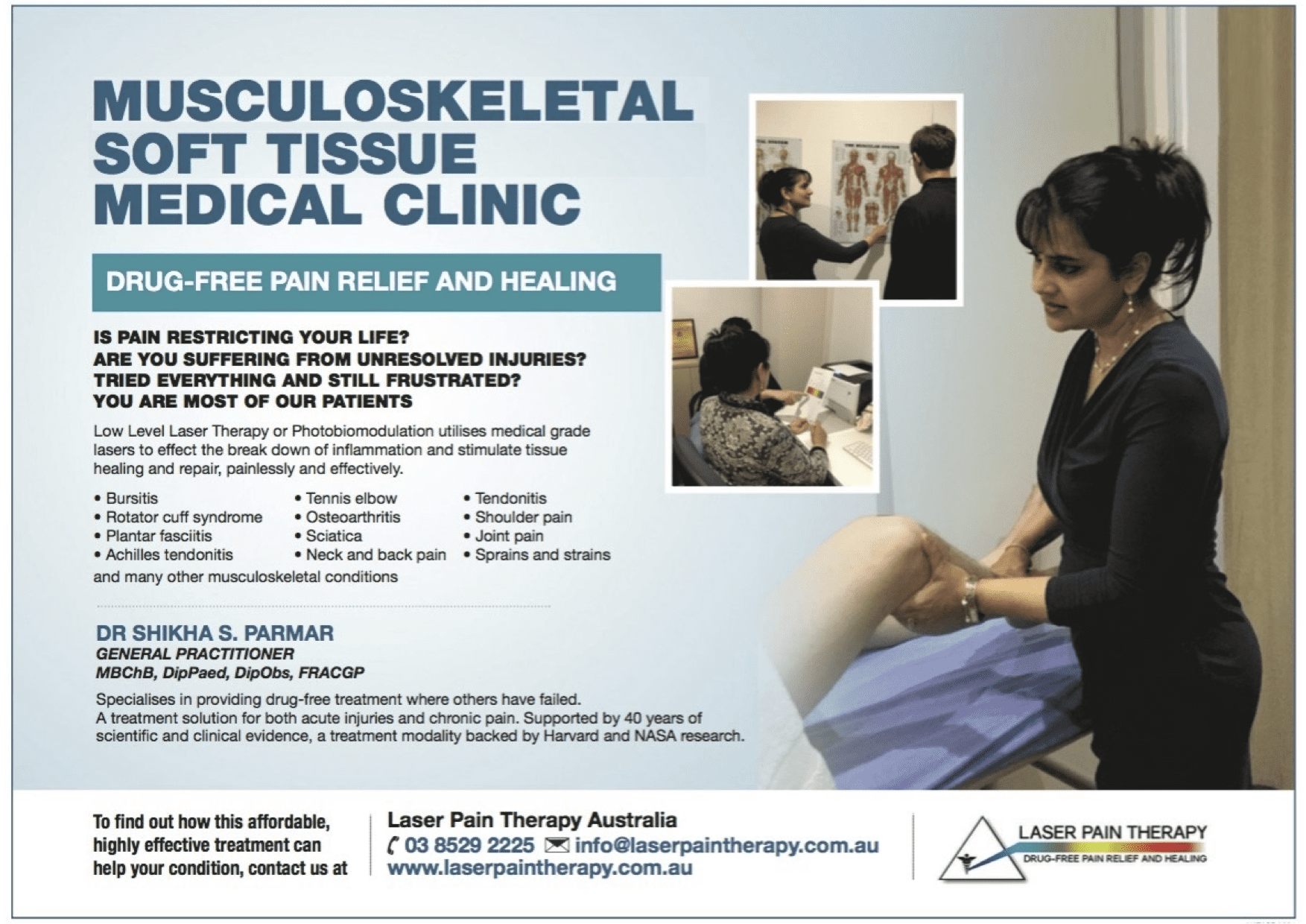
Photobiomodulation therapy is a non-invasive treatment that uses specific wavelengths of light to stimulate biological processes within injured tissue. In tendon injury treatment, the aim is not simply to provide a pleasant sensation or superficial relief. The treatment is used to support cellular repair, reduce inflammation, improve local circulation and assist recovery at a tissue level.
This matters because tendon injuries often involve both pain and impaired healing. Research into photobiomodulation has shown its potential to influence mitochondrial activity, ATP production and cellular signalling pathways involved in tissue repair. In practical terms, that means the therapy may help create a more favourable healing environment while also reducing pain.
For patients, the appeal is straightforward. The treatment is drug-free, non-surgical and generally well tolerated. It can be particularly valuable for people who want to avoid ongoing reliance on anti-inflammatory medication, those who are not good candidates for injections, or those with chronic tendon pain that has not improved with conventional care alone.
At a medically supervised clinic, laser therapy should not be offered as a one-size-fits-all solution. The tendon involved, stage of injury, response to loading and broader clinical picture all need to be considered. Used appropriately, it can complement rehabilitation rather than replace it.
Which tendon problems may respond well
Several common conditions may benefit from this type of treatment when assessed properly. These include Achilles tendinopathy, plantar fascia-related tendon overload, tennis elbow, golfer’s elbow, rotator cuff tendinopathy, gluteal tendinopathy, De Quervain’s tenosynovitis and patellar tendon pain.
Response varies. A recent overuse injury in an otherwise healthy adult may improve more quickly than a long-standing degenerative tendon problem in someone with biomechanical strain, reduced strength or underlying joint disease. Children and adolescents can also develop tendon-related pain, particularly with sport, but treatment needs to take growth and activity demands into account.
This is where individualised care matters. A parent seeking a safe option for a sporting child has different concerns from an older adult with chronic shoulder pain, and an office worker with wrist tendon irritation has different loading demands from a runner with Achilles pain.
What to expect from a medically guided plan
A clinically sound tendon injury treatment plan usually starts with diagnosis review and assessment of function. The key questions are simple but important. Is this truly a tendon problem? Is it acute inflammation, chronic tendinopathy or partial tearing? What activities aggravate it? What has already been tried? Are there red flags or reasons to investigate further?
From there, treatment is tailored. Some patients need a short period of unloading. Others need help reintroducing movement after too much rest. Some benefit from laser therapy early because pain is preventing progress with exercise. Others need the laser component as part of a broader strategy for chronic tissue repair.
Progress should also be measured by more than pain alone. Better tendon recovery usually means improved function – walking further, lifting without pain, sleeping more comfortably, returning to work duties or resuming exercise with confidence.
For patients in Melbourne looking for a non-invasive option, this kind of medically supervised approach can be especially valuable when symptoms have persisted beyond what seemed reasonable or when previous treatment has focused only on short-term symptom control.
The trade-offs patients should understand
There is no single treatment that fixes every tendon injury quickly. That includes laser therapy. Some cases improve rapidly, especially when addressed early. Chronic tendon conditions often require patience, progressive loading and consistent treatment over time.
It also depends on diagnosis. A severely torn tendon may require imaging, specialist review or surgical opinion. A tendon compressed by poor mechanics will keep flaring if those mechanics are not addressed. Someone returning too quickly to running, tennis or manual work may undo early gains.
The best results tend to come from plans that are realistic. Pain relief is important, but so is rebuilding capacity. Tissue healing is important, but so is changing the forces that irritated the tendon in the first place.
When to seek help sooner rather than later
If tendon pain has lasted more than a couple of weeks, keeps recurring, interferes with sleep or daily function, or limits work and exercise, it is worth having it properly assessed. The same applies if there is sudden weakness, marked swelling, bruising or concern about a tear.
Early assessment can prevent a minor overload problem from becoming a persistent pain condition. It can also save time, money and frustration by avoiding treatment that is too generic for the problem in front of you.
Tendons do heal, but they usually heal best when treatment is precise, evidence-based and matched to how you actually use your body. If your pain has stopped behaving like a simple strain, that is often the point where better guidance makes the biggest difference.
Contact us today to arrange your consultation and take the first step towards recovery.
Located in Melbourne
(03) 8529 2225 Contact Us