If your joints feel worst first thing in the morning, or after sitting too long, you have probably already asked the question: does laser therapy help arthritis? For many people, the answer is yes – but not as a magic fix, and not in exactly the same way for every type of arthritis. The real value of laser therapy is that it can reduce pain and inflammation, support tissue repair, and improve movement without adding medication side effects or surgical downtime.
Arthritis is not one single condition. Osteoarthritis, rheumatoid arthritis, post-injury joint degeneration, and inflammatory flare-ups can all present differently. That matters, because the success of any treatment depends on the cause of the pain, the stage of the condition, and whether the surrounding muscles, tendons and soft tissues are also involved.
Does laser therapy help arthritis in clinical practice?
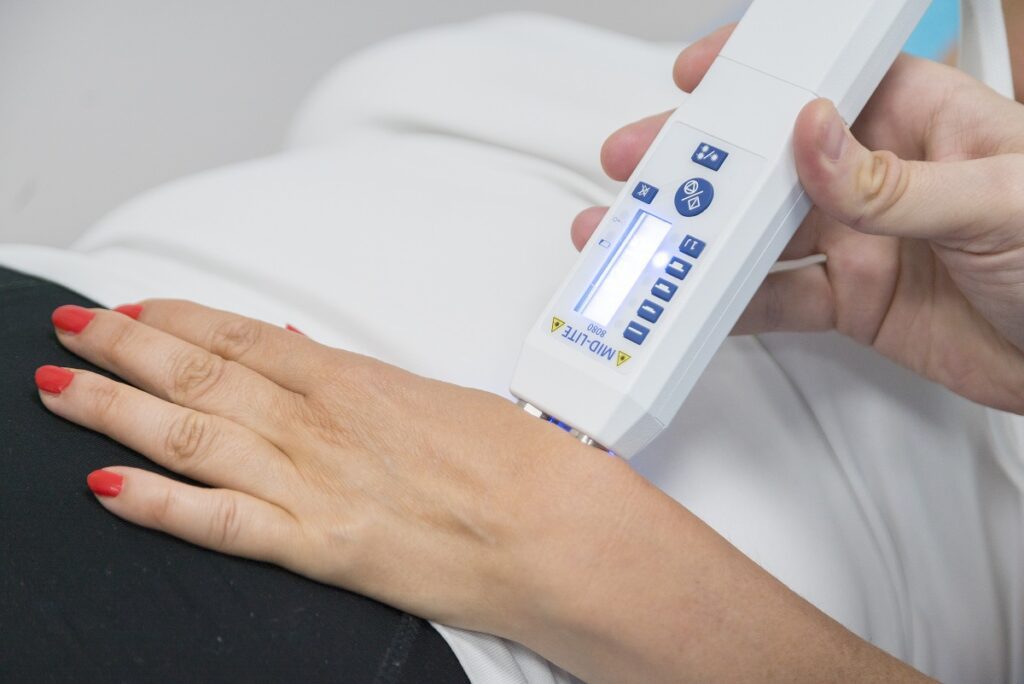
In clinical practice, photobiomodulation therapy, also called low-level laser therapy, is most often used to help manage symptoms such as joint pain, stiffness, swelling and reduced function. It is a non-invasive treatment that delivers specific wavelengths of light into the affected tissue. That light energy is absorbed by cells and can help stimulate cellular repair processes, modulate inflammation and improve local circulation.
For people with arthritis, this matters because painful joints are rarely just “worn out” in a simple mechanical sense. Even in osteoarthritis, there is usually an inflammatory component, irritation of the joint lining, protective muscle tightening, and reduced movement that leads to further weakness. A treatment that helps calm inflammation while supporting recovery in surrounding tissue can therefore make day-to-day function easier.
The evidence is strongest for symptom relief rather than cure. Laser therapy does not reverse severe joint deformity or regenerate an advanced arthritic joint overnight. What it may do is reduce the pain burden enough to help someone walk more comfortably, use their hands more freely, sleep better, or tolerate exercise and rehabilitation they could not manage before.
How laser therapy may help arthritic joints
The reason PBMT attracts interest is that it works at a cellular level rather than simply masking symptoms. When the right dose is applied to the right tissue, light can influence mitochondrial activity, which in turn supports energy production within the cell. This has downstream effects on inflammation, tissue healing and pain signalling.
For an arthritic knee, for example, treatment is not only about the joint surface. The synovium, joint capsule, ligaments, tendons and surrounding muscles may all be contributing to pain and stiffness. Laser therapy can be used as part of a broader management plan to target this wider picture.
Patients often notice a few practical changes first. The joint may feel less stiff on rising. Swelling may settle. Pain during movement may reduce before pain at rest does, or the other way around. Some people find they can climb stairs more comfortably or grip objects with less discomfort if finger joints are involved.
That said, results vary. A mildly arthritic joint with active inflammation may respond better than a severely degenerated joint with major structural change.
What the research actually shows
Research into low-level laser therapy for arthritis has been encouraging, particularly for pain reduction and function in some patients with osteoarthritis. Studies have reported improvements in pain scores, tenderness, morning stiffness and joint mobility, especially when treatment parameters are appropriate. This last point is important. Laser therapy is not one generic treatment. Wavelength, power, dosage, treatment frequency and target tissue all affect outcomes.
This is one reason people can hear mixed reports. If treatment is too superficial, too infrequent, or not matched to the condition, the result may be limited. When it is medically assessed and individually prescribed, the chances of meaningful improvement are stronger.
Research also suggests that laser therapy is generally well tolerated. For patients who cannot take anti-inflammatory medication, want to reduce medicine use, or are trying to delay more invasive treatment, that safety profile is often part of the appeal.
Still, evidence-based care means being honest about limitations. Not every patient responds. Not every arthritic joint improves to the same degree. Laser therapy should be seen as part of a management strategy, not a standalone promise.
Which types of arthritis may benefit most?
Osteoarthritis is the most common reason people seek laser treatment for arthritis-related pain. Knees, hands, hips, shoulders and spine-related joints are frequent problem areas. In these cases, the goal is usually to reduce inflammation and pain, improve mobility, and support better participation in strengthening and movement-based rehabilitation.
Rheumatoid arthritis and other inflammatory arthropathies require specialist medical management and are not often amenable to LLLT. However, some individuals may also experience musculoskeletal pain or soft tissue irritation around affected joints, which may warrant separate assessment where appropriate.
Post-traumatic arthritis can also respond well, especially when old joint injury has led to ongoing inflammation, scar tissue restriction or overload in nearby soft tissue. In younger active adults, this can be an important category, because the issue is not always age-related wear and tear.
What to expect from treatment
A proper assessment comes first. Before recommending laser therapy, a clinician should consider the diagnosis, imaging if available, symptom pattern, aggravating factors, past treatment history and whether the pain is truly coming from the joint. Many patients assume they have arthritis pain when part of the problem is actually tendon overload, bursitis, referred pain from the spine, or muscle dysfunction around the joint.
Treatment itself is painless and comfortable. The laser is applied over the affected area for a set period, based on the tissue depth and condition being treated. Sessions are usually brief, and most people can return to normal activity immediately afterwards.
The number of sessions depends on whether the issue is acute or chronic, mild or advanced. Some patients notice a change within a few treatments. Others improve more gradually over a course of care. Chronic arthritis usually needs consistency rather than a one-off session.
This is also where expectations need to be realistic. If a joint has had years of degeneration, the goal may be meaningful symptom reduction rather than complete resolution. That can still be significant. Less pain, better sleep, easier walking and reduced reliance on pain relief can make a real difference to quality of life.
Does laser therapy help arthritis better than medication?
This is not always the right comparison. Medication and laser therapy do different jobs. Anti-inflammatory medication may reduce symptoms quickly, but it does not directly support tissue repair and is not suitable for everyone long term. Laser therapy is slower in some cases, but it offers a drug-free option that may help calm inflammation and support healing processes without the gastrointestinal, renal or cardiovascular concerns linked to some medicines.
For some patients, laser therapy works best alongside other treatments rather than instead of them. That may include exercise therapy, weight management, pacing, joint protection strategies or medical management of inflammatory disease. The best plan is the one that matches the patient, not the one that sounds simplest.
When laser therapy may not be enough
There are situations where laser therapy alone is unlikely to be sufficient. Advanced bone-on-bone osteoarthritis, major loss of joint alignment, severe inflammatory disease flares, or pain caused by multiple overlapping conditions may need broader intervention. Sometimes the main barrier is not inflammation but mechanical instability, marked weakness or referred pain from another source.
That does not mean laser has no role. It may still help reduce pain enough to support movement or recovery. But treatment should be honest and medically grounded. Patients deserve clear advice about what is likely, what is less likely, and what other care may be needed.
At a medical clinic such as Laser Pain Therapy, that distinction matters. Arthritis care should not be reduced to a machine and a booking schedule. It should begin with assessment, diagnosis review and a treatment plan tailored to the joint, the person and the stage of the condition.
Is laser therapy safe for older adults with arthritis?
In most cases, yes. One of the advantages of PBMT is that it is non-invasive and generally suitable for patients who may not tolerate medication well. Older adults with knee, hand, shoulder or back-related arthritic pain often want options that do not add to an already long medication list.
Safety still depends on appropriate screening. A clinician should review medical history, current conditions and the exact treatment area. When care is delivered properly, laser therapy is commonly well tolerated across age groups.
For many people living with arthritis, the real question is not whether one treatment cures everything. It is whether a treatment helps them move with less pain, rely less on tablets, and get more out of daily life. Laser therapy can often contribute meaningfully to that goal, especially when it is prescribed with clinical judgement rather than offered as a generic wellness add-on.
If you are considering it, the most useful next step is a proper assessment. The right treatment starts with knowing exactly what is driving the pain, and what your joint still has the capacity to recover.
Contact us today to arrange your consultation and take the first step towards recovery.
Located in Melbourne
(03) 8529 2225 Contact Us