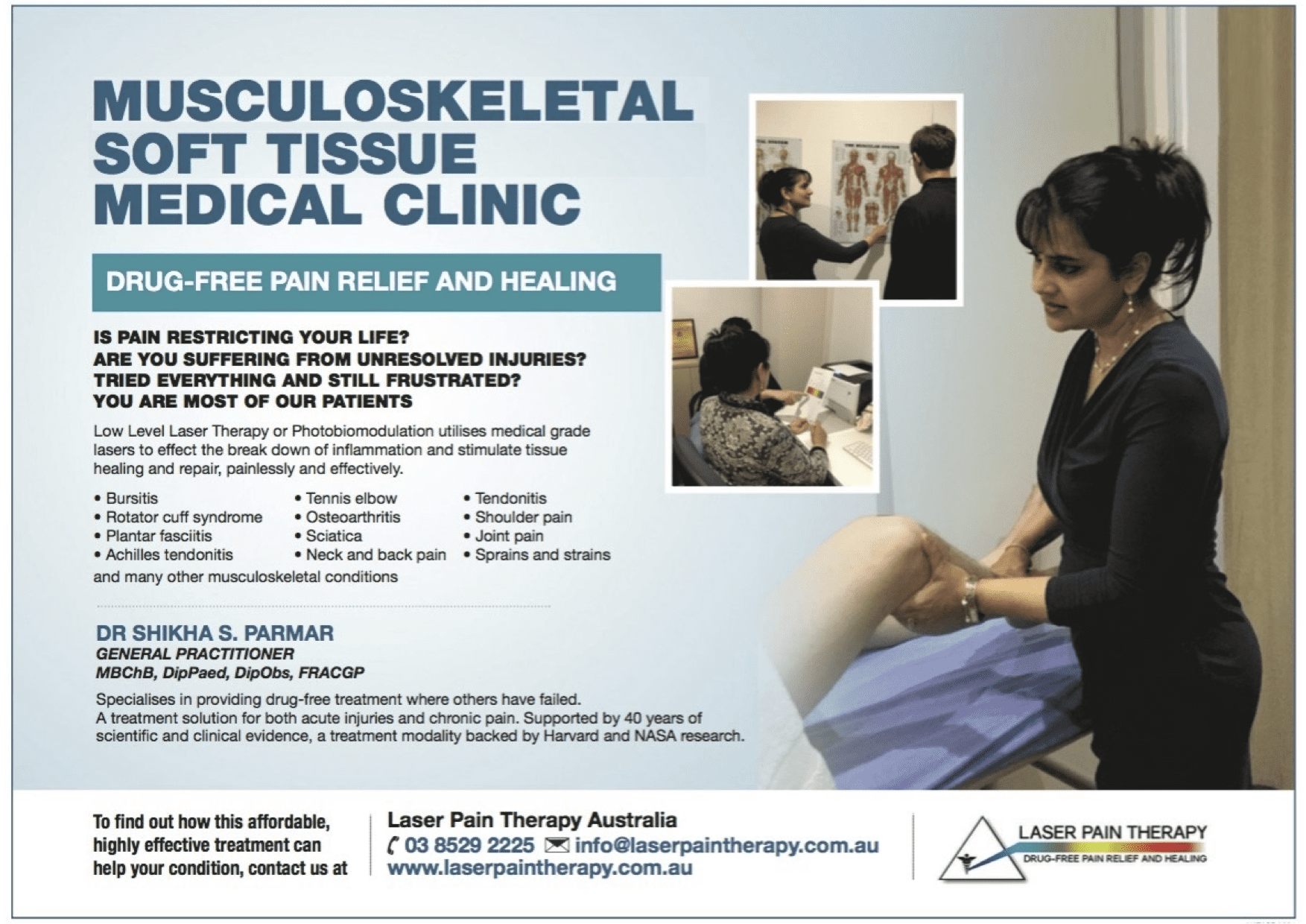
A rolled ankle on the netball court, a stubborn tennis elbow that keeps flaring, a calf strain that never seems to fully settle – sports injuries are not always dramatic, but they can be disruptive for weeks or months. For many people, laser therapy for sports injuries offers a drug-free, non-invasive treatment option that aims not only to ease pain, but to support the underlying healing process.
At a medical pain clinic, this matters. The question is not simply whether an injured area hurts less after treatment. The more useful question is whether inflammation is settling, tissue repair is progressing, function is improving and the person can return to sport, work and daily movement with more confidence.
What is laser therapy for sports injuries?
In clinical practice, laser therapy usually refers to Photobiomodulation Therapy, also known as Low-Level Laser Therapy. This is a medically used light-based treatment that delivers specific wavelengths of light to injured tissue. The goal is to stimulate cellular activity in a way that helps reduce inflammation, improve circulation, support tissue repair and decrease pain.
This is not the same as a surgical laser that cuts or burns tissue. Therapeutic laser treatment is non-invasive and does not damage the skin. Most patients find it comfortable, and many describe the sessions as painless.
Sports injuries are often good candidates because they involve soft tissue stress, microtrauma, inflammation and overload. Muscles, tendons, ligaments and joints can all respond differently depending on the stage of injury, the severity of tissue damage and how long the problem has been present.
How laser therapy works in injured tissue
When sport or exercise overloads tissue, the body begins a repair response. That response is necessary, but it can also become inefficient. In some cases there is too much inflammation for too long. In others, the tissue does not regain normal structure or strength, and pain persists beyond the expected healing window.
Photobiomodulation Therapy works at a cellular level. Light energy is absorbed by structures within cells, particularly in the mitochondria, which are responsible for energy production. This can influence how cells function, including processes involved in inflammation, circulation and tissue regeneration.
The practical effect is what matters most to patients. In the right clinical setting, laser therapy may help settle irritated tissue, improve recovery after acute injury, reduce muscle and joint pain, and support a faster return to movement. It can also be useful when an injury has become persistent and conventional measures have not been enough.
Which sports injuries may respond well?
Laser therapy for sports injuries is often considered for both acute and chronic musculoskeletal conditions. Acute problems may include ankle sprains, muscle strains, ligament injuries, tendon irritation and impact-related soft tissue injury. Chronic presentations may include Achilles tendinopathy, patellar tendon pain, tennis elbow, rotator cuff irritation, plantar fasciitis and recurrent shoulder, knee or back pain linked to sport.
Overuse injuries are particularly common. A runner may not have one dramatic incident, but repeated load through the same structure can gradually create pain, swelling and reduced performance. The same pattern appears in swimmers, golfers, cyclists, racquet sport players and people who have returned to exercise too quickly after time off.
That said, not every sports injury should be managed in exactly the same way. A mild hamstring strain, a significant ligament tear and pain from a stress fracture require different clinical thinking. This is why assessment matters. Effective care starts with understanding the diagnosis, the stage of healing and whether there are any red flags or structural issues that need a different pathway.
Why medically guided treatment matters
Sports injury care is crowded with generic promises. The difficulty is that pain does not always tell the full story. Two people with similar knee pain may have very different underlying problems, and the best treatment plan may not be identical.
A medically supervised approach helps separate temporary symptom relief from genuine recovery planning. That includes reviewing the diagnosis, considering imaging or prior treatment history where relevant, assessing how long symptoms have been present, and deciding whether laser therapy should be used on its own or alongside exercise rehabilitation and activity modification.
This is especially important for people who have tried rest, anti-inflammatory medication, massage or standard physiotherapy without lasting improvement. Persistent sports injuries often need a more targeted plan rather than simply more of the same.
What are the benefits of laser therapy for sports injuries?
The main reason patients seek this treatment is straightforward: they want to recover without relying heavily on medication or facing unnecessary invasive procedures. In suitable cases, laser therapy may help reduce pain, calm inflammation, support tissue repair and improve movement.
For active adults, the appeal is practical. If pain is lower and function is better, they can train more sensibly, complete rehabilitation more comfortably and get back to normal activity with less hesitation. For older adults who remain active, the benefit may be less about competition and more about maintaining walking, golf, tennis, gardening or gym-based exercise without ongoing flare-ups.
There is also a safety and tolerability advantage. Because the treatment is non-invasive and drug-free, it can be an appropriate option for people who wish to reduce medication use or who are concerned about side effects. It is generally well suited to a broad age range when delivered appropriately.
The trade-off is that laser therapy is not a magic fix. Some injuries respond quickly, particularly when treated early. Others, especially chronic tendon problems or long-standing joint pain, may improve more gradually over a series of sessions.
What to expect from treatment
A proper treatment plan begins with assessment, not assumptions. Once the injury has been reviewed, laser dosage and treatment frequency can be tailored to the tissue involved and the treatment goal. Acute inflammation may require a different approach from chronic degeneration or recurrent overload.
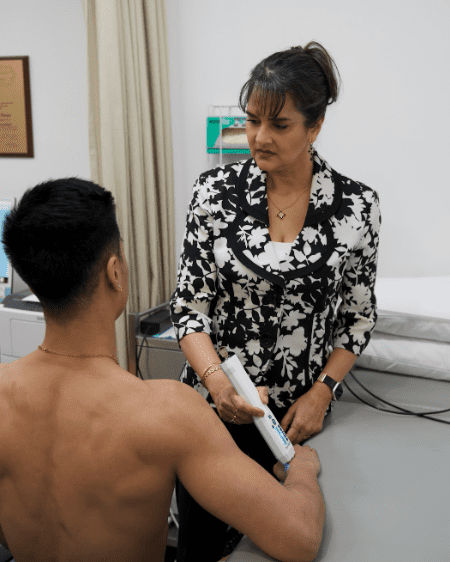
During a session, the laser is applied to the affected area using a handheld device. Treatment is typically brief and comfortable. There is no cutting, no injections and no recovery downtime in the usual sense, although patients may still need guidance about modifying sport or training load while healing continues.
The number of sessions depends on the condition. A recent mild strain may need fewer treatments than an entrenched Achilles tendon problem that has been present for months. Response also varies from person to person. Age, general health, injury severity, activity levels and adherence to the broader recovery plan all play a role.
When laser therapy works best – and when it may not
The best results are often seen when treatment is matched to the right diagnosis and introduced at the right time. Early intervention can be helpful in acute sports injuries because inflammation and tissue stress may be addressed before the problem becomes prolonged. Chronic injuries can also respond well, but they often require patience and a more structured management plan.
There are situations where laser therapy should be part of care, not the whole of it. If a patient has poor biomechanics, returns to sport too soon, ignores strength deficits or continues a training error that caused the injury in the first place, symptom improvement may not hold. In those cases, laser treatment can support healing, but it cannot compensate for an unresolved mechanical problem.
There are also cases where further medical review is essential. Significant tears, fractures, major instability, infection or unexplained swelling need proper diagnosis and management. Good clinical care means knowing when laser therapy is appropriate and when another pathway is necessary.
Is it suitable for younger athletes and older adults?
Often, yes. One of the advantages of Photobiomodulation Therapy is that it is non-invasive and generally well tolerated across age groups. For younger athletes, that may mean a treatment option that supports healing without adding medication burden. For older adults, it may provide a way to manage soft tissue or joint-related sports pain while staying active and independent.
The key is individual assessment. A teenage footballer with a growth-related overuse injury is not managed in the same way as a 65-year-old with tennis elbow and underlying degenerative change. The treatment may be similar in principle, but the clinical reasoning should be different.
A sensible option for people who want more than temporary relief
Sports injuries can interrupt far more than exercise. They affect sleep, work, mood and confidence in movement. When pain persists, many people start to limit activity out of frustration or fear of making things worse.
That is where a medically guided, evidence-based treatment approach at Laser Pain Therapy in Melbourne can make a real difference. Laser therapy is not about masking symptoms so someone can push through an injury. Used properly, it is about helping injured tissue recover, reducing unnecessary dependence on medication and improving the chance of a safer, steadier return to function.
If you have been dealing with a sports injury that is not resolving as expected, the next useful step is not guessing. It is getting clear on what is driving the pain and choosing treatment that matches the condition, the stage of healing and the outcome you actually want.
Contact us today to arrange your consultation and take the first step towards recovery.
Located in Melbourne
(03) 8529 2225 Contact Us