Neck pain rarely stays in the neck. It creeps into sleep, concentration, driving, desk work and even simple movements like checking a blind spot or looking down at a mobile. For many people, laser therapy for neck pain becomes a serious consideration only after painkillers, stretches or rest have stopped making much difference.
That pattern is common. Some neck pain settles quickly after a mild strain, but persistent or recurring symptoms usually involve more than simple muscle tightness. Irritated joints, overloaded tendons, inflamed soft tissue, nerve sensitivity and postural strain can all contribute. The most effective treatment depends on what is driving the pain, how long it has been present and how much it is affecting daily function.
What is laser therapy for neck pain?
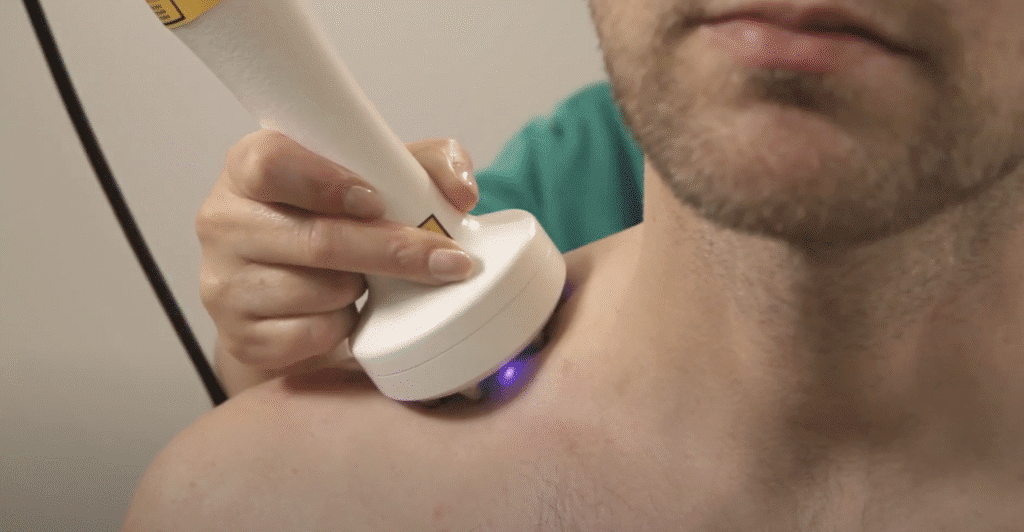
In a medical setting, laser therapy for neck pain usually refers to Photobiomodulation Therapy, also known as Low-Level Laser Therapy. This is a non-invasive treatment that uses specific wavelengths of light to interact with tissue at a cellular level. The aim is not to heat or damage tissue, but to stimulate healing, reduce inflammation and help modulate pain.
That distinction matters. Many patients hear the word laser and think of surgery or cosmetic procedures. PBMT is different. It is painless, does not involve cutting or injections, and is typically used as part of a broader clinical plan for musculoskeletal pain and injury.
For neck pain, treatment may be directed to muscles, ligaments, tendons, facet joints and surrounding soft tissue, depending on the source of symptoms. If there is associated shoulder tension, upper back tightness or referred pain into the head or arm, those areas may also need attention.
How PBMT works in irritated neck tissue
The neck is a complex area. It supports the weight of the head, allows constant movement and is heavily affected by posture, stress, computer use and previous injury. When tissue becomes irritated, the body may respond with inflammation, guarding and altered movement patterns. Over time, this can create a cycle of pain and stiffness.
PBMT works by delivering light energy that is absorbed by cells, particularly within the mitochondria. This may support cellular energy production, improve local circulation and influence inflammatory processes. In practical terms, the goals are to calm irritated tissue, encourage repair and reduce pain so movement can improve.
That does not mean every case responds the same way. A recent muscular flare-up from sleeping awkwardly is different from chronic neck pain linked to degenerative change, whiplash history or long-standing postural overload. The underlying diagnosis still matters. Good care is not just about applying a device to a sore spot. It is about understanding why that spot is sore in the first place.
Who may benefit from laser therapy for neck pain?
Laser treatment can be appropriate for a wide range of neck conditions, but suitability depends on proper assessment. It may help patients with muscle strain, ligament irritation, tendon-related pain, joint inflammation, cervicogenic headache, overuse from desk work or sport, and some forms of chronic neck pain where healing has stalled.
It can also be worth considering for people who are trying to avoid or reduce medication use, or who have not responded well to standard conservative care. That includes patients who have already tried rest, massage, physiotherapy exercises or anti-inflammatory medication without lasting relief.
The treatment is often appealing to adults and older patients because it is non-invasive and generally well tolerated. For some families, the fact that PBMT is drug-free and suitable for many age groups is another practical advantage.
There are limits, though. Neck pain with significant trauma, progressive weakness, marked numbness, dizziness, fever or other neurological or systemic features needs medical review first. The same applies if there is concern about fracture, infection or a more serious spinal condition. A credible clinic should never treat neck pain as one-size-fits-all.
What the evidence says
The evidence for PBMT in musculoskeletal medicine is encouraging, particularly for pain reduction, inflammation control and support of tissue repair. Research has investigated its use across soft tissue injuries, tendon disorders, joint pain and chronic pain presentations. For neck pain specifically, outcomes can include reduced pain intensity, improved movement and better tolerance of daily activity.
That said, evidence is strongest when treatment is correctly dosed and applied to the right condition. This is one reason results can vary between providers. Wavelength, power, treatment duration, tissue depth and treatment frequency all matter. So does diagnosis.
Patients are right to be cautious about broad claims. If someone promises that laser therapy fixes every neck problem in exactly the same way, that is not a medical explanation. The more accurate view is that PBMT can be a useful evidence-based tool when integrated into a personalised treatment plan.
What a proper assessment should include
Before starting treatment, the neck should be assessed clinically rather than treated on assumption. Pain at the base of the skull is different from pain along the side of the neck. Stiffness when rotating is different from pain radiating into the arm. Headaches, poor posture, old injuries and shoulder mechanics may all be relevant.
A medically supervised assessment should look at symptom history, aggravating movements, prior imaging or reports if available, and whether the problem appears muscular, joint-based, nerve-related or mixed. Examination of range of motion, tenderness, referred pain patterns and functional limitation helps guide treatment.
This is where a doctor-led model offers value. Instead of treating neck pain as a generic wellness complaint, care can be aligned with a diagnosis review and a structured plan. At clinics such as Laser Pain Therapy in Melbourne, that medical oversight is designed to improve treatment precision, especially for chronic or previously unresolved cases.
What treatment feels like and how many sessions may be needed
Most patients find PBMT comfortable. The treatment itself is usually quick, with the laser applied over the affected area for a set period based on the condition being treated. It does not usually feel hot or painful. Some patients notice gradual easing of stiffness after treatment, while others experience change over several sessions.
The number of sessions depends on the duration and complexity of the problem. Acute neck strain may respond faster than chronic pain that has been present for months or years. If there is long-standing inflammation, compensatory muscle tension or associated shoulder and upper back involvement, treatment often needs to be staged.
This is another area where honest communication matters. Promising instant results is rarely helpful. Some patients improve quickly. Others need a course of treatment combined with activity modification, posture advice or rehabilitation support. The goal is meaningful, sustained improvement in pain and function, not a brief change that disappears by the next day.
Where laser therapy fits compared with other options
Neck pain is often managed with medication, manual therapy, exercise, heat, injections or simply waiting for it to settle. Each option has a place. Pain relief medication can help during a severe flare, but it does not directly support tissue repair. Exercise is valuable, but some patients need pain and inflammation reduced first before they can move comfortably and effectively. Injections may help in selected cases, but they are not the first choice for everyone.
PBMT sits in a useful middle ground. It is non-surgical, drug-free and targeted, with a focus on reducing inflammation and supporting recovery in irritated tissue. For patients wanting a clinically grounded option without the burden of ongoing medication or invasive procedures, that can be a meaningful advantage.
Still, it is not a magic fix. If neck pain is being driven by poor workstation setup, heavy training load, sleep position or unresolved shoulder dysfunction, those factors need attention too. Lasting improvement usually comes from combining the right treatment with changes that reduce ongoing strain.
Is laser therapy for neck pain worth trying?
For the right patient, yes. If neck pain is persistent, recurrent or interfering with daily life, laser therapy for neck pain may offer a practical next step, particularly when conventional measures have plateaued. The appeal is not just pain relief. It is the combination of safety, comfort and a biological focus on healing rather than masking symptoms.
The key question is not whether laser is fashionable or popular. It is whether your neck pain has been properly assessed and whether this treatment matches the tissue problem involved. When care is evidence-based, individualised and medically supervised, PBMT can play a valuable role in restoring movement, reducing pain and helping people get back to ordinary life with less limitation.
If your neck has been asking for attention every morning, every workday and every time you turn your head, that is usually a sign to look beyond temporary fixes and choose treatment with a clearer clinical purpose.
Contact us today to arrange your consultation and take the first step towards recovery.
Located in Melbourne
(03) 8529 2225 Contact Us