Nerve pain has a way of taking over ordinary moments. Sitting at a desk can trigger burning down the arm. A short walk can bring on shooting pain into the leg. Even sleep becomes difficult when tingling, numbness or electric shock sensations keep flaring. For many people, the question is not whether the pain is real, but whether there is a non surgical treatment for nerve pain that addresses the cause without relying on ongoing medication.
The answer is often yes, but it depends on why the nerve is irritated, inflamed or compressed in the first place. Nerve pain is not a single diagnosis. It is a symptom pattern that can arise from spinal irritation, repetitive strain, post-injury inflammation, scar tissue, joint degeneration, entrapment syndromes or delayed tissue healing. That is why effective care starts with clinical assessment, not guesswork.
What nerve pain actually feels like
Patients describe nerve pain in very specific ways. It may burn, stab, throb, tingle or feel like pins and needles. Some notice numbness or altered sensation. Others feel weakness, clumsiness or pain that travels along a clear pathway, such as from the neck into the hand or from the lower back into the foot.
This matters because nerve pain behaves differently from muscle soreness or joint stiffness. A strained muscle usually hurts when you use it. An irritated nerve can continue firing at rest, become hypersensitive to light touch and produce symptoms far away from the original source. If treatment only targets the painful area and misses the nerve pathway, results are often limited.
Why non surgical treatment for nerve pain can work
Surgery has an important role in certain cases, particularly when there is significant structural compression, progressive weakness, major functional loss or red-flag neurological findings. But many people with nerve pain do not need surgery as a first step. They need the inflammation around the nerve reduced, the surrounding tissue supported to heal and the mechanical stress on the nerve improved.
That is where conservative care can be highly effective. The goal is not simply to mask pain. The goal is to create conditions where irritated nerve tissue can settle, local circulation can improve and damaged soft tissue can repair more efficiently.
A non-surgical approach also makes sense for patients who want to avoid the side effects of long-term pain medication, are not suitable surgical candidates, or have persistent symptoms after trying standard measures such as rest, heat, stretching or anti-inflammatory tablets.
Common causes of nerve pain
The source of nerve pain is not always obvious from symptoms alone. A few common patterns include cervical or lumbar radicular pain from spinal irritation, ulnar nerve irritation, sciatica, post-traumatic nerve sensitivity, shoulder-related nerve referral and chronic inflammation around tendons or joints that affects nearby nerves.
Osteoarthritis can also contribute indirectly. As joints become inflamed or mechanics change, nearby nerves may become more vulnerable to irritation. Repetitive work, sport, poor ergonomics and previous injuries can all play a role as well.
That is why medically guided diagnosis review is so valuable. Two people can both say they have nerve pain, yet one may have a compressed nerve root in the neck while the other has persistent peripheral nerve irritation after an ankle injury. The best treatment plan will not be the same.
Non surgical treatment for nerve pain: what are the options?
Conservative care usually works best when it is targeted and personalised. Depending on the clinical picture, management may include activity modification, bracing in selected cases, rehabilitation exercises, posture correction, manual therapy, medication review and image-guided medical assessment where needed.
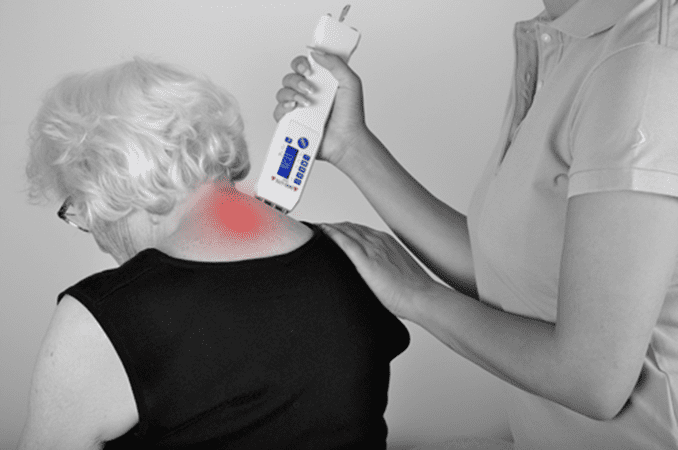
One option attracting increasing attention is Photobiomodulation Therapy, also known as Low-Level Laser Therapy. This is a non-invasive treatment that uses specific wavelengths of light to stimulate cellular repair processes. In clinical settings, PBMT is used to help reduce inflammation, support tissue healing, improve circulation and ease pain without the need for injections or surgery.
For nerve pain, this is particularly relevant because irritated nerves often sit in an environment of ongoing inflammation and delayed healing. When the surrounding tissues are inflamed, sensitised or poorly recovering, the nerve remains under stress. PBMT aims to influence that healing environment rather than simply covering up symptoms.
How laser therapy may help irritated nerves
Photobiomodulation Therapy is not a cosmetic laser and it is not designed to burn or cut tissue. It delivers light energy at therapeutic wavelengths that are absorbed at a cellular level. This can help improve mitochondrial activity, support ATP production and modulate inflammatory pathways involved in pain and tissue repair.
In practical terms, patients are usually more interested in what this means for them. It means treatment is painless, drug-free and designed to support the body’s own healing response. In nerve-related conditions, clinically appropriate laser therapy may help reduce local inflammation, calm sensitised tissues and improve functional recovery over time.
Results do vary. If a nerve is severely compressed by a structure that requires surgical decompression, laser therapy is not a substitute for that procedure. But where pain is driven by inflammation, soft tissue injury, repetitive strain, postural overload or chronic irritation, non-invasive treatment can be a sensible and effective pathway.
Who is most likely to benefit?
The best candidates for conservative nerve pain treatment are those whose symptoms have persisted despite basic self-care, those trying to reduce reliance on medication, and those looking for a medically supervised option before considering invasive procedures.
This often includes office workers with neck and arm pain, adults with sciatica, people with shoulder or wrist overuse injuries, seniors managing degenerative change, and active patients keen to return to sport or exercise without aggravating symptoms further. It can also be appropriate for children and teenagers in selected injury-related cases, provided treatment is properly assessed and supervised.
The key point is that good care should be individualised. A patient with recent acute nerve irritation may need a different treatment frequency and load-management plan compared with someone who has had chronic symptoms for two years.
What to expect from a medical assessment
Before starting any non surgical treatment for nerve pain, the diagnosis should make sense. A thorough assessment looks at symptom behaviour, aggravating factors, functional limitations, previous imaging, medication history and whether there are any warning signs that need further investigation.
This stage is often where patients feel most reassured. They are not being handed a generic therapy plan. They are being assessed as an individual, with treatment guided by the likely pain generator, the duration of symptoms and the goals that matter to them – whether that is walking comfortably, sleeping through the night, getting back to work or returning to training.
At a doctor-led clinic, this process also helps clarify whether non-invasive care is appropriate or whether referral for additional investigation is needed. That clinical oversight matters, especially when nerve symptoms include weakness, spreading numbness or persistent pain that has not responded to multiple previous treatments.
Trade-offs and realistic expectations
Patients deserve a clear view of both benefits and limitations. Non-surgical care is attractive because it avoids the recovery burden, risk and cost associated with invasive procedures. It can also be started earlier and adapted over time. But it is not instant.
Nerve tissue can be slow to settle, particularly when symptoms have been present for months or years. Some patients notice early reduction in pain intensity or frequency, while others improve more gradually through better tolerance for movement, reduced flare-ups and improved day-to-day function. Chronic cases often require consistency rather than one-off treatment.
It is also worth saying that no reputable clinic should promise that every case can be resolved without surgery. Good medicine is about selecting the right treatment for the right patient at the right time.
A more practical path forward
If you are living with burning, tingling, shooting or numb pain, the next step should not be blind trial and error. It should be determining why the nerve is irritated and whether the tissues around it can be treated in a way that supports genuine recovery.
For many patients, especially those wanting a drug-free and clinically guided option, PBMT offers a credible non-invasive pathway. At Laser Pain Therapy in Melbourne, this sits within a medical model of care that combines diagnosis review, personalised planning and ongoing treatment aimed at reducing pain, restoring function and helping patients move forward with confidence.
The most useful question is not whether nerve pain can be treated without surgery in theory. It is whether your particular nerve pain has been properly assessed, and whether there is still a safer, more targeted path worth trying before accepting that pain as normal.
Contact us today to arrange your consultation and take the first step towards recovery.
Located in Melbourne
(03) 8529 2225 Contact Us