
You wake up stiff, your shoulders ache by mid-morning, and by evening your legs or back feel sore again – even though you have not done anything unusual. If you keep asking, why do I have chronic muscle pain, the answer is rarely as simple as getting older or sleeping badly. Persistent muscle pain usually has an underlying driver, and finding it matters because treatment depends on the cause.
Why do I have chronic muscle pain if I have not injured myself?
Many people expect muscle pain to follow a strain, fall or heavy workout. In practice, chronic muscle pain often builds gradually. It can come from repeated minor stress, poor movement patterns, nerve irritation, joint dysfunction, inflammatory processes, or soft tissue that has not healed properly after an older injury.
This is why ongoing pain should not be dismissed just because there was no clear accident. Muscles often become painful as a reaction to something else nearby. A muscle may tighten to protect an unstable joint, compensate for weakness, or respond to inflammation in tendons, ligaments or nerves. The pain feels muscular, but the true source may be more complex.
For some patients, there is more than one contributor. An office worker might have neck and shoulder pain from prolonged desk posture, jaw tension and poor sleep at the same time. An older adult with calf or thigh pain may also have osteoarthritis, reduced mobility and long-term deconditioning contributing to the problem. Chronic pain is often layered.
Common causes of chronic muscle pain
A persistent ache, tightness, cramping or burning sensation in muscles can come from several medical and mechanical causes. The most common include overuse, unresolved strain, myofascial pain, referred pain from joints or nerves, inflammatory conditions, medication effects and systemic illness.
Overuse and repetitive strain
Not all injuries are dramatic. Repetitive lifting, long hours at a computer, gardening, manual work, driving, sport or even prolonged sitting can overload muscle groups over time. Small areas of tissue irritation may not fully settle before they are stressed again. Eventually the body stops recovering properly between activities, and pain becomes part of daily life.
This pattern is common in the neck, shoulders, lower back, forearms, hips and calves. The pain may fluctuate, but it keeps returning because the aggravating load has never really changed.
An old injury that never fully healed
A muscle strain, sporting injury or postural problem can leave behind lingering inflammation, scar tissue, weakness or altered movement. Even if the initial injury seemed to improve, the area may remain vulnerable. The body then recruits surrounding muscles to compensate, which can create further pain.
This is one reason chronic pain can continue months after the original issue should have healed. The tissue may not be actively tearing, but it may not have restored normal function either.
Myofascial pain and trigger points
Myofascial pain refers to pain arising from muscle and fascia, the connective tissue surrounding muscles. Tight, irritable bands within muscle can form trigger points that cause local tenderness or pain referred into another area. For example, trigger points in the upper back can cause pain into the neck or head, and gluteal trigger points may mimic hip or leg pain.
This type of pain is real, common and often persistent. It can be driven by stress, overuse, biomechanics, previous injury or prolonged guarding around a painful joint.
Joint or nerve problems that feel like muscle pain
Pain does not always stay where it starts. Cervical spine irritation can cause pain into the shoulder or arm. Lumbar spine issues may present as buttock, thigh or calf pain. Arthritic joints can lead nearby muscles to tighten and fatigue because they are trying to stabilise the area.
When this happens, treating only the sore muscle may provide limited relief. A proper assessment needs to consider the surrounding joints, nerves and movement patterns.
Inflammation and medical conditions
Sometimes chronic muscle pain reflects a broader health issue rather than a local strain. Conditions such as fibromyalgia, polymyalgia rheumatica, autoimmune disease, thyroid dysfunction, vitamin D deficiency and some viral illnesses can all contribute to widespread or prolonged muscle pain.
Medication side effects can also play a role. Certain cholesterol-lowering medicines, for example, may trigger muscle aches in some people. If your pain is widespread, symmetrical, associated with fatigue, or does not match your activity levels, it is worth considering a medical cause.
Why chronic muscle pain can become persistent
The longer pain continues, the less it behaves like a simple injury. Ongoing inflammation, reduced activity, weakness, disturbed sleep and pain-related muscle guarding can create a cycle that keeps symptoms going. Tissues may become more sensitive. Movements that were once easy start to feel threatening, so people naturally avoid them. That can reduce strength and mobility further.
There is also a difference between pain that is chronic and pain that is harmless. Chronic simply means it has lasted longer than expected, usually beyond three months. It does not tell you why it is there. Some cases are relatively straightforward and respond well to targeted treatment. Others need a broader medical work-up.
This is why self-diagnosing chronic muscle pain can be unreliable. Heat packs, massage or stretching may help temporarily, but if the underlying driver is still present, the pain often returns.
Why do I have chronic muscle pain in one area only?
Localised chronic muscle pain often points to a mechanical or structural issue. That might include a chronic strain, tendon overload, spinal referral, postural loading, or compensation around an arthritic or unstable joint. Pain in one area is not necessarily less serious than widespread pain, but it usually gives clearer clues about what is driving it.
For example, ongoing pain between the shoulder blades may be linked to desk posture and thoracic stiffness. Recurrent calf tightness may reflect altered walking mechanics, low back referral or a lingering sports injury. Lower back muscle spasm can be the body reacting to disc irritation or facet joint inflammation rather than the muscles being the primary problem.
The pattern matters. When the pain starts, what aggravates it, how long it lasts, whether it wakes you at night, and whether there is weakness or numbness all help narrow down the cause.
When to seek a proper medical assessment
Not every sore muscle needs a scan or specialist review. But persistent pain should be assessed if it has lasted more than a few weeks, keeps recurring, limits your movement, or has not improved with sensible self-care.
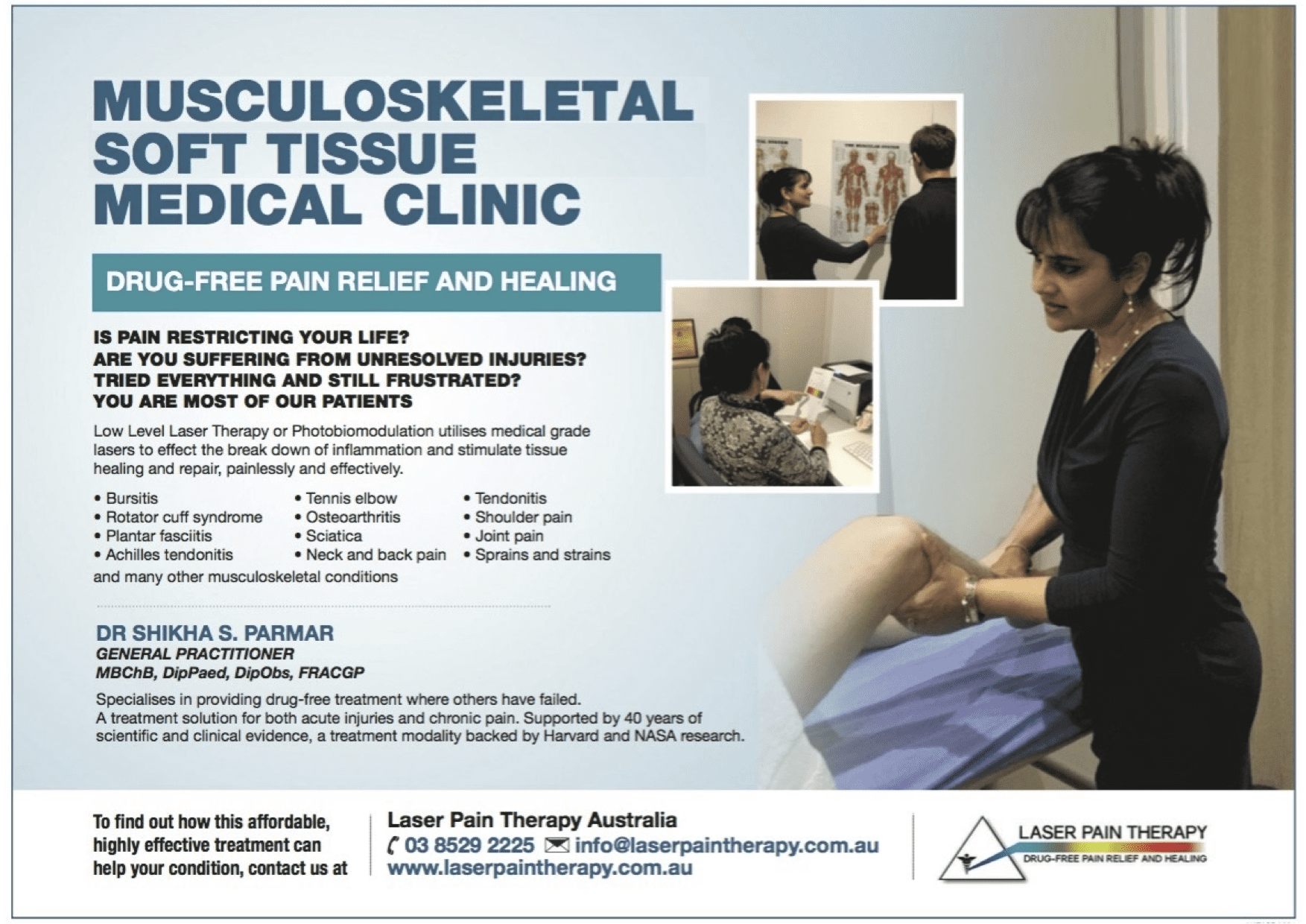
This is where non-invasive options can be valuable, particularly for people who want to avoid relying on medication or are not suitable for more invasive treatment. Photobiomodulation Therapy, also known as Low-Level Laser Therapy, is used in clinical pain management to support tissue healing, reduce inflammation and improve function in a range of musculoskeletal conditions where the there is localised injury and inflammation and some osteoarthritis conditions. It is not a one-size-fits-all answer, and it works best when guided by a clear diagnosis and treatment plan. But for patients with persistent soft tissue pain, overuse injuries or chronic inflammatory musculoskeletal conditions, it can be a useful part of evidence-based care.
A thorough assessment should look beyond the painful spot. In a clinical setting, that may include reviewing your history, previous injuries, medications, daily load, biomechanics, joint function and whether the pain pattern fits muscle, tendon, nerve or inflammatory causes. Sometimes imaging is useful. Sometimes it is not. The key is matching the investigation to the clinical picture rather than assuming every ache needs the same approach.
What helps when chronic muscle pain does not settle?
Effective treatment depends on diagnosis. In some cases, progressive strengthening, load modification and movement retraining are central. In others, the priority is reducing inflammation, improving tissue repair and calming pain enough for normal movement to return.
This is where non-invasive options can be valuable, particularly for people who want to avoid relying on medication or are not suitable for more invasive treatment. Photobiomodulation Therapy, also known as Low-Level Laser Therapy, is used in clinical pain management to support tissue healing, reduce inflammation and improve function in a range of musculoskeletal conditions. It is not a one-size-fits-all answer, and it works best when guided by a clear diagnosis and treatment plan. But for patients with persistent soft tissue pain, overuse injuries or chronic inflammatory musculoskeletal conditions, it can be a useful part of evidence-based care.
At a doctor-led clinic such as Laser Pain Therapy, the focus is not simply on where it hurts. The goal is to identify why it hurts, what tissue is involved, and what is preventing recovery.
The question to ask next
If you keep wondering why do I have chronic muscle pain, the better follow-up question is this: what is my pain trying to tell us about healing, load, movement or inflammation? Chronic muscle pain is often treatable, but it responds best when the cause is defined properly rather than guessed. The sooner that process starts, the sooner treatment can move from short-term coping to meaningful recovery.
Contact us today to arrange your consultation and take the first step towards recovery.
Located in Melbourne
(03) 8529 2225 Contact Us