A child who limps for weeks after a sporting injury, complains of heel pain after training, or keeps waking at night with an aching knee can leave parents stuck between waiting it out and wanting a treatment that is both safe and effective. One of the most common questions we hear is: is laser therapy suitable for children? In many cases, photobiomodulation therapy, also called low-level laser therapy, can be an appropriate option for children when it is used for the right condition, with the right dose, and under expert medical supervision.
What matters most is not simply the child’s age. It is the diagnosis, the area being treated, the severity of symptoms, and whether treatment is being delivered within a clinical framework rather than as a generic wellness service.
Is laser therapy suitable for children for pain and injury?
For a range of musculoskeletal conditions, the answer can be yes. PBMT is a non-invasive treatment that uses specific wavelengths of light to interact with tissue at a cellular level. The aim is not to heat or damage tissue, but to support biological processes linked to reduced inflammation, improved tissue repair, and pain relief.
That distinction matters. Many parents hear the word laser and think of cutting, burning, or cosmetic procedures. Therapeutic laser used in PBMT is different. It is designed to stimulate healing responses in tissue without surgery, injections, or medication.
In paediatric care, this may be relevant for conditions such as sports injuries, tendon irritation, muscle strains, ligament sprains, growth-related overuse pain, and some forms of persistent soft tissue inflammation. Children and adolescents involved in football, netball, gymnastics, basketball, athletics, dance, and swimming can be particularly prone to these issues because growing bodies are active bodies.
Still, suitable does not mean automatic. A child with pain always needs a proper assessment first. What looks like a simple overuse injury can occasionally turn out to be a stress injury, infection, inflammatory condition, or another issue that should not be managed with symptom-focused treatment alone.
How PBMT works in younger patients
Children are not just small adults, but the core biological principles of PBMT are similar across age groups. Light energy is absorbed by cells and can influence mitochondrial activity, circulation, inflammatory signalling, and tissue repair processes. In practical terms, that may help settle irritated tissue and support recovery.
For younger patients, the attraction is obvious. The treatment is non-invasive, drug-free, and generally well tolerated. Sessions are typically painless and comfortable. For families trying to reduce reliance on anti-inflammatory medication or repeated rest-only cycles that never quite solve the problem, that can be a meaningful advantage.
There is also a practical point here. Children often struggle with treatments that are unpleasant, restrictive, or hard to understand. A treatment that is quick, gentle, and medically guided is often easier for both child and parent to manage.
When laser therapy may be considered for children
PBMT may be considered when a child has a clearly identified musculoskeletal issue and the treatment goal is to reduce pain, calm inflammation, and support healing. Common examples include ankle sprains, shin pain, knee pain linked to sport or growth (Osgood Schlatter), tendon irritation, soft tissue bruising, stress fractures, and recovery after overuse.
In adolescents, it may also be useful where pain has started to interfere with school sport, sleep, mobility, or regular daily function. The longer a child stays sore, the more likely they are to alter movement patterns, avoid activity, and lose confidence in the injured area. Early, appropriate treatment can matter.
That said, laser therapy should not be used as a shortcut that allows a child to continue loading an injury without addressing the cause. If training errors, poor biomechanics, inappropriate footwear, or excessive sports volume are contributing to the problem, these factors still need attention.
Safety comes down to clinical judgement
The question is laser therapy suitable for children is really a safety question, and that is where clinical oversight becomes essential. PBMT has a strong safety profile when used correctly, but correct use is the key point.
Treatment settings need to match the tissue depth, condition, and size of the patient. Protective eyewear must be used when indicated. Some body areas require extra caution, and some presentations require treatment to be delayed or avoided until further medical review is completed.
A clinician should also know when not to treat. If a child has unexplained pain, persistent swelling, significant night pain, fever, trauma with suspected fracture, or neurological symptoms, the priority is diagnosis. Laser therapy is not a substitute for investigating red flags.
This is one reason parents should be cautious about any provider who treats children without a detailed history and examination. Safe paediatric care starts with understanding what is being treated.
Conditions where extra caution is needed
Not every painful condition in a child is appropriate for PBMT. If pain is unexplained, worsening rapidly, or associated with systemic symptoms, medical review comes first. The same applies to suspected fractures, acute abdominal pain, unexplained lumps, or symptoms suggesting infection.
There are also cases where PBMT may be part of a broader management plan rather than a standalone treatment. A child with chronic joint pain, hypermobility-related symptoms, or recurring sports injuries may need review of strength, training load, biomechanics, and recovery habits alongside any laser treatment.
Parents should also mention all relevant medical history, including previous injuries, current medications, and any recent imaging or specialist advice. The more precise the diagnosis, the more tailored the treatment can be.
What a parent should ask before treatment
A reasonable parent does not need to understand laser physics to make a good decision, but they should expect clear answers. Ask what diagnosis is being treated, why PBMT is appropriate, what the expected benefit is, how many sessions may be required, and how progress will be measured.
It is also fair to ask who is supervising the treatment. In a medically led clinic, care should begin with assessment rather than a package of pre-booked sessions. That approach is especially important in children because the margin for casual, one-size-fits-all treatment is smaller.
A trustworthy provider will also explain that response varies. Some children improve quickly, especially with recent soft tissue injuries. Others need a broader recovery plan that includes modified activity, home care, and reassessment.
What treatment feels like for a child
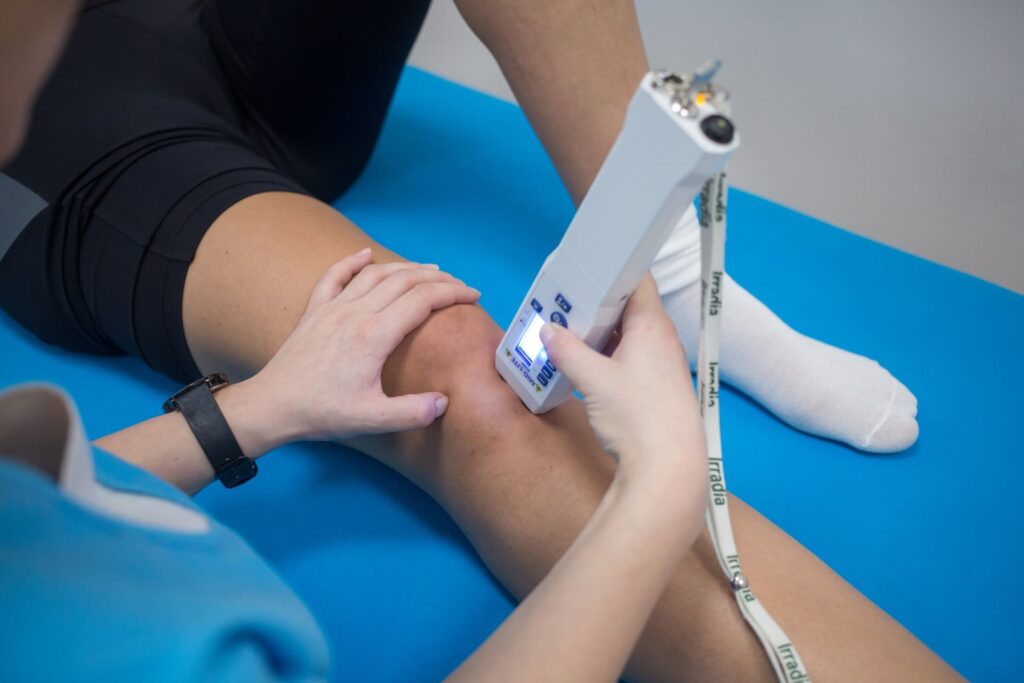
For most children, PBMT is straightforward. The treatment is applied to the affected area using a therapeutic laser device, and sessions are usually brief. The child may feel little to nothing during treatment, or occasionally a mild warmth depending on the device and protocol used.
There is no need for sedation, no cutting of the skin, and no recovery downtime in the usual sense. That does not mean the child can immediately return to unrestricted sport. Return to activity depends on the diagnosis and stage of healing, not simply whether pain has eased.
This is an important trade-off to understand. Pain reduction is helpful, but in active children it can sometimes create a false sense of readiness. A sensible treatment plan balances symptom improvement with tissue recovery and graded return to sport.
Why medically supervised care matters
Parents often want reassurance that a treatment is evidence-based and not simply marketed as natural or gentle. That is a reasonable standard. PBMT has been studied for pain, inflammation, and tissue healing, but research quality and treatment protocols vary, and outcomes depend heavily on clinical application.
That is why medically supervised assessment matters more than broad claims that laser therapy is suitable for all ages. The treatment may be appropriate for many children, but it should still be selected case by case.
At a medical clinic, the decision to treat should sit within a proper diagnosis review and a personalised management plan. For families in Melbourne seeking non-invasive care for sports injuries or persistent musculoskeletal pain, that level of oversight can make the difference between a treatment that is merely appealing and one that is genuinely appropriate.
The real answer for parents
So, is laser therapy suitable for children? Often yes, particularly for properly assessed musculoskeletal pain and injury where the goal is to reduce inflammation, ease pain, and support tissue healing without medication or invasive procedures.
But the better question is whether it is suitable for your child, for this condition, at this stage of recovery. That answer should come from a clinician, such as Dr Parmar at Laser Pain Therapy, who takes the pain seriously, explains the diagnosis clearly, and recommends treatment with the same care they would want for their own family.
When a child is in pain, parents do not need hype. They need a safe plan, a clear diagnosis, and treatment that helps a young body get back to moving well with confidence.
Contact us today to arrange your consultation and take the first step towards recovery.
Located in Melbourne
(03) 8529 2225 Contact Us