Treatment of Thoracic & Upper Back and Shoulder Pain Using LLLT/PBMT
Low Level Laser Therapy (LLLT) also known as Photobiomodulation Therapy (PBMt) is the application of red and near infrared light over injuries to stimulate cellular repair. LLLT is a highly effective, completely safe treatment in Melbourne, Victoria. It is painless, and has no effect on normal tissues. LLLT treats the underlying cause of the injury unlike pain medication which just masks the pain. It is a treatment modality supported by research from reputable institutions including Harvard University and NASA. LLLT is an evidence-based therapy for soft tissue injuries which include all types of back pain.
Gentle. Drug-Free. Clinically Proven
Key Points
- Upper back and shoulder pain may result from trauma (e.g. lifting, falls) or postural strain (e.g. prolonged sitting, desk work).
- Common causes include muscle or ligament strain, facet joint irritation, and thoracic disc bulging.
- Muscle and ligament strains, joint dysfunction, and thoracic disc bulges are frequent contributors. In some cases, osteoporosis may lead to compression fractures.
- Symptoms range from localised aching to referred pain in the chest, arms, or shoulder blades.
- Standard treatments such as medication, ice, or massage often offer only short-term relief and may aggravate symptoms.
- Low Level Laser Therapy (LLLT), or Photobiomodulation Therapy (PBMT), is a drug-free, non-invasive option that reduces inflammation and promotes tissue repair with mechanical stress
- LLLT is ideal for both acute and persistent pain, especially where inflammation is a key driver.
- Treatment is part of a structured program overseen by Dr Shikha Parmar, combining laser therapy with tailored rehabilitation advice.
Understanding Thoracic, Upper Back, and Shoulder Pain
Upper back (thoracic) and top-of-shoulder pain can significantly impact daily life. While many cases resolve within a couple of weeks with rest and home care, more severe or poorly managed injuries may become chronic and persistent problem. Low Level Laser Therapy (LLLT), also known as Photobiomodulation Therapy (PBMT), offers a highly effective, non-invasive treatment option for both acute and persistent upper back and shoulder pain.
Causes of Thoracic, Upper Back, and Shoulder Pain
Upper back pain can result from sudden trauma (e.g. falls, car accidents, or awkward lifting) or from sustained overuse or stress injuries, such as repetitive postural strain e.g., prolonged desk work, repetitive lifting or overhead activities, or poor sleeping postures can cause cumulative micro-trauma over time leading to persistent discomfort.
Upper back pain typically involves muscle strain, ligament sprain, or joint dysfunction. Weakened back and shoulder stabilisers often contribute. In some cases, especially with osteoporosis, thoracic vertebrae may develop compression fractures.
Muscle or Ligament Injury
Much of upper back pain is musculoskeletal in origin and referred to as non-specific thoracic pain. Typically, it involves:
- Muscle strain of the large upper back muscles (trapezius, rhomboids, levator scapulae)
- Ligament sprain (through over-stretching) around the facet joints of the thoracic spine
- Joint dysfunction between the thoracic vertebrae and ribs
Common causes include heavy lifting, sports collisions, and motor vehicle accidents.
Bulging or Herniated Discs
Thoracic disc bulges or herniations, though less common than in the lower spine, can cause upper back pain and pain in the shoulder blades, stiffness, muscle spasm, or referred pain due to nerve irritation, into the chest or arms.
These issues may result from repetitive strain or sudden trauma such as a fall or heavy lift. Symptoms often worsen with sitting, slouching, coughing, or twisting. In more serious cases, nerve involvement may cause numbness, tingling, or weakness. Severe pain or symptoms such as shortness of breath require prompt medical attention.
Symptoms
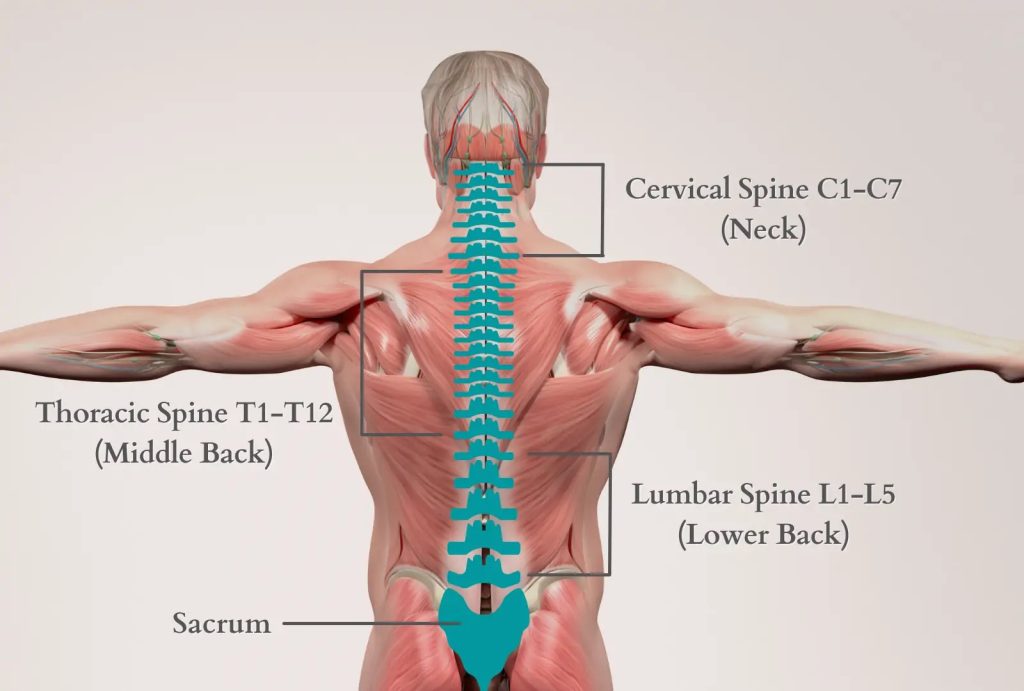
Pain can be felt at the top of the shoulder, about the scapulae (shoulder blades), through the thoracic spine and its supporting muscles and ligaments.
Discomfort is usually localised to the upper back without radiation into the arms. Patients often experience tenderness or spasms in the muscles at the top of the shoulder, around the spine or scapulae (shoulder blades) and through the thoracic spine.
Symptoms of upper back muscle pain can vary from a mild, nagging ache to sharp, stabbing pain, along with protective muscle tightness and stiffness.
Occasionally, the pain may be referred into the shoulders, the chest wall, or the arms.
How is Thoracic & Upper Back Pain Diagnosed?
Diagnosing thoracic and upper back pain requires a comprehensive clinical evaluation to identify the source of discomfort and guide treatment. Dr Shikha Parmar will begin by taking a detailed history, including your activities, posture, and any previous injuries. The following diagnostic methods are commonly used to confirm the cause of pain:
Key Diagnostic Steps:
- Medical History: Dr Parmar will ask about the onset of pain, any recent trauma or strain, and factors such as prolonged sitting, desk work, or lifting habits.
- Physical Examination: A physical examination will assess areas of tenderness, muscle tightness, and mobility restrictions. Specific tests may be performed to evaluate the range of motion in the thoracic spine and shoulders.
- Imaging: In some cases, X-rays or MRI scans may be used to assess structural issues, such as disc bulges, facet joint problems, or compression fractures. MRI may also help rule out serious underlying conditions.
- Palpation and Special Tests: Tenderness over specific areas, such as the vertebrae or shoulder blades, may help identify muscle, ligament, or joint dysfunction. Tests to assess nerve involvement may also be performed if radicular symptoms (e.g., pain radiating to the arm) are present.
The combination of physical exams and diagnostic imaging helps determine the precise cause of your thoracic and upper back pain, enabling Dr Parmar to develop an appropriate treatment plan tailored to your needs.
Thoracic, Upper Back and Shoulder Pain – Treatment Overview
Low Level Laser Therapy (LLLT), also known as Photobiomodulation Therapy (PBMT), is a gentle, evidence-based treatment that targets the underlying cause of thoracic and upper back pain: persistent inflammation, muscle and ligament strain, facet joint irritation, disc-related inflammation, and nerve sensitivity. It promotes healing without mechanical stress to vulnerable spinal and shoulder structures.
Why Choose Low Level Laser Therapy (LLLT)?
Many patients present after limited relief from medications, massage, manipulation, stretching, or exercise programs. These approaches may temporarily ease symptoms but often fail to address deeper tissue inflammation and may aggravate symptoms if introduced too early. LLLT is particularly helpful where inflammation, muscle spasm, and micro-injury persist, and where excessive loading may delay recovery.
Why ice, anti-inflammatories, cortisone, and PRP may not support long-term recovery. Read more here.
How LLLT Supports Healing
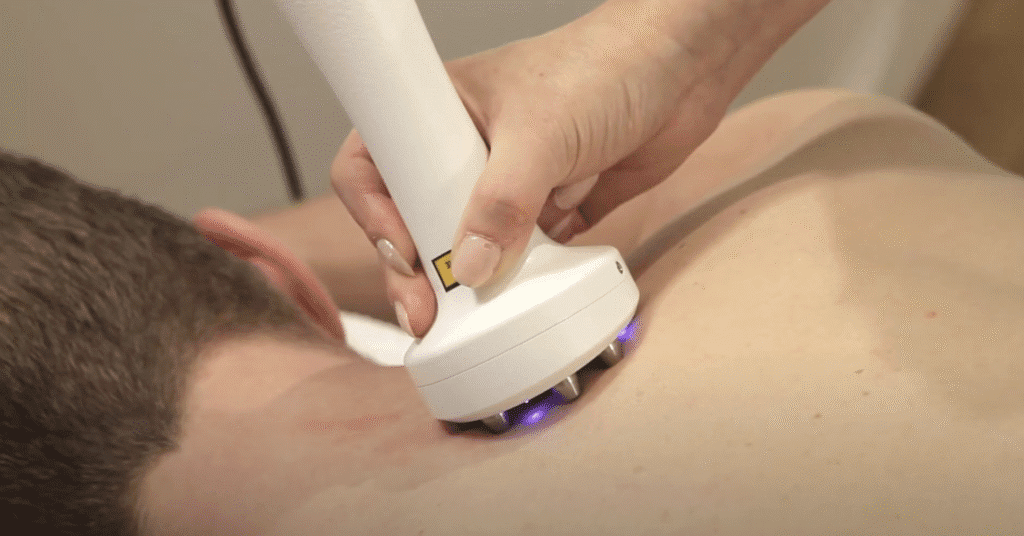
LLLT uses red and near-infrared light to restore balance to the inflammatory process and stimulate soft tissue and nerve repair by:
- Improving circulation and oxygenation
- Enhancing lymphatic drainage
- Reducing inflammation and oxidative stress
- Increasing cellular energy (ATP)
- Supporting soft tissue and nerve regeneration
All without loading or stressing the thoracic spine or shoulder.
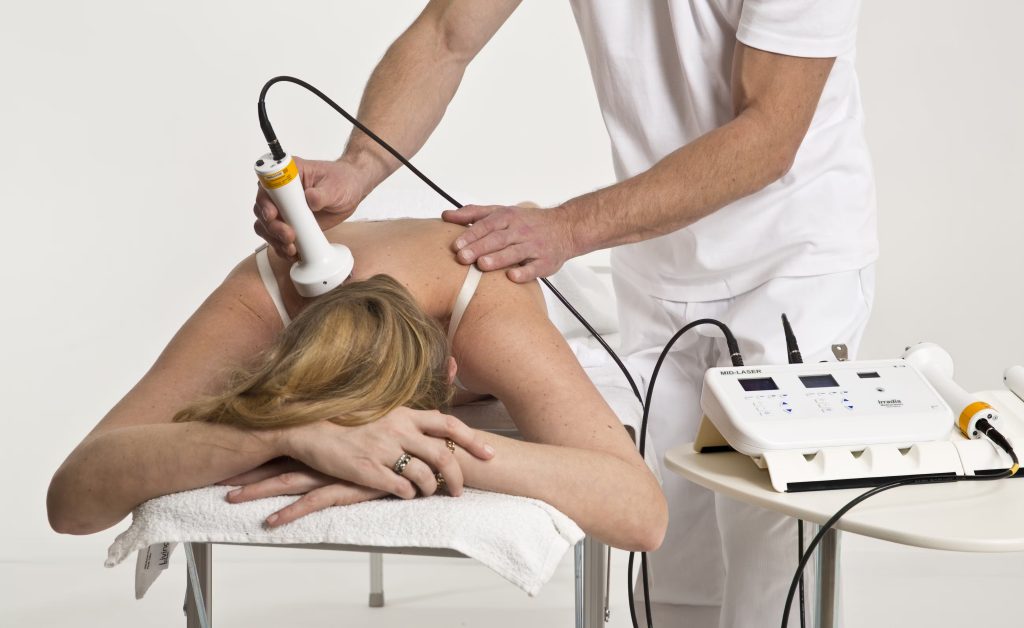
Proven, Safe, and Effective
It is non-invasive, painless, and supported by extensive clinical research. Read more here.
See how LLLT helps restore the cellular environment needed for repair here.
Our Treatment Program
All patients are assessed by Dr Shikha Parmar (GP). Treatment is delivered within a structured six-week program, including:
- Up to 12 LLLT sessions
- Review after 6 sessions
- Individualised advice and activity modification
- Guided rehabilitation for durable recovery
Patients who respond typically show 15–20% improvement within the first 6 sessions, with best-case improvement of 70–90% over the full program.
View the full treatment protocol and expected outcomes here.
Ready for Lasting Relief?
If you are struggling with chronic neck pain or nerve-related symptoms, we invite you to contact our experienced team at Laser Pain Therapy. Our LLLT treatment offers a safe, effective, and lasting solution to restore your comfort, mobility, and quality of life.
Contact us today to arrange your consultation and take the first step towards recovery.
📍 Located in Melbourne
📞 (03) 8529 2225 Contact Us