TFCC Injury Treatment Using LLLT/PBMT
Low Level Laser Therapy (LLLT) also known as Photobiomodulation Therapy (PBMt) is the application of red and near infrared light over injuries to stimulate cellular repair. LLLT is highly effective, completely safe treatment in Melbourne, Victoria. It is painless, and has no effect on normal tissues. LLLT treats the underlying cause of the injury unlike pain medication which just masks the pain. It is a treatment modality supported by research from reputable institutions including Harvard University and NASA. LLLT is an evidence-based therapy for soft tissue injuries, such as TFCC injury.
Gentle. Drug-Free. Clinically Proven
Key Points
- TFCC injuries affect the small finger (ulnar) side of the wrist and are often caused by trauma, repetitive strain, or age-related degeneration.
- Common symptoms include ulnar-sided wrist pain, clicking or catching, reduced grip strength, and pain with twisting or weight-bearing.
- If left untreated, TFCC injuries can significantly impact daily hand function and quality of life.
- Low Level Laser Therapy (LLLT), or Photobiomodulation Therapy (PBMT), offers a safe, non-invasive treatment that promotes healing at the cellular level — reducing inflammation and stimulating tissue repair.
- LLLT is particularly suited to TFCC injuries where mechanical stress must be avoided, making it superior to traditional therapies in selected cases.
- Unlike temporary symptom relief from ice, medications, or injections, LLLT supports long-term healing and helps restore joint stability and function.
- Treatment is GP-led by Dr Shikha Parmar and delivered in a medically supervised setting over a structured 6-week program.
- Backed by over 700 RCTs and 7,000+ publications, LLLT is painless, drug-free, and clinically proven to reduce pain and accelerate recovery.
- Suitable for those with chronic or unresolved TFCC pain who have not improved with standard therapies.
What is TFCC?
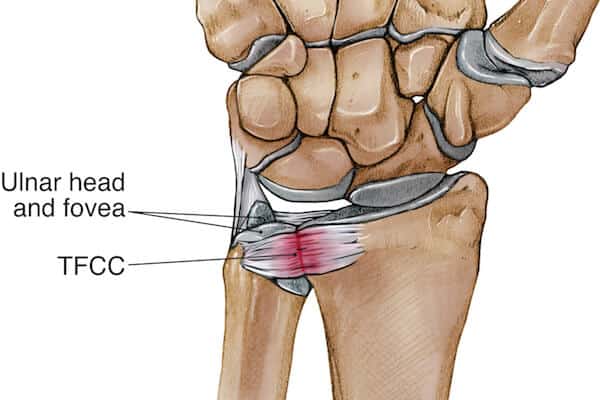
The Triangular Fibrocartilage Complex (TFCC) is a group of ligaments, cartilage, and connective tissue located on the small finger side of the wrist, stabilising the wrist and supporting load transmission between the forearm and hand. The TFCC acts as a shock absorber and stabiliser during gripping, twisting, and weight-bearing activities.
TFCC injuries can result from trauma, repetitive stress, or degenerative changes and are a common cause of ulnar or little finger sided wrist pain. The injury may involve tearing or degeneration of the cartilage or supporting ligaments and can affect daily hand function significantly if left untreated.
Causes of TFCC Injury
TFCC injuries are commonly caused by:
- Fall onto an outstretched hand (FOOSH injury)
- Forceful twisting motions, such as using tools or opening jars
- Repetitive wrist movements in sports such as tennis, gymnastics, martial arts or golf
- Weight-bearing through the wrist, such as during push-ups or lifting
- Degenerative changes, often related to ageing or repetitive strain
- Ulnar variance, where the ulna is longer than the radius, predisposing the TFCC to impingement and injury
These injuries may be acute (from a single incident) or chronic (from repetitive strain) and often occur in combination with other wrist pathologies.
Symptoms of TFCC
Typical symptoms of TFCC injury include:
- Pain on the ulnar (little finger) side of the wrist
- Clicking, catching, or grinding sensations during wrist movement
- Weakness or discomfort when gripping or rotating the forearm (e.g., turning a doorknob or screwdriver)
- Swelling or tenderness over the TFCC region
- Instability or a feeling of “giving way” in the wrist
- Pain that worsens with weight-bearing or twisting activities
Symptoms may vary in severity depending on the extent and chronicity of the injury.
How Is TFCC Injury Diagnosed?
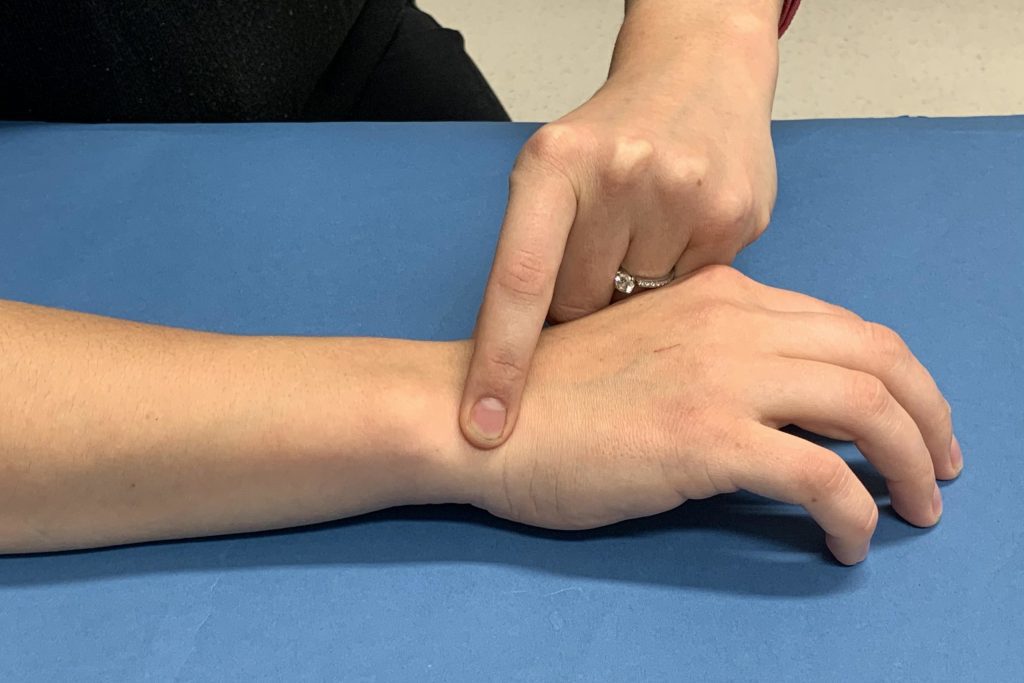
Diagnosis begins with a thorough clinical assessment, including a history of symptoms and aggravating activities, followed by a physical examination. Specific stress tests may be used to provoke symptoms and assess joint stability.
Ultrasound can be useful in diagnosing TFCC but more advanced imaging such as MRI is often required to visualise the TFCC structure in detail and confirm the presence, type, and extent of injury. X-rays may be used to assess joint alignment and ulnar variance.
TFCC Injury – Treatment Overview
Low Level Laser Therapy (LLLT), also known as Photobiomodulation Therapy (PBMT), is a gentle, evidence-based treatment that targets the underlying cause of TFCC injury: persistent inflammation, ligament micro-tears, and impaired tissue healing within the wrist. It promotes repair without mechanical stress to the injured joint structures.
Why Choose Low Level Laser Therapy (LLLT)?
Many patients present after limited relief from splinting, physiotherapy, exercises, manual therapy, or anti-inflammatory medication. These approaches may temporarily reduce symptoms but often fail to address deeper ligament or cartilage injury and may aggravate inflammation or joint instability if introduced too early.
Why ice, anti-inflammatories, cortisone, and PRP may not support long-term recovery. Read more here.
How LLLT Supports Healing
LLLT uses red and near-infrared light to restore balance to the inflammatory process and stimulate ligament and cartilage repair by:
- Improving circulation and oxygenation
- Enhancing lymphatic drainage
- Reducing inflammation and oxidative stress
- Increasing cellular energy (ATP)
- Supporting tissue regeneration and immune balance
All without loading or stressing the injured wrist.
Proven, Safe, and Effective
It is non-invasive, painless, and supported by extensive clinical research. Read more here.
See how LLLT helps restore the cellular environment needed for repair here.
Our Treatment Program
All patients are assessed by Dr Shikha Parmar (GP). Treatment is delivered within a structured six-week program, including:
- Up to 12 LLLT sessions
- Review after 6 sessions
- Individualised advice and activity modification
- Guided rehabilitation for durable recovery
Patients who respond typically show 15–20% improvement within the first 6 sessions, with best-case improvement of 70–90% over the full program.
View the full treatment protocol and expected outcomes here.
Ready for Lasting Relief?
If you are struggling with persistent ulnar-side wrist pain or have been diagnosed with a TFCC injury, we invite you to contact our experienced team at Laser Pain Therapy. Our LLLT treatment offers a safe, effective, and lasting solution to restore your comfort, mobility, and quality of life.
Contact us today to arrange your consultation and take the first step towards recovery.
📍 Located in Melbourne
📞 (03) 8529 2225 Contact Us