Treatment of Temporomandibular Pain/Syndrome Using LLLT/PBMT
Low-Level Laser Therapy (LLLT), also known as Photobiomodulation Therapy (PBMT), involves the application of red and near-infrared light to injuries to stimulate cellular repair. Led by Dr. Shikha Parmar, a GP with expertise in the management of chronic musculoskeletal pain, Laser Pain Therapy incorporates LLLT as part of a holistic treatment plan. LLLT is a highly effective, painless, and completely safe treatment in Melbourne, Victoria. It addresses the underlying cause of Temporomandibular Pain (TMJ) by targeting inflammation and promoting tissue regeneration. Supported by scientific research from respected institutions such as Harvard University and NASA, LLLT is an evidence-based therapy for soft tissue injuries, including TMJ syndrome.
Gentle. Drug-Free. Clinically Proven
Key Points
- Temporomandibular Pain or Syndrome (TMJ) is a disorder affecting the jaw joint, causing pain, discomfort, and restricted movement.
- Common causes include stress, jaw clenching, teeth grinding, misalignment, and trauma to the jaw.
- Symptoms often include jaw pain, clicking or popping sounds, headaches, neck pain, and difficulty chewing.
- Night splints are commonly used to protect the jaw from further strain during sleep, particularly in those who clench or grind their teeth.
- Low Level Laser Therapy (LLLT), or Photobiomodulation Therapy (PBMT), is an effective, non-invasive treatment for TMJ by targeting inflammation, reducing muscle spasms, and promoting long-term tissue healing and recovery
- LLLT goes beyond Botox™ in addressing the root cause of TMJ, offering long-term benefits rather than just symptom relief.
- LLLT helps alleviate pain, settle inflammation, and resolve microtrauma in the ligaments and muscles, improving jaw function and relieving associated headaches or neck pain.
- LLLT is a primary treatment to address the inflammation and muscle spasm associated with TMJ, unlike conventional treatments which may mask symptoms without addressing the underlying cause.
- Treatment is customised and delivered under direct medical supervision, typically as part of a six-week structured program to support recovery and long-term relief.
What is Temporomandibular Pain/Syndrome (TMJ)?
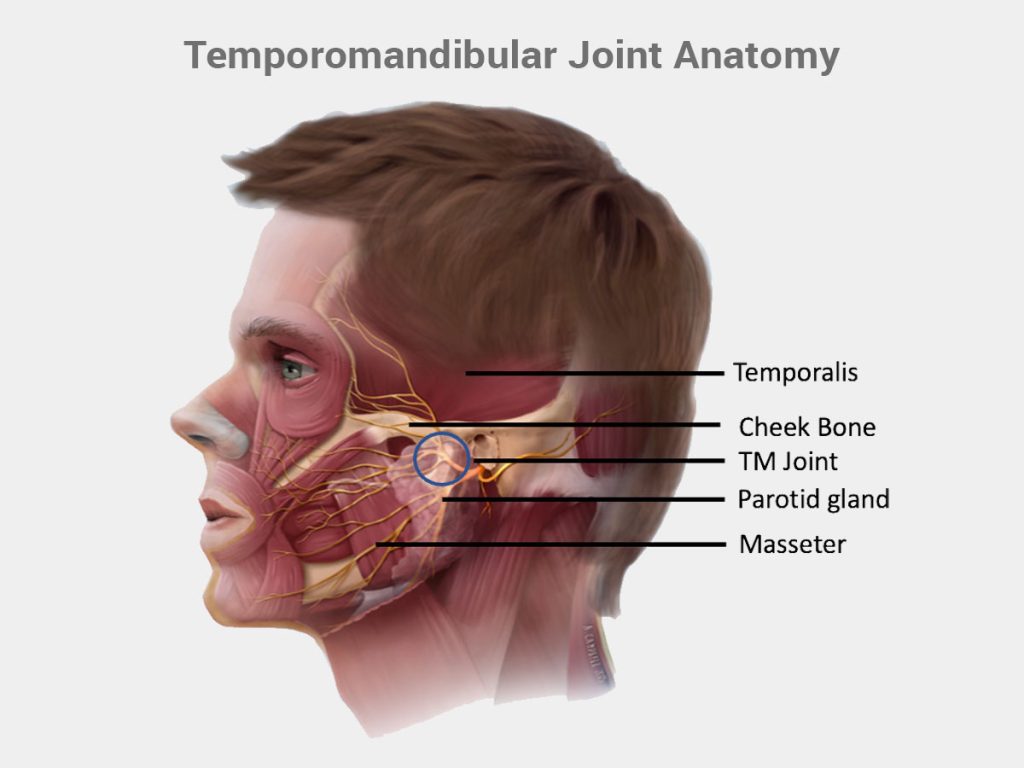
Temporomandibular pain or syndrome (TMJ) is a condition that affects the temporomandibular joint, which connects the jaw to the skull. This joint is responsible for the movement of the jaw, enabling functions such as chewing, speaking, and yawning. TMJ occurs when this joint or the muscles controlling it become irritated, inflamed, or strained.
It can cause pain in the jaw, face, neck, and shoulders, as well as headaches and difficulty moving the jaw.
TMJ syndrome is often associated with jaw clenching or teeth grinding, especially during sleep. These habits can place excessive strain on the joint and surrounding tissues, leading to discomfort and dysfunction. TMJ can also result from misalignment of the jaw, trauma to the jaw, or stress-induced muscle tension.
Causes and Risk Factors of TMJ
Several factors contribute to the development of TMJ, often involving multiple causes acting together:
- Stress: Emotional stress can lead to jaw clenching or teeth grinding, which places undue pressure on the TMJ and surrounding muscles.
- Jaw Misalignment: A misaligned bite or an uneven jaw can cause stress on the TMJ and lead to pain.
- Trauma or Injury: Any direct trauma to the jaw, such as from an accident, can damage the TMJ and surrounding structures, leading to long-term pain.
- Arthritis: Degenerative conditions, such as osteoarthritis or rheumatoid arthritis, can affect the TMJ, causing pain, inflammation, and stiffness.
- Teeth Grinding and Jaw Clenching: These habits, often related to stress or anxiety, place excessive force on the joint, leading to pain and inflammation.
- Poor Posture: Misalignment in the upper body, particularly in the neck and shoulders, can exacerbate TMJ symptoms by affecting the muscles surrounding the jaw.
Common Symptoms of TMJ
The symptoms of TMJ can vary but commonly include:
- Pain: Pain in the jaw joint, face, neck, or shoulders, especially when chewing or speaking.
- Clicking or Popping Sounds: Audible sounds when opening or closing the mouth, which can be accompanied by discomfort.
- Limited Jaw Movement: Difficulty opening or closing the mouth fully, leading to problems with chewing, speaking, or yawning.
- Headaches: Tension in the jaw muscles often leads to headaches, which may radiate to the temples or the back of the head.
- Neck Pain: Muscle spasms in the jaw often extend to the neck and shoulders, causing stiffness and discomfort.
- Tingling or Numbness: Nerve compression or irritation may cause tingling sensations or numbness in the face, jaw, or neck.
How is TMJ Diagnosed?
Diagnosis of TMJ typically involves:
- Medical History: Dr. Shikha Parmar will take a thorough medical history, assessing symptoms, lifestyle, and any history of jaw clenching or teeth grinding.
- Physical Examination: A detailed examination of the jaw joint, including palpation and range of motion tests, to assess tenderness, strength, and mobility.
Imaging: In some cases, X-rays, MRI, or CT scans may be used to visualise the TMJ and surrounding structures, allowing for the detection of structural issues, arthritis, or joint degeneration.
Temporomandibular Joint (TMJ) Pain – Treatment Overview
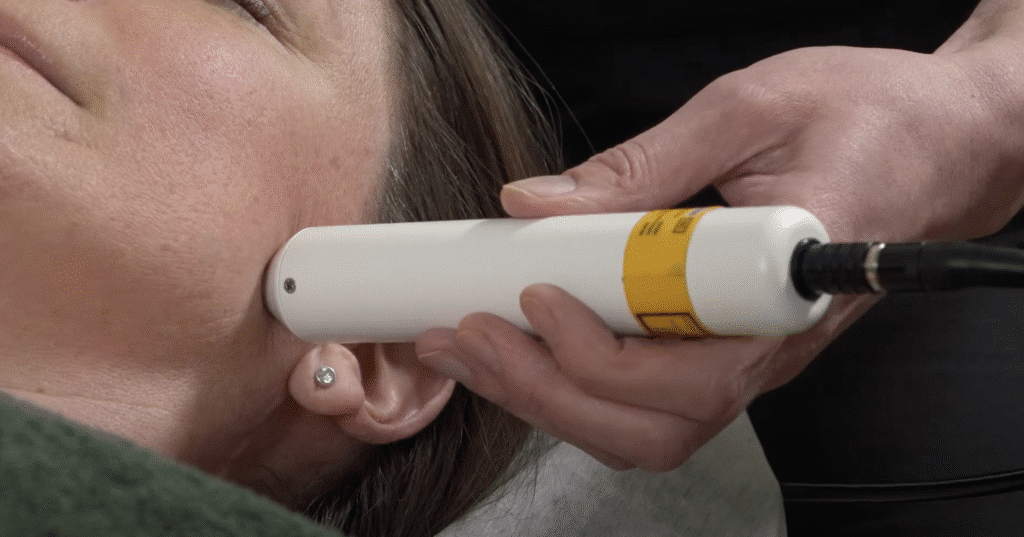
Low Level Laser Therapy (LLLT), also known as Photobiomodulation Therapy (PBMT), is a gentle, evidence-based treatment that targets the underlying cause of TMJ pain: inflammation, joint dysfunction, and microtrauma within the temporomandibular joint. It promotes healing without mechanical stress to sensitive jaw tissues.
Why Choose Low Level Laser Therapy (LLLT)?
Many patients present after limited relief from splints, physiotherapy, massage, exercises, or anti-inflammatory medication. These approaches may ease symptoms temporarily but often fail to address deeper joint inflammation and tissue injury and may aggravate symptoms if introduced too early.
Why ice, anti-inflammatories, cortisone, and PRP may not support long-term recovery. Read more here.
Treating the Symptoms vs Healing the Cause
- Botox™: Provides temporary relief of TMJ pain by reducing jaw muscle activity, but does not address underlying causes such as chronic microtrauma, inflammation, and tissue dysfunction.
- Low Level Laser Therapy (LLLT): Facilitates long-term healing at the cellular level through tissue regeneration, inflammation reduction, and restoration of muscle, ligament, and joint function.
When muscle dysfunction and joint inflammation are primary contributors to TMJ pain and associated headaches, LLLT represents a viable front-line treatment for sustained clinical improvement.

How LLLT Supports Healing
LLLT uses red and near-infrared light to restore balance to the inflammatory process and stimulate joint and soft tissue repair by:
- Improving circulation and oxygenation
- Enhancing lymphatic drainage
- Reducing inflammation and oxidative stress
- Increasing cellular energy (ATP)
- Normalising muscle activity
All without loading or stressing the temporomandibular joint.
Proven, Safe, and Effective
It is non-invasive, painless, and supported by extensive clinical research. Read more here.
See how LLLT helps restore the cellular environment needed for repair here.
Our Treatment Program
All patients are assessed by Dr Shikha Parmar (GP). Treatment is delivered within a structured six-week program, including:
- Up to 12 LLLT sessions
- Review after 6 sessions
- Individualised advice and activity modification
- Guided rehabilitation for durable recovery
Patients who respond typically show 15–20% improvement within the first 6 sessions, with best-case improvement of 70–90% over the full program.
View the full treatment protocol and expected outcomes here.
Ready for Lasting Relief?
If you are struggling with persistent TMJ pain, we invite you to contact our experienced team at Laser Pain Therapy. Our LLLT treatment offers a safe, effective, and lasting solution to restore your comfort, mobility, and quality of life.Contact us today to arrange your consultation and take the first step towards recovery.
Contact us today to arrange your consultation and take the first step towards recovery.
📍 Located in Melbourne
📞 (03) 8529 2225 Contact Us