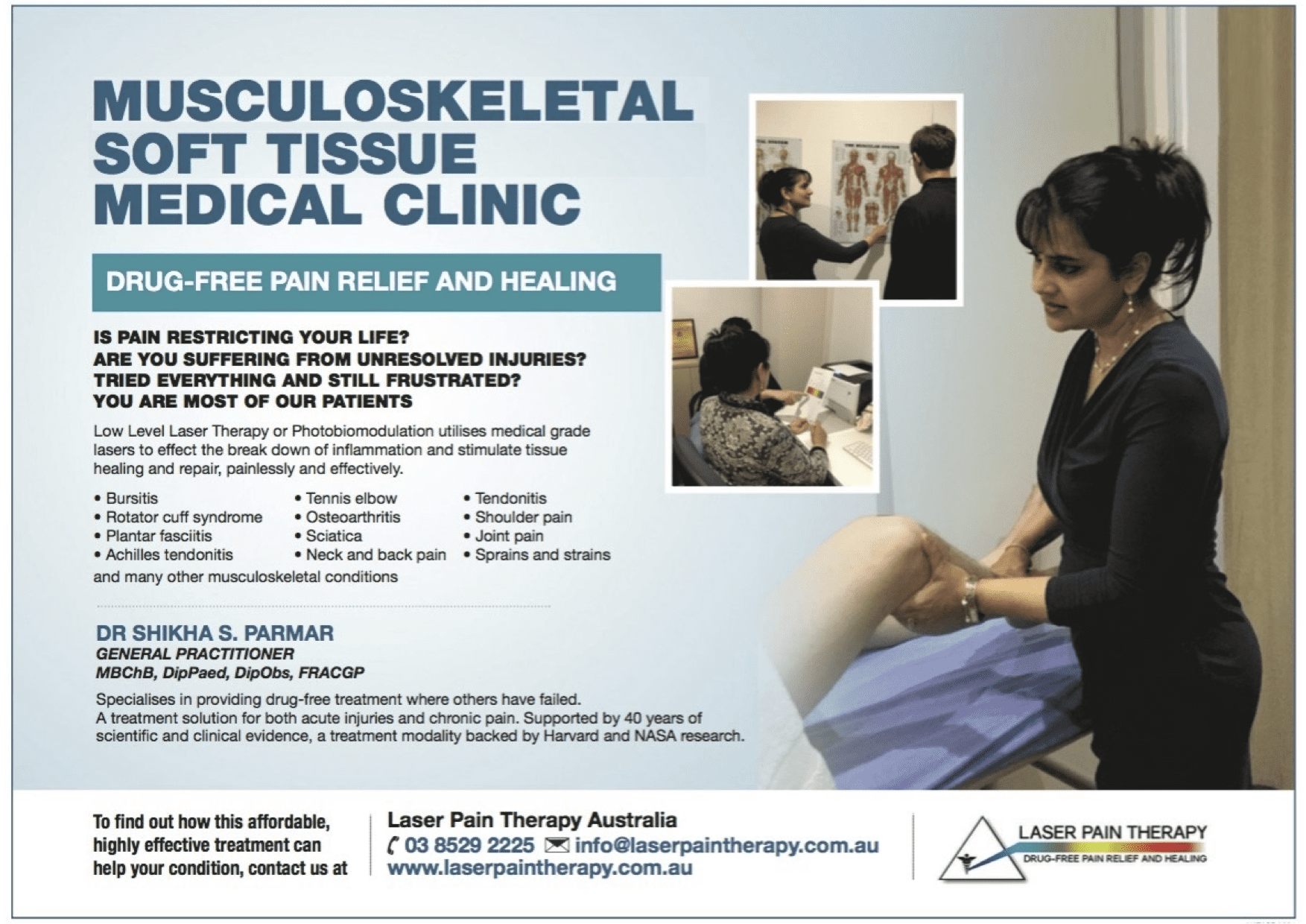
Treatment of Shoulder Bursitis Using LLLT/PBMT
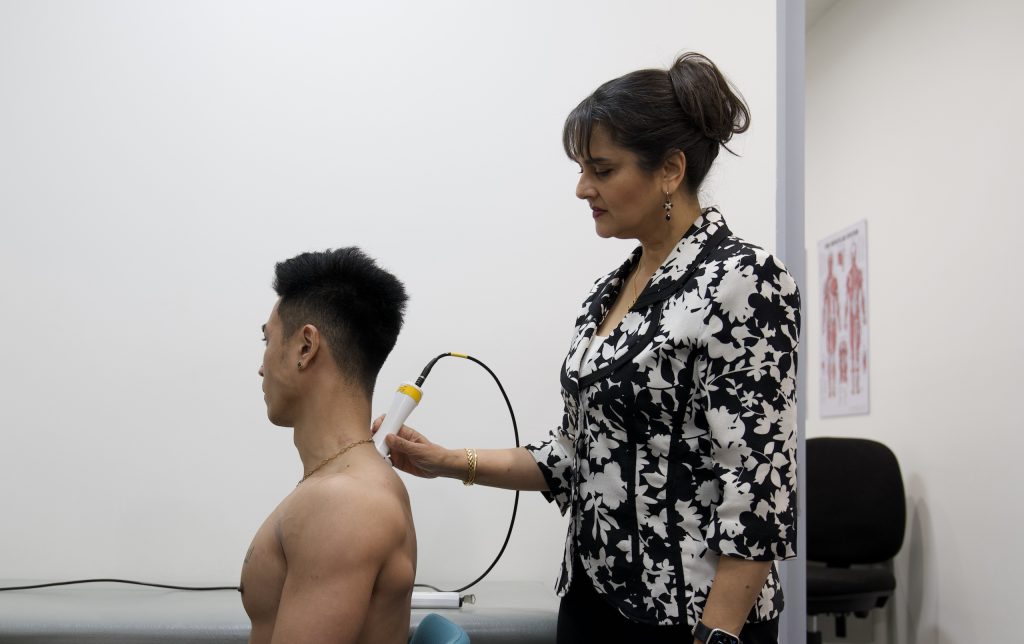
Low Level Laser Therapy (LLLT) also known as Photobiomodulation Therapy (PBMt) is the application of red and near infrared light over injuries to stimulate cellular repair. LLLT is highly effective, completely safe treatment in Melbourne, Victoria. It is painless, and has no effect on normal tissues. LLLT treats the underlying cause of the injury unlike pain medication which just masks the pain. It is a treatment modality supported by research from reputable institutions including Harvard University and NASA. LLLT is a evidence-based therapy for soft tissue injuries related to shoulder bursitis.
Gentle. Drug-Free. Clinically Proven
Key Points
- Shoulder bursitis (also called subacromial or subdeltoid bursitis) is inflammation of the shoulder’s fluid-filled bursa, often secondary to tendon injury or overuse.
- It typically occurs alongside rotator cuff tendinopathy and is aggravated by repetitive motion, poor posture, trauma, or ageing-related degeneration.
- Common symptoms include shoulder pain with movement, discomfort when lying on the affected side, morning stiffness, tenderness, and reduced range of motion.
- Diagnosis is made through clinical assessment and may be supported by ultrasound, X-ray, or MRI to evaluate inflammation and associated tendon pathology.
- Low Level Laser Therapy (LLLT), or Photobiomodulation Therapy (PBMT), offers a safe, drug-free, and non-invasive treatment that targets inflammation and supports tissue regeneration.
- Unlike temporary symptom relief from medications or cortisone, LLLT works at the cellular level to improve blood flow, reduce oxidative stress, and accelerate natural healing.
- LLLT is ideal in the early recovery stage, where loading the shoulder may aggravate symptoms—making it particularly effective for bursitis and tendon-related conditions.
- Treatment is delivered under medical supervision by Dr Shikha Parmar as part of a structured, six-week program tailored to each patient’s condition.
- Backed by over 700 RCTs and 7,000+ studies, LLLT is scientifically validated and clinically proven to reduce pain, promote healing, and restore shoulder function.
- Especially suited for those with persistent or recurring bursitis who have not responded to conventional approaches.
What is Shoulder Bursitis?
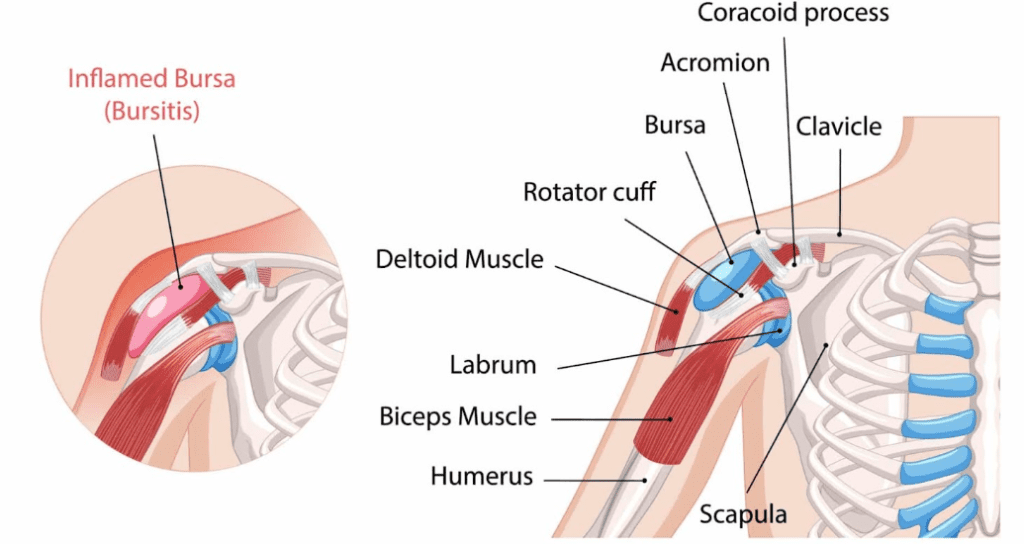
Shoulder bursitis – also referred to as subacromial bursitis or subdeltoid bursitis – involves inflammation of the shoulder bursa, often accompanied by injury to nearby rotator cuff tendons. In most cases, bursitis is a secondary response to strain or injury of the soft tissues of the shoulder, particularly the tendons and muscles.
A bursa is a thin, fluid-filled sac that reduces friction between tissues such as bone, muscle, tendon, and skin. The shoulder bursa is one of these sacs, helping to cushion movement between the rotator cuff tendons and the overlying bone. When the tendons or muscles become overworked, strained, or injured, the bursa may become inflamed – resulting in bursitis.
Symptoms
Shoulder bursitis causes pain in the joint due to inflammation of the bursa. Pain may develop gradually or appear suddenly and severely. The shoulder may feel stiff or weak, especially during movement.
Symptoms commonly include:
- Pain during or after physical activity
- Discomfort when lying on the affected side
- Morning stiffness or reduced range of motion
- Difficulty reaching overhead or behind the back
- Tenderness around the shoulder
How is Shoulder Bursitis Diagnosed?
Diagnosis of shoulder bursitis begins with a thorough clinical history and examination. Dr Shikha Parmar, our GP, will ask about the location, onset, and pattern of your pain, as well as any recent injuries, repetitive use, or occupational activities.
During the physical examination, Dr Parmar will assess:
- Range of motion and shoulder flexibility
- Muscle strength and joint stability
- Presence of swelling, tenderness, or warmth over the bursa
- Signs of associated tendon involvement
In many cases, bursitis can be diagnosed clinically. However, if the diagnosis is uncertain or symptoms are persistent, imaging may be recommended:
- Ultrasound: Excellent for visualising inflamed bursae, fluid accumulation, and tendon pathology in real-time.
- X-ray: Helps rule out bony abnormalities or calcific bursitis.
- MRI: Offers detailed visualisation of soft tissues and may be used if more complex injury is suspected.
Shoulder Bursitis – Treatment Overview
Low Level Laser Therapy (LLLT), also known as Photobiomodulation Therapy (PBMT), is a gentle, evidence-based treatment that targets the underlying cause of shoulder bursitis: persistent inflammation and soft tissue dysfunction within the bursa and surrounding tendons. It promotes healing without mechanical stress to already irritated shoulder structures.
Why Choose Low Level Laser Therapy (LLLT)?
Many patients present after limited relief from rest, physiotherapy, massage, exercises, injections, or anti-inflammatory medication. These approaches may ease symptoms temporarily but often fail to address deeper bursal inflammation and may aggravate symptoms if loading or stretching is introduced too early.
Why ice, anti-inflammatories, cortisone, and PRP may not support long-term recovery. Read more here.
How LLLT Supports Healing
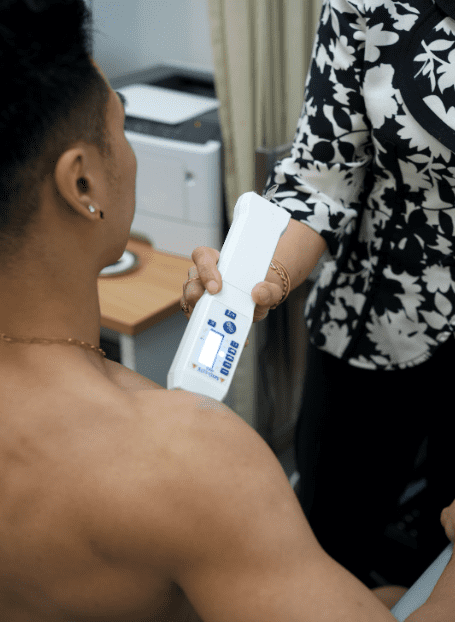
LLLT uses red and near-infrared light to restore balance to the inflammatory process and stimulate bursal and soft tissue repair by:
- Improving circulation and oxygenation
- Enhancing lymphatic drainage
- Reducing inflammation and oxidative stress
- Increasing cellular energy (ATP)
- Supporting tendon and bursal tissue regeneration
All without loading or stressing the shoulder joint.
Proven, Safe, and Effective
It is non-invasive, painless, and supported by extensive clinical research. Read more here.
See how LLLT helps restore the cellular environment needed for repair here.
Our Treatment Program
All patients are assessed by Dr Shikha Parmar (GP). Treatment is delivered within a structured six-week program, including:
- Up to 12 LLLT sessions
- Review after 6 sessions
- Individualised advice and activity modification
- Guided rehabilitation for durable recovery
Patients who respond typically show 15–20% improvement within the first 6 sessions, with best-case improvement of 70–90% over the full program.
View the full treatment protocol and expected outcomes here.
Ready for Lasting Relief?
If you are struggling with persistent shoulder pain, stiffness, or reduced range of motion from bursitis, we invite you to contact our experienced team at Laser Pain Therapy. Our LLLT treatment offers a safe, effective, and lasting solution to restore your comfort, mobility, and quality of life.
Contact us today to arrange your consultation and take the first step towards recovery.
📍 Located in Melbourne
📞 (03) 8529 2225 Contact Us