Osteoarthritis Treatment with LLLT/PBMT
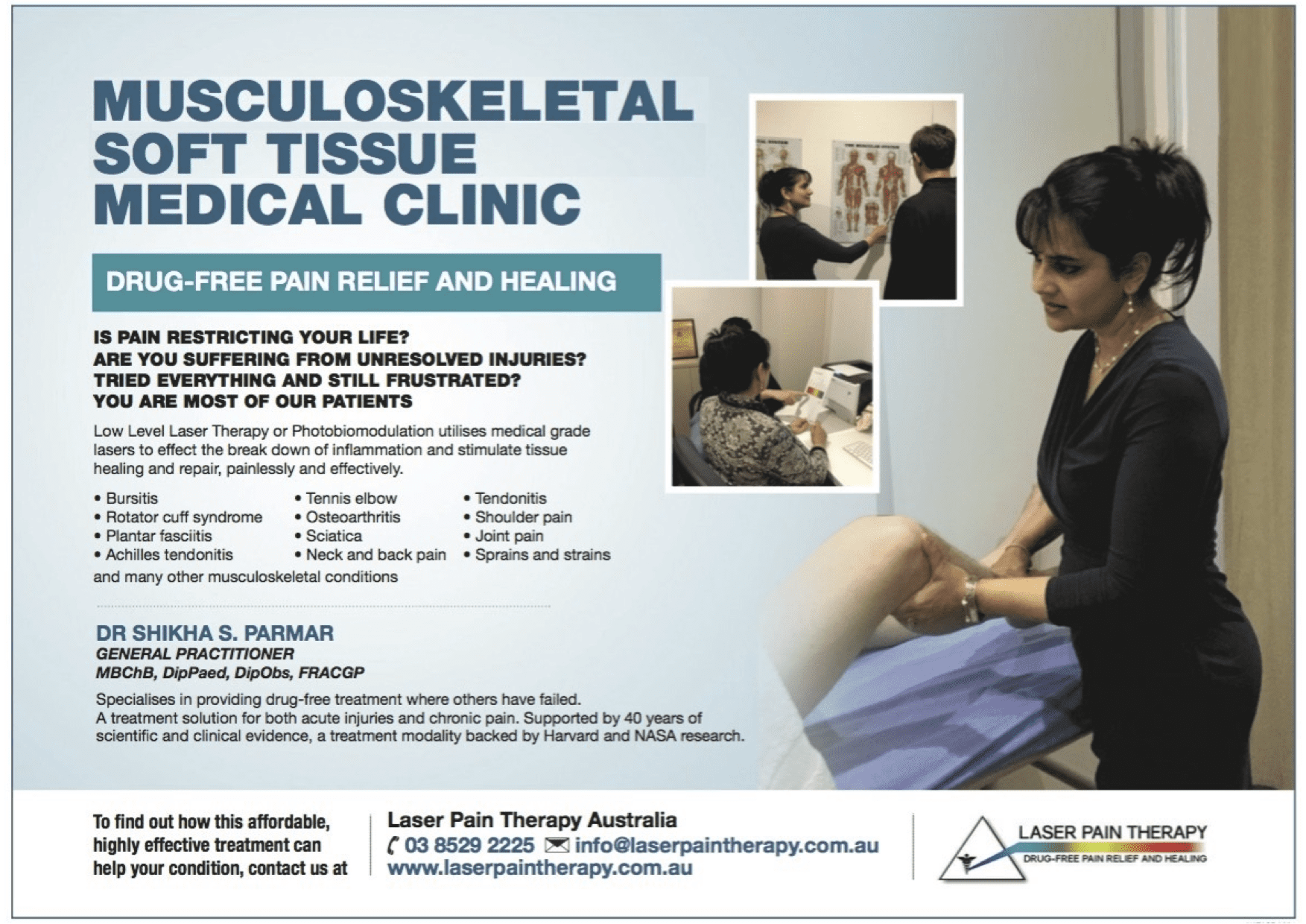
Low Level Laser Therapy (LLLT), also known as Photobiomodulation Therapy (PBMT), uses red and near-infrared light applied over targeted areas. In our clinic it is used as part of a GP-led treatment approach for selected osteoarthritis presentations where local pain, stiffness, synovitis or surrounding soft tissue inflammation are contributing to symptoms.
PBMT/LLLT is non-invasive and generally well tolerated. Suitability and response vary, and treatment recommendations depend on the diagnosis, severity, duration of symptoms and individual clinical factors. PBMT/LLLT has been studied for a range of musculoskeletal pain and injury conditions. See our references page for supporting literature.
Gentle. Drug-Free. Evidence-Informed
Key Points:
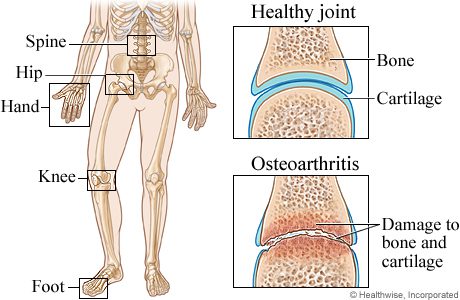
- Osteoarthritis (OA) is a degenerative joint disease caused by the breakdown of cartilage, leading to pain, swelling, and stiffness in the affected joints.
- LLLT/PBMT is considered for selected OA presentations where local inflammation, pain and surrounding soft tissue irritation are contributing to symptoms.
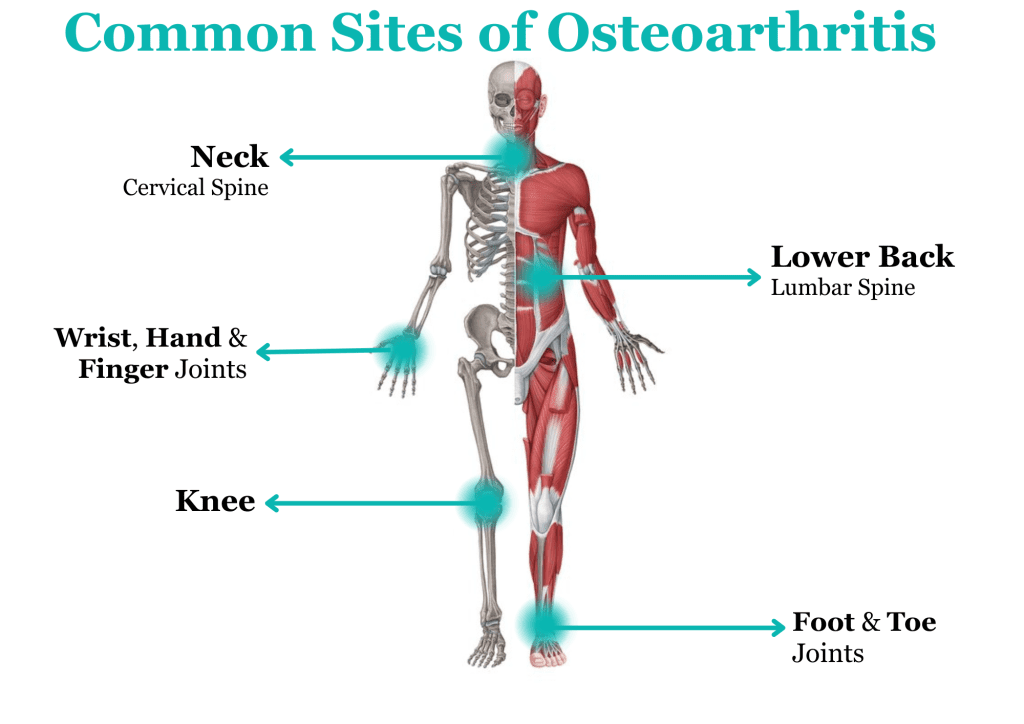
- Common sites of OA include weight-bearing joints such as the knees, hips, lumbar spine and hands, as well as the neck and foot joints.
- LLLT/PBMT may help modulate inflammation, support local circulation and assist soft tissue recovery processes around affected joints.
- Standard treatments, such as anti-inflammatory medications, cortisone injections and exercise programs, may provide symptom relief for some people, but are not suitable or effective for everyone. Exercise programs can also be limited by pain.
- LLLT/PBMT does not reverse cartilage loss or correct advanced structural joint change, and it does not replace surgery where surgery is clearly indicated.
- LLLT/PBMT can be part of a medically supervised osteoarthritis treatment plan that includes rehabilitation support tailored to each patient’s specific needs.
What is Osteoarthritis?
Osteoarthritis (OA) is a degenerative joint disease that occurs when the protective cartilage that cushions the ends of the bones breaks down over time. As the cartilage wears away, bones may rub against each other, causing pain, stiffness, swelling and decreased range of motion. OA can affect any joint in the body but is most commonly found in weight-bearing joints such as the knees, hips and spine, as well as in the hands and fingers.
The condition typically develops gradually with age, but it can also result from joint injuries or repetitive stress on the joints. While OA cannot fully reverse cartilage loss, managing the inflammation and pain associated with it is key to improving mobility and maintaining quality of life.
Common Joints Involved
Osteoarthritis (OA) can affect a variety of joints in the body, often in a progressive manner. The most commonly affected areas include:
- Neck (Cervical Spine): OA in the neck can cause stiffness, pain and reduced range of motion, particularly when turning the head. This condition is often associated with age-related wear and tear, leading to cartilage degeneration and the formation of bone spurs. Read more here.
- Lumbar Spine: OA in the lower back can lead to chronic pain, stiffness and sometimes nerve irritation. It typically results from the gradual breakdown of cartilage in the facet joints of the spine, causing pressure on surrounding structures. Read more here.
- Hand and Finger Joints: OA commonly affects the joints in the hands and fingers, particularly at the base of the thumb and the middle and end joints of the fingers. This can result in pain, swelling and deformities such as Heberden’s nodes or Bouchard’s nodes, limiting hand dexterity and grip strength. Read more here.
- Knee: One of the most common sites of OA, especially in weight-bearing individuals. Pain, stiffness and swelling occur due to cartilage degeneration, often resulting in reduced mobility and difficulty with movement. Read more here.
- Hip: OA in the hip joint often causes pain in the groin area and stiffness, making it difficult to perform everyday activities such as walking or climbing stairs. Read more below.
- Foot and Toe Joints: The big toe joint (metatarsophalangeal) and the midfoot joints are commonly affected, causing pain and deformities such as bunions or hammertoes, which can severely affect mobility. Read more here.
These joints are particularly prone to OA due to their involvement in weight-bearing activities or repetitive movements, making them more susceptible to cartilage wear over time.
Causes and Risk Factors
Osteoarthritis is a degenerative joint disease caused by the breakdown of cartilage, leading to pain, swelling and stiffness. It can affect any joint in the body but is most common in the weight-bearing joints. Risk factors for OA include:
- Age: OA increases with age due to natural wear and tear on cartilage.
- Previous injuries: Foot fractures, sprains or tendon injuries can lead to increased risk of OA.
- Excessive strain: High-impact sports or standing for prolonged periods can increase stress on the joints.
- Obesity: Excess weight puts extra stress on the joints, particularly those in the lower body.
- Genetics: A family history of OA can predispose individuals to the condition.
Symptoms
Symptoms of osteoarthritis include:
- Pain: Often aggravated by weight-bearing activities such as walking or standing.
- Swelling: Inflammation around the joint can lead to noticeable swelling.
- Stiffness: Reduced range of motion, particularly in the morning or after inactivity.
- Joint Deformities: Bunions, hammertoes or joint enlargement may occur.
- Grinding sensation: A feeling of grating or “bone-on-bone” contact when moving the joint.
Diagnosis
Diagnosing osteoarthritis involves a comprehensive evaluation, including:
- Medical history: Dr Shikha Parmar will assess symptoms, duration, lifestyle factors and any previous joint injuries.
- Physical examination: Assessing joint tenderness, swelling and range of motion.
- Imaging: X-rays are commonly used to confirm cartilage loss, joint space narrowing and the presence of bone spurs, while MRI or ultrasound may be used for evaluating soft tissue damage or to assess the full extent of degeneration.
Osteoarthritis – Treatment Overview
Low Level Laser Therapy (LLLT), also known as Photobiomodulation Therapy (PBMT), is considered as part of a structured program for selected osteoarthritis presentations where persistent soft tissue inflammation surrounds worn or degenerative joints. While cartilage loss itself cannot currently be reversed, pain in osteoarthritis may also arise from inflamed tendons, ligaments, bursae and joint capsules. LLLT/PBMT may help modulate these local inflammatory processes without mechanical stress to vulnerable joints.
Why Consider Low Level Laser Therapy (LLLT)?
Many patients present after limited relief from anti-inflammatory medications, injections, exercise programs, stretching or massage. These standard treatments may temporarily ease symptoms but are not suitable or effective for everyone, and may aggravate sensitive tissues if introduced too early. LLLT/PBMT can be considered where local inflammation persists and where excessive mechanical loading must be avoided during recovery.
Why ice, anti-inflammatories, cortisone, and PRP may not support long-term recovery. Read more here.
How LLLT Supports Healing
LLLT uses red and near-infrared light and may support:
- Helping modulate inflammation and oxidative stress
- Local circulation and oxygenation
- Lymphatic drainage
- Cellular energy production (ATP)
- Soft tissue recovery processes around affected joints where irritation is present
- Assisting pain reduction without loading or stressing the affected joint
Important Note on Hip Joint Conditions
LLLT/PBMT is most relevant where pain is driven by associated soft tissue problems such as gluteal tendinopathy, trochanteric bursitis or surrounding inflammatory irritation. Its effects are limited for conditions primarily caused by structural cartilage damage. The therapy is best suited for managing pain and inflammation in soft tissues surrounding the joint, and may complement rehabilitation even when cartilage issues are present.
Conditions that are less responsive to LLLT/PBMT are usually evident on imaging and include:
- Hip dysplasia in younger individuals
- Femoro-acetabular impingement (FAI/Cam deformities)
- Moderate to severe osteoarthritis (OA)
On the other hand, if imaging shows only mild osteoarthritis, the source of pain may still be soft tissue-related and potentially suitable for consideration. LLLT/PBMT does not restore cartilage or repair labral tears, but may help modulate inflammation and swelling that contribute to pain in osteoarthritic hips, allowing rehabilitation to be introduced more comfortably.
In some moderate or severe hip osteoarthritis presentations, symptom relief may still be possible when surrounding soft tissues are contributing to pain. Improving the health of surrounding soft tissues may assist function while a person is awaiting surgery or when surgery is not advisable for other medical reasons. Suitability depends on clinical assessment and imaging findings.
Hip joint labral tears are often identified on imaging and may be incidental findings. Surgery is generally reserved for patients with clear mechanical symptoms and appropriate imaging findings. In many adults, symptoms may arise from associated soft tissue inflammation rather than the tear itself, and this may be considered as part of assessment and management planning.
Non-Invasive and Supported by Research
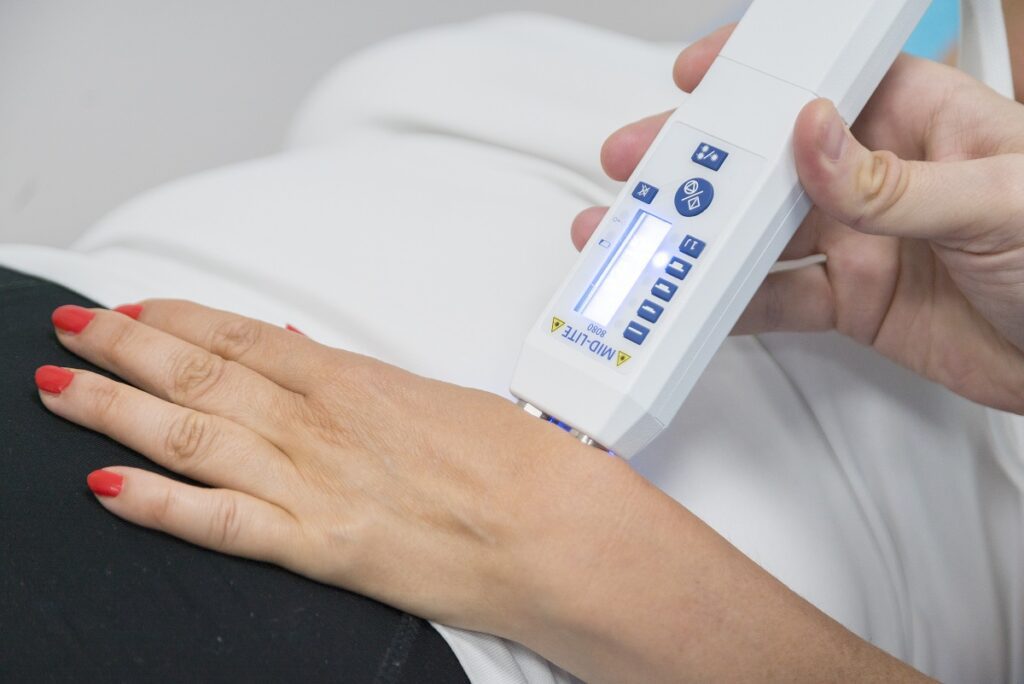
PBMT/LLLT is non-invasive and generally well tolerated. It has been studied in a range of musculoskeletal pain and injury conditions. Individual responses vary, and outcomes depend on the condition being treated and the stage of recovery. Read more here.
See how LLLT may support the cellular environment involved in tissue recovery here.
Our Treatment Program
All patients are assessed by Dr Shikha Parmar (GP). Treatment is delivered within a structured six-week program, including:
- Up to 12 LLLT sessions
- Early progress review after the first 6 treatments
- Individualised advice and activity modification
- Guided rehabilitation to support longer-term function
Progress is reviewed during the program. Many patients notice appreciable improvement after the first 6 treatments. If there has not been sufficient improvement by this review point, further treatment may not be recommended.
View the full treatment protocol and expected outcomes here.
Ready to Discuss Your Osteoarthritis Treatment Options?
If you are struggling with persistent osteoarthritic pain, we invite you to contact our team at Laser Pain Therapy to discuss the suitability of LLLT for your presentation. Treatment suitability and outcomes vary, and assessment is required before recommendations can be made.
Contact us today to arrange your consultation.
📍 Located in Melbourne
📞 (03) 8529 2225 Contact Us