Treatment of Morton’s Neuroma Using LLLT/PBMT
Low Level Laser Therapy (LLLT), also known as Photobiomodulation Therapy (PBMT), uses red and near-infrared light applied over targeted areas. In our clinic it is used as part of a GP-led treatment approach for selected musculoskeletal pain and injury presentations, including selected Morton’s neuroma and forefoot nerve irritation presentations.
PBMT/LLLT is non-invasive and generally well tolerated. Suitability and response vary, and treatment recommendations depend on the diagnosis, severity, duration of symptoms and individual clinical factors. PBMT/LLLT has been studied for a range of musculoskeletal pain and injury conditions. See our references page for supporting literature.
Gentle. Drug-Free. Evidence-Informed
Key Points:
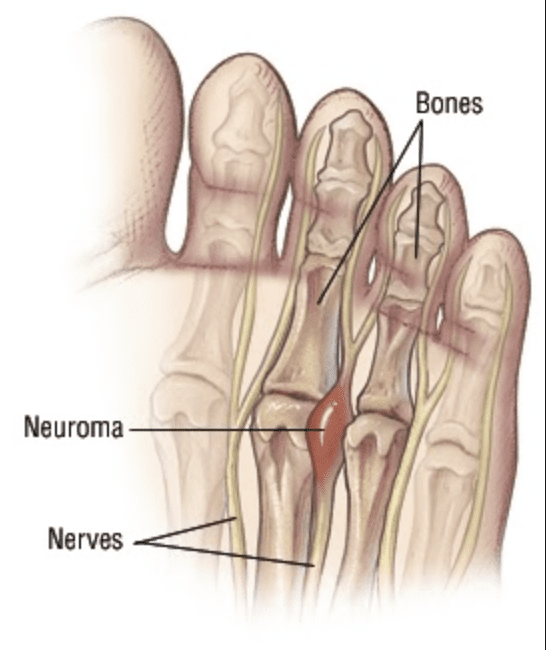
- Morton’s neuroma involves thickening or enlargement of the interdigital nerve, usually between the third and fourth toes, due to compression and irritation.
- Symptoms include sharp or burning pain, numbness, tingling and discomfort that worsens with pressure or tight footwear.
- Common causes include tight footwear, abnormal foot mechanics, repetitive stress and associated soft tissue injuries such as bursitis, plantar plate tears or tendonitis.
- Splinting, cushioning, footwear modification and orthotics may be used to reduce pressure and improve comfort, although orthotics are not helpful for everyone.
- Low Level Laser Therapy (LLLT), or Photobiomodulation Therapy (PBMT), is considered for selected Morton’s neuroma presentations where nerve irritation, pain or surrounding soft tissue inflammation is contributing to symptoms.
- LLLT does not remove ongoing mechanical compression; footwear and pressure factors still need to be addressed.
- LLLT can be considered for people with persistent Morton’s neuroma symptoms who have not improved with usual conservative care, after appropriate medical assessment.
What Is Morton’s Neuroma?
Morton’s neuroma is a condition affecting the interdigital nerve, most commonly between the third and fourth toes. It is not a true tumour, but an enlargement or thickening of the nerve due to compression and irritation.
It may involve swelling and fibrosis of the nerve, irritation of the protective myelin sheath, inflammation of surrounding tissues and development of a neuroma-like structure in response to repeated irritation.
What Causes Morton’s Neuroma?
- Tight, high-heeled shoes or shoes with inadequate toe space
- Abnormal foot mechanics, such as flat feet, high arches or altered gait patterns
- Repetitive stress from activities involving impact or pressure on the forefoot
- Associated soft tissue injury such as bursitis, plantar plate tears or tendonitis
- No obvious cause may be identified
Associated Soft Tissue Injuries
Morton’s neuroma may occur alongside soft tissue injuries, which can worsen symptoms or complicate recovery. These include:
- Bursitis causing pain and swelling around the forefoot
- Plantar plate tears associated with increased pressure on the metatarsal joints
- Tendonitis related to altered biomechanics or compensatory loading
What Are the Symptoms of Morton’s Neuroma?
- Sharp or burning pain in the ball of the foot, often radiating to the toes
- Tingling, numbness or a sensation of a pebble in the shoe
- Worsening pain with tight footwear or narrow toe boxes
- Relief when shoes are removed or when wearing soft, wider footwear
- Pain with activities that place pressure on the forefoot
How Is Morton’s Neuroma Diagnosed?
Diagnosis usually begins with physical examination, including palpation of the foot for swelling, tenderness or altered sensation. A Mulder’s click test may be performed to reproduce symptoms.
Ultrasound or MRI may help confirm nerve thickening or associated fluid and exclude other causes such as stress fracture, soft tissue mass, tendon injury or ligament injury.
Morton’s Neuroma – Treatment Overview
Low Level Laser Therapy (LLLT), also known as Photobiomodulation Therapy (PBMT), is a non-invasive treatment approach used as part of a structured program for selected Morton’s neuroma presentations. It may help modulate pain and local inflammatory processes and support the surrounding tissue environment where nerve irritation is present, without adding mechanical stress to the sensitive interdigital nerve.
Why Consider Low Level Laser Therapy (LLLT)?
Many patients present after limited relief from footwear changes, orthotics, anti-inflammatory medication, cortisone injections, stretching or activity modification. These standard treatments may ease symptoms temporarily, but are not suitable or effective for everyone, especially if compression persists.
Why ice, anti-inflammatories, cortisone, and PRP may not support long-term recovery. Read more here.
A Note on Why Orthotics Sometimes Don’t Help
Orthotics do not always help Morton’s neuroma because symptoms may be driven by footwear, repetitive strain or forefoot compression rather than foot alignment alone. In some people, forcing the foot into a different alignment can increase pressure on the nerve. Comfort-focused footwear, a wide toe box, cushioning and avoiding high-impact activities may be more useful for reducing compression.
How LLLT Supports Healing
LLLT uses red and near-infrared light and may support:
- Helping modulate inflammation and oxidative stress
- Local circulation and oxygen delivery
- Lymphatic drainage
- Cellular energy production (ATP)
- Nerve and connective tissue recovery processes where irritation is present
- Assisting pain reduction without compressing or stressing the forefoot

Non-Invasive and Supported by Research
PBMT/LLLT is non-invasive and generally well tolerated. It has been studied in a range of musculoskeletal pain and injury conditions. Individual responses vary, and outcomes depend on the condition being treated and the stage of recovery. Read more here.
See how LLLT may support the cellular environment involved in tissue recovery here.
Our Treatment Program
All patients are assessed by Dr Shikha Parmar (GP). Treatment is delivered within a structured six-week program, including:
- Up to 12 LLLT sessions
- Early progress review after the first 6 treatments
- Individualised advice and activity modification
- Guided rehabilitation to support longer-term function
Progress is reviewed during the program. Many patients notice appreciable improvement after the first 6 treatments. If there has not been sufficient improvement by this review point, further treatment may not be recommended.
View the full treatment protocol and expected outcomes here.
Ready to Discuss Your Morton’s Neuroma Treatment Options?
If you are struggling with persistent Morton’s neuroma pain, we invite you to contact our team at Laser Pain Therapy to discuss the suitability of LLLT for your presentation. Treatment suitability and outcomes vary, and assessment is required before recommendations can be made.
Contact us to arrange your consultation.
📍 Located in Melbourne
📞 (03) 8529 2225 Contact Us