Treatment of Morton’s Neuroma Using LLLT/PBMT
Low-Level Laser Therapy (LLLT), also known as Photobiomodulation Therapy (PBMT), involves the application of red and near-infrared light to injuries to stimulate cellular repair. Led by Dr. Shikha Parmar, a GP with expertise in the management of chronic musculoskeletal pain, Laser Pain Therapy incorporates LLLT as part of a holistic treatment plan. LLLT is a highly effective, painless, and completely safe treatment in Melbourne, Victoria. LLLT treats the underlying cause of the injury. It is a treatment modality supported by research from reputable institutions, including Harvard University and NASA. LLLT is an evidence-based therapy for soft tissue injuries, such as Morton’s neuroma.
Gentle. Drug-Free. Clinically Proven
Key Points:
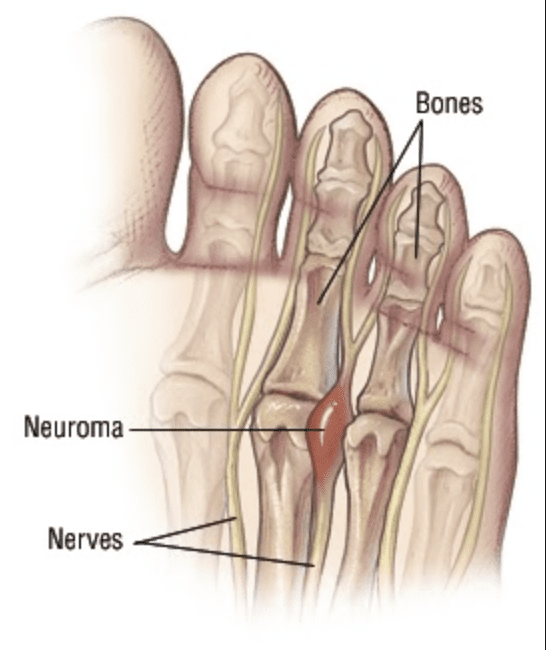
- Morton’s Neuroma is a condition involving the thickening or enlargement of the interdigital nerve, usually between the third and fourth toes, due to compression and irritation.
- LLLT (Low-Level Laser Therapy) is an effective, non-invasive treatment for Morton’s neuroma, helping reduce inflammation, alleviate pain, and promote healing of the affected nerve and surrounding tissues.
- Symptoms of Morton’s neuroma include sharp, burning pain, numbness, tingling, and discomfort that worsens with pressure or tight footwear.
- Common causes include tight or poorly fitting footwear, abnormal foot mechanics, repetitive stress from high-impact activities, and soft tissue injuries such as bursitis, plantar plate tears, or tendonitis.
- LLLT helps by targeting inflammation and nerve damage at the cellular level, promoting blood flow, cellular regeneration, and pain relief without causing mechanical stress.
- Splinting, cushioning, and orthotics are also used to alleviate symptoms by reducing pressure on the affected nerve and improving foot comfort.
- LLLT can be considered a primary treatment for Morton’s Neuroma, as it directly addresses the underlying pathology by reducing inflammation, promoting healing, and alleviating nerve damage, rather than simply masking symptoms via conventional treatments.
What Is Morton’s Neuroma?
Morton’s neuroma is a condition of nerve tissue damage that primarily affects the interdigital nerve (the nerve between the toes), most commonly between the third and fourth toes. It is not a true neuroma in the sense of being a growth or tumour of nerve tissue, but rather an enlargement or thickening of the nerve due to compression and irritation.
It involves:
- Enlargement of the Nerve: this results from the swelling and fibrosis of the nerve due to repeated compression or irritation. It’s often caused by the compression of the nerve between the metatarsal bones, particularly in the area where the nerve branches into the toes.
- Myelin Sheath Damage: The nerve’s myelin sheath (the protective covering around the nerve fibres) may become damaged over time due to repeated compression. This can disrupt normal nerve function, leading to pain and sensory disturbances (such as tingling or numbness).
- Inflammation of Surrounding Tissues: this may occur as a response to irritation and injury of the nerve, resulting in swelling around the affected nerve, further irritating it and making the condition more painful.
- Neuroma-like Structure Formation: over time, persistent irritation can cause a benign, non-tumour growth of nerve tissue, known as a neuroma-like structure. This is a response to nerve damage and irritation, not a true tumour, making the term “Morton’s neuroma” somewhat misleading
What Causes Morton’s Neuroma?
- Footwear: Tight, high-heeled shoes or shoes with inadequate toe space can contribute to compression of the interdigital nerve, leading to Morton’s neuroma. Excessive pressure on the toes or metatarsals can increase the risk.
- Abnormal Foot Mechanics: Conditions such as flat feet, high arches, or abnormal gait patterns can increase the pressure on the nerve, especially when there is imbalance in the way weight is distributed across the foot.
- Repetitive Stress: Activities that involve a lot of impact or pressure on the forefoot, such as running or certain sports, can increase the risk of developing Morton’s neuroma.
- Associated Soft Tissue Injury: Morton’s neuroma can sometimes be associated with other soft tissue injuries, including bursitis, plantar plate tears, and tendonitis.
- No obvious cause may be identified
Associated Soft Tissue Injuries
In some cases, Morton’s neuroma can be associated with other soft tissue injuries, which may further complicate the condition. Common soft tissue injuries that may occur alongside Morton’s neuroma include:
- Bursitis: Inflammation of the fluid-filled sacs (bursae) that cushion the joints, often causing pain and swelling.
- Plantar Plate Tears: A tear or rupture in the plantar plate, a thick ligament in the forefoot, often associated with increased pressure on the metatarsal joints.
- Tendonitis: Inflammation of the tendons, which may occur due to increased stress on the foot from compensatory mechanisms.
These soft tissue injuries may result from altered biomechanics or excessive stress on the forefoot and can exacerbate the symptoms of Morton’s neuroma.
What Are the Symptoms of Morton’s Neuroma?
- Pain: Morton’s neuroma is commonly characterised by sharp, burning pain in the ball of the foot, often worsened by walking or standing for long periods. The pain may also radiate to the toes, particularly the third and fourth toes.
- Numbness or Tingling: Many people with Morton’s neuroma experience tingling, numbness, or a sensation of having something in their shoe, like a pebble.
- Worsening Pain with Tight Footwear: Wearing shoes that are tight or have narrow toe boxes can aggravate the condition and worsen the pain.
- Relief with Footwear Modification: The pain often eases when the individual removes their shoes or wears backless or soft-soled shoes.
- Pain with Activity: The pain may be worse when engaging in activities that put pressure on the forefoot, such as running or walking for extended periods.
How Is Morton’s Neuroma Diagnosed?
- Physical Examination: Diagnosis of Morton’s neuroma typically begins with a physical examination, during which the physician will palpate the foot to check for signs of swelling, tenderness, or abnormal sensations. A characteristic test, called the Mulder’s click test, may be performed, where the clinician applies pressure to the affected area to reproduce pain or a clicking sensation.
- Imaging: If necessary, imaging tests such as ultrasound or MRI can help confirm the diagnosis. An ultrasound may reveal thickening of the nerve or fluid accumulation, while an MRI can show structural damage and help rule out other causes of pain, such as a tendon or ligament injury.
- Exclusion of Other Conditions: It’s important to rule out other conditions that may present with similar symptoms, such as metatarsal stress fractures, soft tissue masses, or peripheral neuropathy.
Morton’s Neuroma – Treatment Overview
Low Level Laser Therapy (LLLT), also known as Photobiomodulation Therapy (PBMT), is a gentle, evidence-based treatment that targets the underlying cause of Morton’s Neuroma: persistent inflammation, nerve irritation, soft tissue thickening, and immune imbalance within the forefoot. It promotes healing without mechanical stress to the sensitive interdigital nerve.
Why Choose Low Level Laser Therapy (LLLT)?
Many patients present after limited relief from footwear changes, orthotics, anti-inflammatory medications, cortisone injections, stretching, or activity modification. These approaches may temporarily ease symptoms but often fail to address ongoing nerve inflammation and may aggravate symptoms if compression persists. LLLT is particularly helpful where nerve irritation and inflammatory overload remain active, and where mechanical pressure must be minimised during recovery.
Why ice, anti-inflammatories, cortisone, and PRP may not support long-term recovery. Read more here.
A Note on Why Orthotics Sometimes Don’t Help
Orthotics do not always help with Morton’s Neuroma because the condition is often caused by external factors such as footwear, repetitive strain, or activity rather than abnormal foot mechanics. Forcing the foot into a different alignment with orthotics can sometimes increase pressure on the nerve and worsen symptoms. A more effective approach is improving comfort and reducing compression on the forefoot through well-cushioned shoes with a wide toe box, shock-absorbing inserts that do not alter natural alignment, and avoiding high-impact activities.
How LLLT Supports Healing
LLLT uses red and near-infrared light to restore balance to the inflammatory process and support nerve and soft tissue repair by:
- Improving circulation and oxygen delivery
- Enhancing lymphatic drainage
- Reducing inflammation and oxidative stress
- Increasing cellular energy (ATP)
- Supporting nerve and connective tissue regeneration
All without compressing or stressing the forefoot.

Proven, Safe, and Effective
It is non-invasive, painless, and supported by extensive clinical research. Read more here.
See how LLLT helps restore the cellular environment needed for repair here.
Our Treatment Program
All patients are assessed by Dr Shikha Parmar (GP). Treatment is delivered within a structured six-week program, including:
- Up to 12 LLLT sessions
- Review after 6 sessions
- Individualised advice and activity modification
- Guided rehabilitation for durable recovery
Patients who respond typically show 15–20% improvement within the first 6 sessions, with best-case improvement of 70–90% over the full program.
View the full treatment protocol and expected outcomes here.
Ready for Lasting Relief?
If you’re struggling with persistent Morton’s neuroma pain and debility, we invite you to contact our experienced team at Laser Pain Therapy. Our LLLT treatment offers a safe, effective, and lasting solution to restore your comfort, mobility, and quality of life.
Contact us today to arrange your consultation and take the first step towards recovery.
📍 Located in Melbourne
📞 (03) 8529 2225 Contact Us