Golfer’s Elbow Treatment Using LLLT/PBMT
Also known as Medial Epicondylitis or Elbow Tendonitis/Tendinopathy
Low Level Laser Therapy (LLLT) also known as Photobiomodulation Therapy (PBMt) is the application of red and near infrared light over injuries to stimulate cellular repair. LLLT is highly effective, completely safe treatment in Melbourne, Victoria. It is painless, and has no effect on normal tissues. LLLT treats the underlying cause of the injury unlike pain medication which just masks the pain. It is a treatment modality supported by research from reputable institutions including Harvard University and NASA. LLLT is an evidence-based therapy for soft tissue injuries, such as golfer’s elbow.
Gentle. Drug-Free. Clinically Proven

Key Points
- Golfer’s Elbow (medial epicondylitis) involves degeneration or irritation of the tendons on the inner elbow due to repetitive wrist flexion and gripping – not limited to golfers.
- Typical symptoms include inner elbow pain, forearm tenderness, stiffness, and weakness – often aggravated by lifting, twisting, gripping, or using tools.
- Caused by overuse, especially in activities involving repeated wrist and finger flexion – common in golfers, gardeners, carpenters, manual workers, and computer users.
- Conventional treatments such as rest, ice, painkillers, or cortisone injections may offer temporary relief but often fail to resolve the underlying tendon dysfunction.
- Low Level Laser Therapy (LLLT) – also known as Photobiomodulation Therapy (PBMT) – is non-invasive red and near-infrared light therapy a safe, non-invasive, painless, scientifically validated treatment that promotes deep tissue healing by reducing inflammation, increasing circulation, and stimulating tendon repair.
- LLLT works to improve energy production (ATP), clearing waste products, and modulating the immune response – all without mechanical stress to the injured tendon.
- Backed by over 700 randomised trials and 7,000+ published studies, LLLT is clinically proven to reduce pain and restore tendon function across a range of soft tissue injuries.
- Treatment is delivered under the direct medical supervision of Dr Shikha Parmar as part of a structured, personalised 6-week program with assessment and review milestones.
Treatment results in eliminating pain, restoring tendon health, regaining normal function, and building strength to prevent recurrence.
What is Golfer’s Elbow ?
Golfer’s Elbow, medically known as medial epicondylitis, is a painful condition affecting the tendons that attach to the bony bump on the inside of the elbow (the medial epicondyle). It arises from repetitive strain or overuse of the wrist flexor and forearm pronator muscles, leading to microtears, inflammation, or even degenerative changes in the tendon over time.
Despite its name, this condition isn’t limited to golfers. It can affect anyone whose work or activities involve repeated gripping, lifting, wrist flexion, or forearm rotation. The underlying issue is often not acute inflammation, but rather tendinopathy – a chronic degenerative response of the tendon tissue due to cumulative overload.
Causes and Risk Factors
Golfer’s elbow is caused by repetitive stress on the forearm muscles that flex the wrist and rotate the forearm. Contributing factors include:
- Repetitive gripping or wrist flexion (e.g. using tools, lifting, typing)
- Poor technique in sports or sudden increase in activity
- Prolonged or forceful manual tasks
It’s especially common in people aged 35 to 55, though it can affect individuals of any age. Activities and occupations that increase risk include:
- Golf (especially incorrect swing mechanics)
- Gardening, painting, or carpentry
- Racquet sports or weightlifting
- Trades involving frequent use of hand tools
- Repetitive computer mouse or keyboard use
A lack of proper conditioning, poor ergonomics, and inadequate recovery between activities can also contribute to the development of this condition.
Symptoms
- Pain and tenderness on the inner (medial) side of the elbow
- Discomfort that may radiate into the inner forearm
- Worsening pain with gripping, wrist flexion, or forearm rotation
- Weak grip strength
- Stiffness or aching, particularly in the morning or after activity
- Pain during everyday tasks such as:
- Lifting a kettle or cup
- Turning a doorknob
- Shaking hands
- Swinging a golf club or throwing a ball
Symptoms often build gradually and may worsen with continued strain or delayed management.
How is Golfer’s Elbow Diagnosed?
Diagnosis of golfer’s elbow is typically made through a detailed clinical history and physical examination, with imaging used selectively to confirm diagnosis or rule out other conditions.
Clinical Assessment:
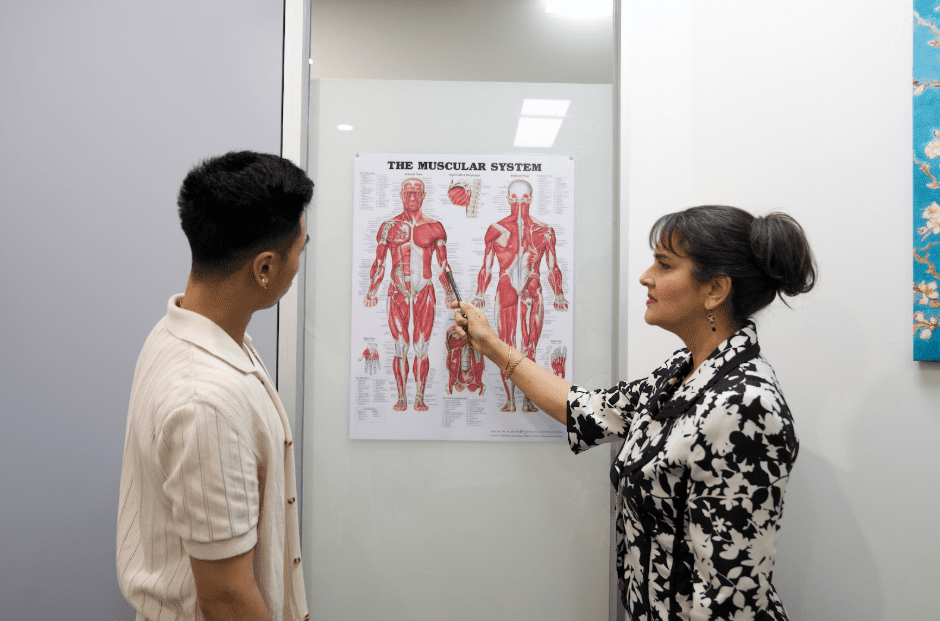
Dr Shikha Parmar will assess:
- Location and nature of your pain
- Onset and history of repetitive activity or strain
- Aggravating movements (especially resisted wrist flexion and forearm pronation)
- Grip strength and functional impact
- Tenderness along the medial epicondyle or flexor-pronator tendon origin
- Imaging (if needed)
- Ultrasound may be used to visualise tendon thickening, degeneration, or tears in real-time.
- X-rays help exclude bony changes or arthritis.
- MRI offers detailed insight into the tendon and surrounding soft tissues for complex or unresponsive cases.
In most cases, clinical examination is sufficient for diagnosis, and imaging is reserved for persistent or atypical presentations.
Golfer’s Elbow – Treatment Overview
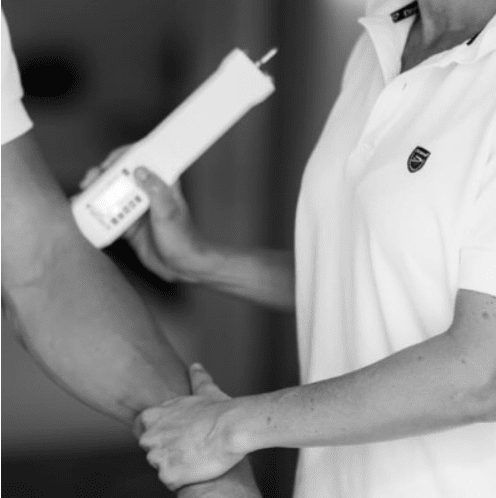
Low Level Laser Therapy (LLLT), also known as Photobiomodulation Therapy (PBMT), is a gentle, evidence-based treatment that targets the underlying cause of golfer’s elbow: tendon micro-tears and persistent inflammation at the medial elbow. It promotes healing without mechanical stress to already irritated tendon tissue.
Why Choose Low Level Laser Therapy (LLLT)?
Many patients present after limited relief from rest, bracing, physiotherapy, massage, exercises, or anti-inflammatory medication. These approaches may ease symptoms temporarily but often fail to address deeper tendon injury and may aggravate symptoms if strengthening is introduced too early.
Why ice, anti-inflammatories, cortisone, and PRP may not support long-term recovery. Read more here.
How LLLT Supports Healing
LLLT uses red and near-infrared light to restore balance to the inflammatory process and stimulate tendon and soft tissue repair by:
- Improving circulation and oxygenation
- Enhancing lymphatic drainage
- Reducing inflammation and oxidative stress
- Increasing cellular energy (ATP)
- Supporting collagen production and tissue regeneration
All without loading or stressing the elbow.
Proven, Safe, and Effective
It is non-invasive, painless, and supported by extensive clinical research. Read more here.
See how LLLT helps restore the cellular environment needed for repair here.
Our Treatment Program
All patients are assessed by Dr Shikha Parmar (GP). Treatment is delivered within a structured six-week program, including:
- Up to 12 LLLT sessions
- Review after 6 sessions
- Individualised advice and activity modification
- Guided rehabilitation for durable recovery
Patients who respond typically show 15–20% improvement within the first 6 sessions, with best-case improvement of 70–90% over the full program.
View the full treatment protocol and expected outcomes here.
Ready for Lasting Relief?
If you are struggling with persistent pain from soft tissue injury such as golfer’s elbow, we invite you to contact our experienced team at Laser Pain Therapy. Our LLLT treatment offers a safe, effective, and lasting solution to restore your comfort, mobility, and quality of life.
Contact us today to arrange your consultation and take the first step towards recovery.
📍 Located in Melbourne
📞 (03) 8529 2225 Contact Us