Treatment of Frozen Shoulder using LLLT/PBMT
Low Level Laser Therapy (LLLT) – now known as Photobiomodulation or PBM therapy is the application of red and near infrared light over injuries to stimulate cellular repair. It is a highly effective drug-free, safe & painless treatment solution for frozen shoulder in Melbourne, Victoria. A treatment modality backed by Harvard University and NASA research, LLLT is designed to reduce pain, resolve inflammation, and restore joint mobility by targeting the root cause – rather than simply masking symptoms. LLLT is a proven therapy for soft tissue conditions, such as frozen shoulders.
Gentle. Drug-Free. Clinically Proven
Key Points
- Frozen shoulder (adhesive capsulitis) is a painful and restrictive condition caused by inflammation and thickening of the joint capsule, often occurring spontaneously or in association with autoimmune or metabolic conditions.
- It typically progresses through three phases – freezing, frozen, and thawing – and can take 12 to 24 months to resolve without intervention.
- Common symptoms include persistent shoulder pain, stiffness, loss of range of motion, and difficulty with daily activities such as dressing, reaching, or lying on the affected side.
- The cause is often unknown, but it is more common in adults over 40, and in those with thyroid disease, diabetes, or a history of shoulder injury or immobility.
- Low Level Laser Therapy (LLLT) – or Photobiomodulation Therapy (PBMT) – is a non-invasive, drug-free treatment that reduces pain and inflammation without adding mechanical stress to the joint.
- LLLT helps accelerate resolution of the painful phase by modulating inflammation, improving blood flow, and stimulating tissue repair at the cellular level.
- Although movement recovery in frozen shoulder is unpredictable, about half of our patients experience functional improvement during the LLLT treatment course.
- LLLT is ideal for those unable to tolerate stretching or loading, and offers a gentle alternative to cortisone injections or prolonged medication use.
- Treatment is GP-led by Dr Shikha Parmar and delivered in a structured, six-week program under direct medical supervision for consistent, safe, and evidence-based care.
- Backed by over 700 RCTs and 7,000+ scientific studies, LLLT is clinically proven to relieve pain and support recovery in inflammatory and fibrotic shoulder conditions such as frozen shoulder.
What is Frozen Shoulder?
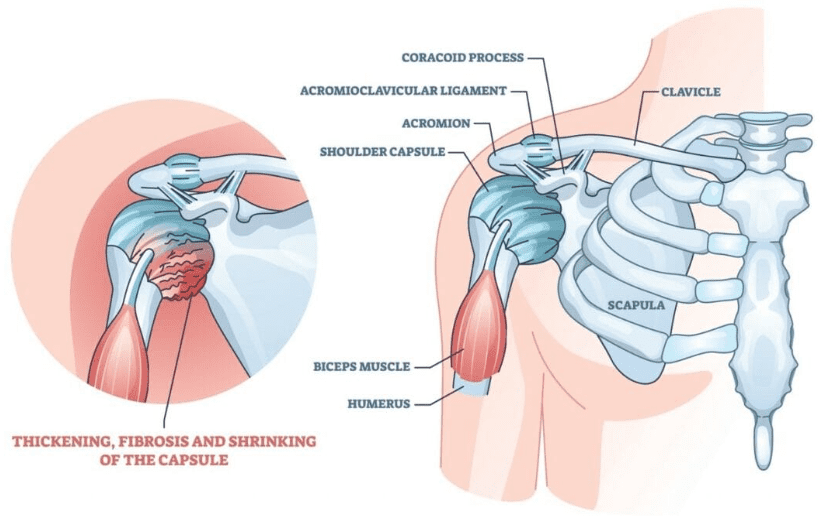
Frozen shoulder, or adhesive capsulitis, is a painful and progressive condition characterised by stiffness, inflammation, and significant restriction of movement in the shoulder joint. It occurs when the connective tissue surrounding the shoulder capsule becomes inflamed and thickened, leading to stiffness and adhesions that limit mobility.
This condition can severely impact day-to-day activities such as dressing, grooming, driving, or sleeping comfortably. Frozen shoulder typically progresses through three stages:
- Freezing stage – increasing pain and stiffness; range of motion gradually decreases.
- Frozen stage – pain may ease but shoulder stiffness worsens; daily activities are significantly limited.
- Thawing stage – gradual return of movement as inflammation subsides and tissues begin to heal.
Without effective treatment, frozen shoulder can take 12–24 months to resolve naturally – and in some cases, full recovery may never occur.
Causes of Frozen Shoulder
In many cases, the exact cause of frozen shoulder is unknown, which is why it is often referred to as idiopathic adhesive capsulitis. However, several risk factors and medical conditions are commonly associated with its development:
- Chronic systemic inflammation or autoimmune conditions, such as:
- Thyroid disease (particularly hypothyroidism and autoimmune thyroiditis)
- Type 1 diabetes mellitus – significantly increases risk
- Rheumatoid arthritis
- Dupuytren’s contracture
- Post-surgical or post-injury immobility – following shoulder surgery, rotator cuff tears, or arm fractures
- Previous shoulder trauma or overuse
- Prolonged immobilisation (e.g. after stroke, surgery, or prolonged illness)
- Middle age (40–60 years old) – frozen shoulder is more common in this age group
- Female sex – women are more frequently affected than men
In some cases, frozen shoulder can arise spontaneously with no obvious trigger.
Symptoms of Frozen Shoulder
Frozen shoulder typically affects one shoulder at a time, although in rare cases, both shoulders may be affected (either simultaneously or sequentially). The hallmark symptoms include:
- Progressive pain and stiffness in the shoulder joint
- Reduced range of motion – especially in movements such as external rotation, abduction, and reaching behind the back
- Pain that worsens at night or when lying on the affected side
- Dull, aching pain felt in the outer shoulder and sometimes upper arm
- Muscle weakness due to disuse or guarding
- Functional limitations – difficulty with dressing, personal care, reaching, and lifting
Symptoms typically evolve over several months, progressing through freezing, frozen, and thawing phases unless managed appropriately.
How Is Frozen Shoulder Diagnosed?
Diagnosis of frozen shoulder is primarily clinical and based on a thorough history and physical examination. At Laser Pain Therapy, Dr Shikha Parmar will conduct a detailed consultation to assess:
- Onset, nature, and progression of pain and stiffness
- Functional limitations or activities exacerbating symptoms
- Medical history including diabetes, thyroid issues, autoimmune diseases, or recent shoulder injuries
During the examination, key diagnostic features may include:
- Restricted active and passive range of motion, especially external rotation
- Pain with movement or stretching of the joint capsule
- Absence of other obvious mechanical causes (e.g. tendon tears, arthritis)
If further confirmation is needed or to exclude other conditions, imaging may be requested:
- X-ray – to rule out arthritis, fractures, or bone abnormalities
- Ultrasound – to assess rotator cuff integrity and exclude bursitis or tendinopathy
- MRI – may be used in complex cases to visualise capsular thickening or adhesive changes
Early diagnosis is key to effective management, as delayed treatment often results in prolonged disability.
Frozen Shoulder – Treatment Overview
Low Level Laser Therapy (LLLT), also known as Photobiomodulation Therapy (PBMT), is a gentle, evidence-based treatment that targets the underlying cause of frozen shoulder: persistent inflammation and thickening of the joint capsule (adhesive capsulitis). It promotes healing without mechanical stress to an already painful and restricted shoulder.
Why Choose Low Level Laser Therapy (LLLT)?
Many patients present after limited relief from medications, cortisone injections, stretching, or physiotherapy. These approaches may provide temporary symptom relief but often fail to address deep capsular inflammation, and early or aggressive stretching may aggravate symptoms.
Why ice, anti-inflammatories, cortisone, and injections may not support long-term recovery. Read more here.

How LLLT Supports Healing
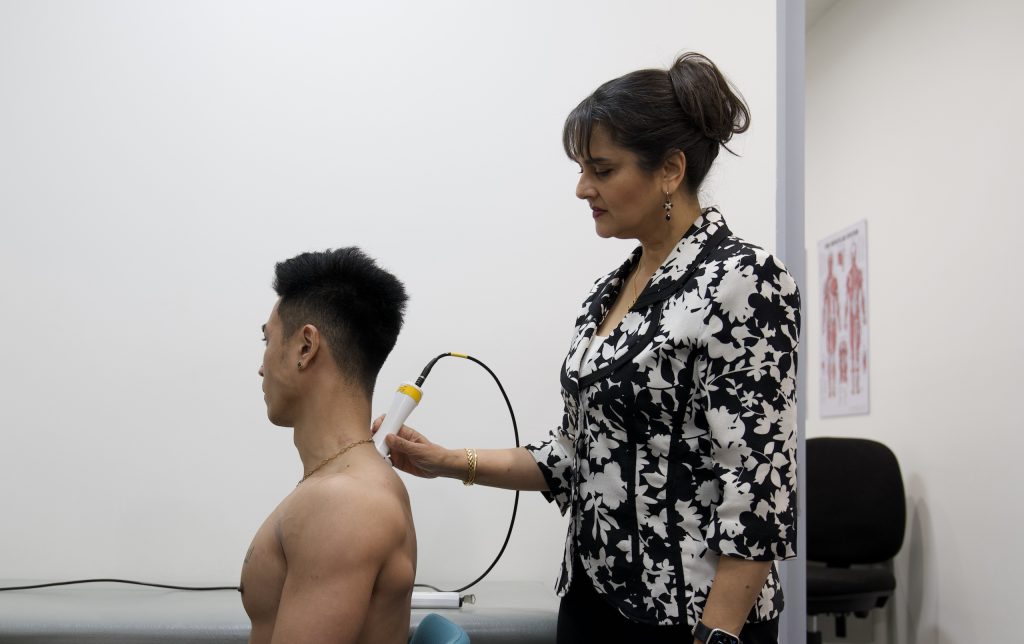
LLLT uses red and near-infrared light to restore balance to the inflammatory process and stimulate capsular and soft tissue repair by:
- Improving circulation and oxygen delivery
- Enhancing lymphatic drainage
- Reducing inflammation and oxidative stress
- Increasing cellular energy (ATP)
- Supporting regeneration of inflamed joint capsule tissue
All without loading or stressing the shoulder joint.
Proven, Safe, and Effective
It is non-invasive, painless, and supported by extensive clinical research. Read more here.
See how LLLT helps restore the cellular environment needed for repair here.
Our Treatment Program
All patients are assessed by Dr Shikha Parmar (GP). Treatment is delivered within a structured six-week program, including:
- Up to 12 LLLT sessions
- Review after 6 sessions
- Individualised advice and activity modification
- Guided rehabilitation for durable recovery
Patients who respond typically show 15–20% improvement within the first 6 sessions, with best-case improvement of 70–90% over the full program.
View the full treatment protocol and expected outcomes here.
Ready for Lasting Relief?
If you are struggling with persistent pain, stiffness or reduced shoulder mobility due to frozen shoulder, we invite you to contact our experienced team at Laser Pain Therapy. Our LLLT treatment offers a safe, effective, and lasting solution to restore your comfort, mobility, and quality of life.
Contact us today to arrange your consultation and take the first step towards recovery.
📍 Located in Melbourne
📞 (03) 8529 2225 Contact Us