Foot & Toe Osteoarthritis Treatment Using LLLT/PBMT
Low Level Laser Therapy (LLLT), also known as Photobiomodulation Therapy (PBMT), is a safe, effective, and non-invasive treatment for foot and toe osteoarthritis (OA). It offers long-term relief from pain, stiffness, and swelling caused by degenerative changes in the joints, improving mobility and restoring function. Led by Dr. Shikha Parmar, a GP with expertise in the management of chronic musculoskeletal pain, Laser Pain Therapy incorporates LLLT as part of a holistic treatment plan. Supported by scientific research from respected institutions, such as NASA and Harvard University, foot & toe osteoathritis treatment with LLLT targets the root cause of the pain, unlike medications that only mask symptoms.
Gentle. Drug-Free. Clinically Proven
Key Points
- Osteoarthritis (OA) in the foot and toes involves the gradual breakdown of cartilage, leading to pain, swelling, and reduced mobility.
- The condition is often associated with bunions, hallux rigidus, and toe joint deformities, all of which can impact daily activities and quality of life.
- OA can develop due to age-related wear and tear, joint misalignment, trauma, or overuse injuries.
- Symptoms include pain that worsens with weight-bearing activities, stiffness, and swelling in the affected joints.
- Common causes include age-related wear and tear, previous joint injuries, overuse, and mechanical stress from abnormal gait or foot deformities such as bunions or hammertoes.
- Conventional treatments, such as rest, ice, anti-inflammatory medications, and orthotics, may provide temporary relief but do not address reversible causes of pain involving inflammation.
- LLLT helps reduce inflammation, promote healing of related soft tissue damage, and improve joint function
- LLLT is supported by over 700 randomised trials and more than 7,000 scientific studies demonstrating its effectiveness in treating musculoskeletal conditions.
- At Laser Pain Therapy, treatment is guided by Dr Shikha Parmar and delivered through a structured 6-week program, with personalised rehabilitation support to aid in long-term recovery.
What Is Foot and Toe Osteoarthritis (OA)?
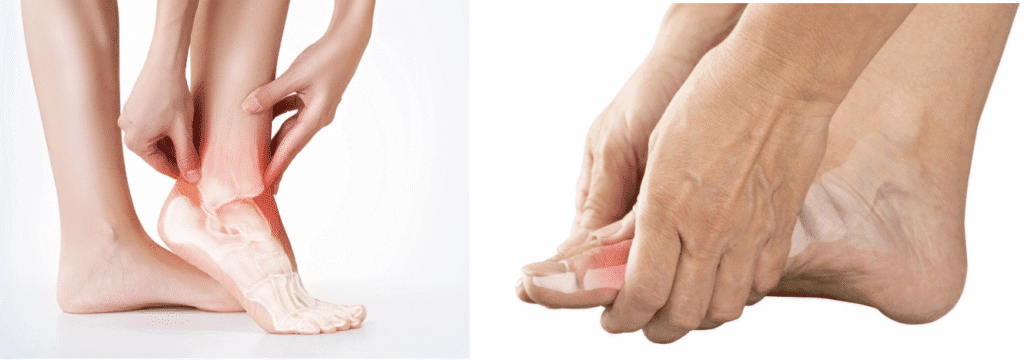
Osteoarthritis in the foot and toes occurs when the protective cartilage that cushions the bones in the joints gradually wears down. This leads to pain, stiffness, and swelling, especially in the weight-bearing joints such as the big toe, arch, and other small joints in the feet.
OA in the toes can result in deformities such as bunions or hammertoes, causing difficulty in walking and reduced flexibility. As cartilage breaks down, the bones may rub together, causing increased friction and inflammation.
OA in the feet is commonly seen in older adults due to natural wear and tear. It can also develop from previous injuries, misalignments, or overuse, particularly in people who engage in high-impact sports or spend extended periods on their feet.
Causes of Foot and Toe Osteoarthritis
Several factors can contribute to the development of foot and toe osteoarthritis:
- Age-related degeneration of cartilage, leading to natural wear and tear on joints
- Previous joint injuries, such as fractures or sprains, which can lead to increased risk of OA
- Joint misalignments or deformities, such as bunions or hammertoes, which place extra stress on certain joints
- Overuse or repetitive stress from high-impact activities, prolonged standing, or walking
- Obesity, which places additional strain on the weight-bearing joints of the feet and toes
- Genetics, with some individuals being predisposed to joint degeneration
Symptoms of Foot and Toe Osteoarthritis
Common symptoms of foot and toe osteoarthritis include:
- Pain in the affected joints, often worse with weight-bearing activities such as walking or standing
- Swelling and tenderness around the joints
- Stiffness, particularly after periods of rest or in the morning
- Difficulty moving the toes or foot, often limiting movement and flexibility
- Weakness: difficulty with gripping or stabilising the foot during movement.
- Deformities, such as bunions or hammertoes, which can further aggravate the pain and dysfunction
How Is Foot and Toe Osteoarthritis Diagnosed?
Diagnosis involves a comprehensive evaluation by Dr Shikha Parmar, including:
- A detailed medical history to understand symptom onset, impact on daily life, and any prior injuries or surgeries
- Physical examination to assess joint tenderness, swelling, and mobility
- Imaging studies, such as X-rays, to evaluate the degree of cartilage degeneration, bone spurs, and joint alignment
Foot & Toe Osteoarthritis – Treatment Overview
Low Level Laser Therapy (LLLT), also known as Photobiomodulation Therapy (PBMT), is a gentle, evidence-based treatment that targets the underlying cause of foot and toe osteoarthritis pain: persistent joint inflammation, synovial irritation, ligament and tendon overload, and soft tissue degeneration secondary to cartilage wear. It promotes healing without mechanical stress to vulnerable joints of the foot and toes.
Why Choose Low Level Laser Therapy (LLLT)?
Many patients present after limited relief from ice, anti-inflammatory medications (NSAIDs), cortisone injections, orthotics, or exercise programs. These approaches may temporarily ease symptoms but often fail to address deeper inflammatory drivers of osteoarthritis pain and may be difficult to tolerate when joints are acutely inflamed. LLLT is particularly helpful where inflammation, stiffness, and soft tissue irritation persist, and where excessive joint loading may delay recovery.
Why ice, anti-inflammatories, cortisone, and other injections may not support long-term recovery. Read more here.
How LLLT Supports Healing
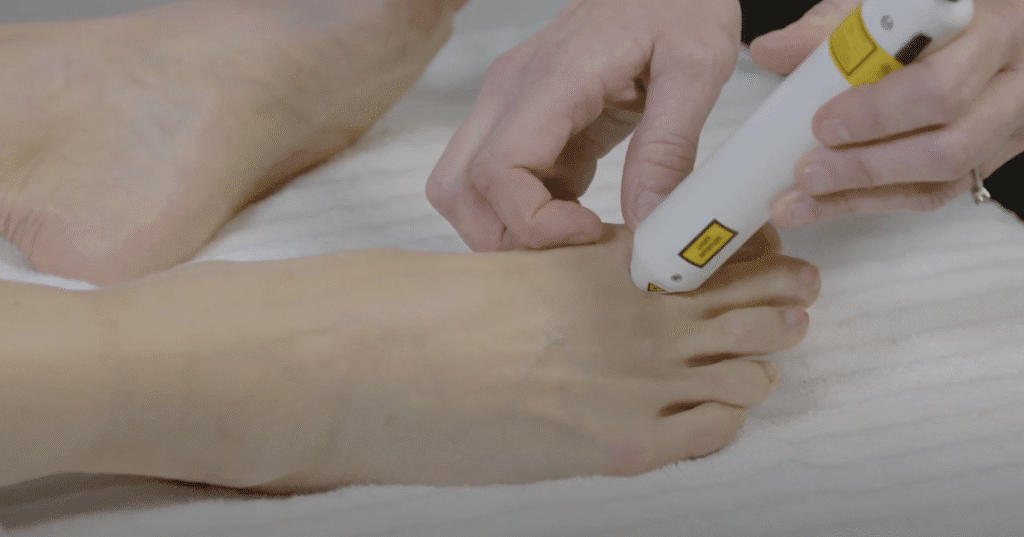
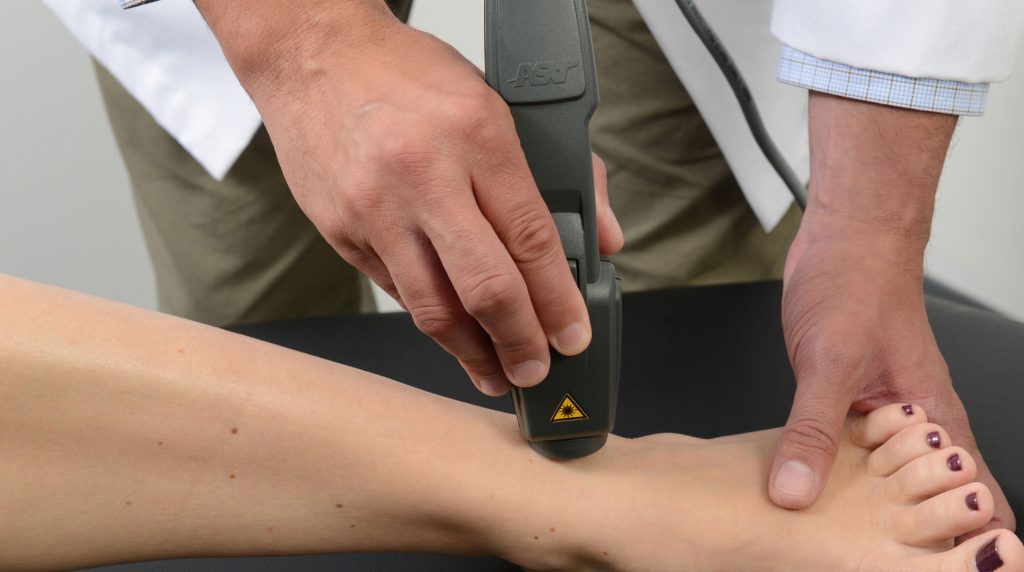
LLLT uses red and near-infrared light to restore balance to the inflammatory process and stimulate soft tissue and joint repair by:
- Improving circulation and oxygenation
- Enhancing lymphatic drainage
- Reducing inflammation and oxidative stress
- Increasing cellular energy (ATP)
- Supporting ligament, tendon, and joint tissue regeneration
All without loading or stressing the affected foot or toe joints.
Proven, Safe, and Effective
It is non-invasive, painless, and supported by extensive clinical research. Read more here.
See how LLLT helps restore the cellular environment needed for repair here.
LLLT for Foot and Toe Osteoarthritis Pain
Low Level Laser Therapy (LLLT) can help manage foot and toe osteoarthritis by reducing inflammation, relieving pain, and improving joint mobility and function. While it does not restore cartilage, it supports healing of surrounding soft tissues such as tendons and ligaments, which may slow symptom progression and allow patients to participate more comfortably in rehabilitation and daily activities. In moderate to severe cases, LLLT may significantly reduce pain and improve function, potentially delaying the need for surgery or supporting post-surgical recovery. Treatment is most useful when inflammation or associated soft tissue conditions contribute to pain.
Our Treatment Program
All patients are assessed by Dr Shikha Parmar (GP). Treatment is delivered within a structured six-week program, including:
- Up to 12 LLLT sessions
- Review after 6 sessions
- Individualised advice and activity modification
- Guided rehabilitation for durable recovery
Patients who respond typically show 15–20% improvement within the first 6 sessions, with best-case improvement of 70–90% over the full program.
View the full treatment protocol and expected outcomes here.
Ready for Lasting Relief?
If you are struggling with persistent foot or toe pain from osteoarthritis, we invite you to contact our experienced team at Laser Pain Therapy. Our LLLT treatment offers a safe, effective, and lasting solution to restore your comfort, mobility, and quality of life.
Contact us today to arrange your consultation and take the first step towards recovery.
📍 Located in Melbourne
📞 (03) 8529 2225 Contact Us