Treatment of Wrist Tendonitis & De Quervain’s Tenosynovitis Using LLLT/PBMT
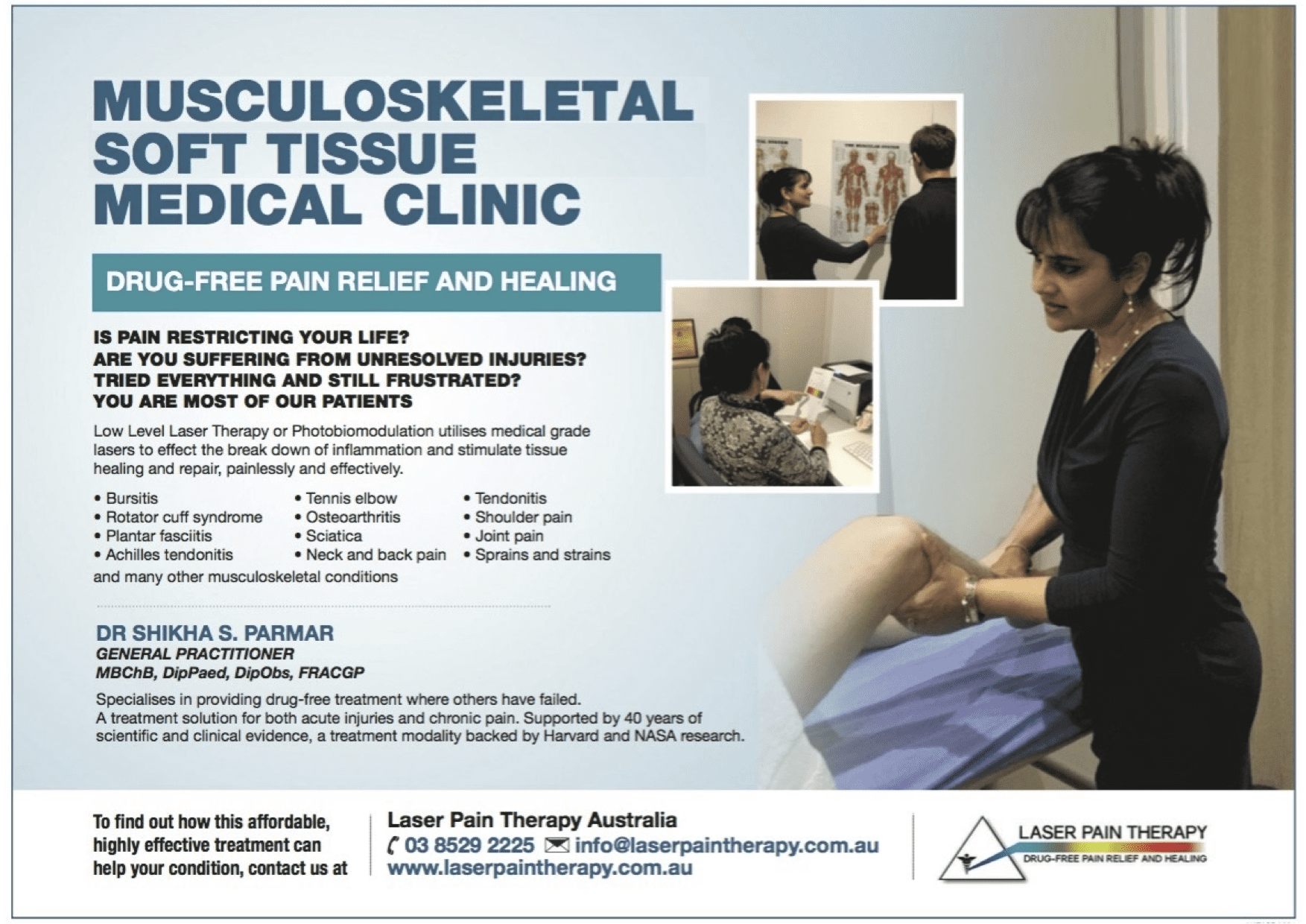
Low-Level Laser Therapy (LLLT), also known as Photobiomodulation Therapy (PBMT), involves the application of red and near-infrared light to injuries to stimulate cellular repair. Led by Dr. Shikha Parmar, a GP with expertise in the management of chronic musculoskeletal pain, Laser Pain Therapy incorporates LLLT as part of a holistic treatment plan. LLLT is highly effective, painless, completely safe treatment in Melbourne, Victoria. LLLT treats the underlying cause of the injury. It is a treatment modality supported by research from reputable institutions including Harvard University and NASA. LLLT is an evidence-based therapy for soft tissue injuries, such as De Quervain’s tenosynovitis.
Gentle. Drug-Free. Clinically Proven

Key Points
- Wrist tendonitis involves inflammation or degeneration of tendons from overuse or repetitive movement, most commonly on the thumb side of the wrist.
- De Quervain’s tenosynovitis is a specific type of tendonitis affecting the tendons that control thumb movement, often presenting with pain and swelling at the base of the thumb.
- Typical symptoms include pain with gripping, pinching, wrist motion, or lifting—especially with twisting or thumb use.
- Common causes include overuse, heavy lifting, prolonged computer/mouse use, and hormonal changes (e.g. postpartum).
- Standard treatments such as splints, anti-inflammatories, and injections may reduce symptoms short-term but often do not heal the damaged tendon tissue.
- Low Level Laser Therapy (LLLT), or Photobiomodulation Therapy (PBMT), is a non-invasive, drug-free treatment that reduces inflammation, improves circulation, and stimulates tendon healing without mechanical stress.
- LLLT is especially effective for chronic or irritable wrist conditions where rest alone is insufficient or impractical.
- Treatment is supervised by Dr Shikha Parmar and delivered through a structured 6-week program tailored to wrist and thumb tendon issues.
- Supported by over 700 randomised trials and 7,000+ studies, LLLT is clinically validated for safe, effective, and lasting soft tissue recovery.
What is Wrist Tendonitis?
Wrist tendonitis refers to inflammation, irritation, or degeneration of the tendons that cross the wrist joint, typically due to repetitive stress. It often involves the extensor or flexor tendons that allow for gripping, pinching, and rotating motions.
What is De Quervain’s Tenosynovitis?
De Quervain’s affects the two tendons at the base of the thumb—the abductor pollicis longus and extensor pollicis brevis—causing pain and thickening near the thumb side of the wrist. It commonly occurs in new parents, manual workers, or anyone whose activities involve repetitive thumb motion.
Causes and Risk Factors
- Repetitive hand and wrist movements
- Prolonged or forceful gripping (e.g. tools, lifting, childcare)
- Poor wrist posture during computer/mouse use
- Hormonal changes and fluid retention (e.g. postpartum)
- Inadequate rest between repetitive tasks
- Sudden increase in physical activity
Symptoms
- Pain on the thumb side of the wrist (radial side)
- Pain with gripping, pinching, or wrist motion
- Swelling or tenderness at the base of the thumb
- Difficulty with lifting or twisting actions (e.g. jars, kettles)
- Pain on thumb extension or resisted movement
- Positive Finkelstein’s test (pain when stretching thumb tendons)
How is Wrist Tendonitis Diagnosed?
Diagnosis is typically clinical and based on:
- Thorough history of activity, pain, and functional limitations
- Physical examination, including palpation and resisted movements
- Specific tests such as the Finkelstein’s test for De Quervain’s
Imaging may be used to confirm diagnosis or rule out other causes:
- Ultrasound to visualise tendon thickening or sheath fluid
- X-rays to rule out joint or bony abnormalities
- MRI in complex or chronic cases
Note: If pain is ulnar-sided (on the little finger side), a TFCC injury may be considered. See our dedicated TFCC Injury page.
Wrist Tendonitis & De Quervain’s Tenosynovitis – Treatment Overview
Low Level Laser Therapy (LLLT), also known as Photobiomodulation Therapy (PBMT), is a gentle, evidence-based treatment that targets the underlying cause of wrist tendonitis and De Quervain’s tenosynovitis: persistent inflammation and micro-tears affecting the thumb and wrist tendons. It promotes healing without mechanical stress to already irritated tendon tissue.
Why Choose Low Level Laser Therapy (LLLT)?
Many patients present after limited relief from splinting, physiotherapy, massage, exercises, or anti-inflammatory medication. These approaches may ease symptoms temporarily but often fail to address deeper tendon inflammation and tissue injury and may aggravate symptoms if loading or exercise is introduced too early.
Why ice, anti-inflammatories, cortisone, and PRP may not support long-term recovery. Read more here.
How LLLT Supports Healing
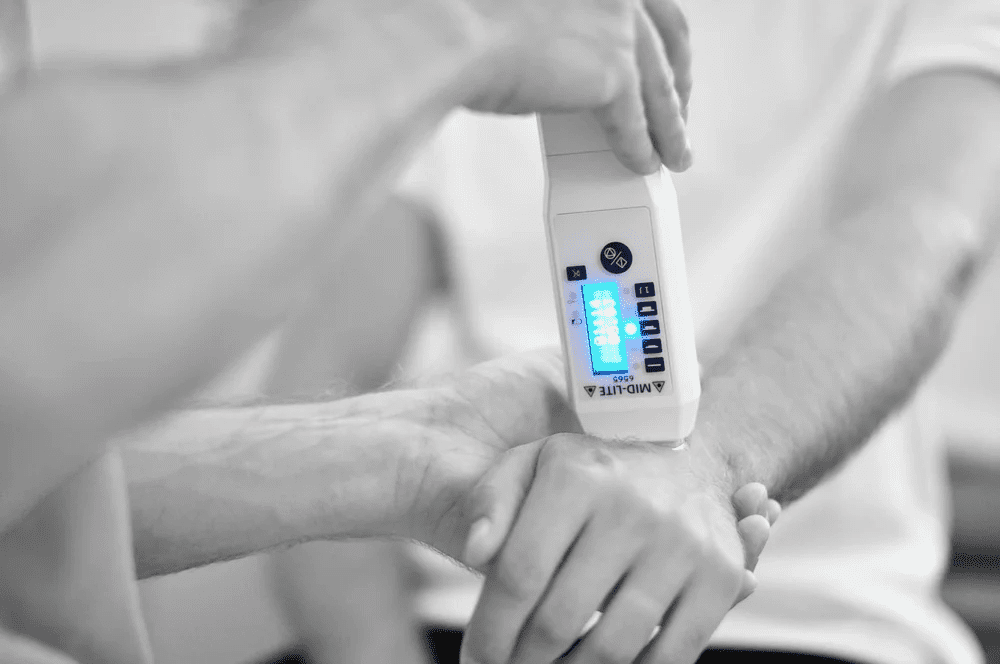
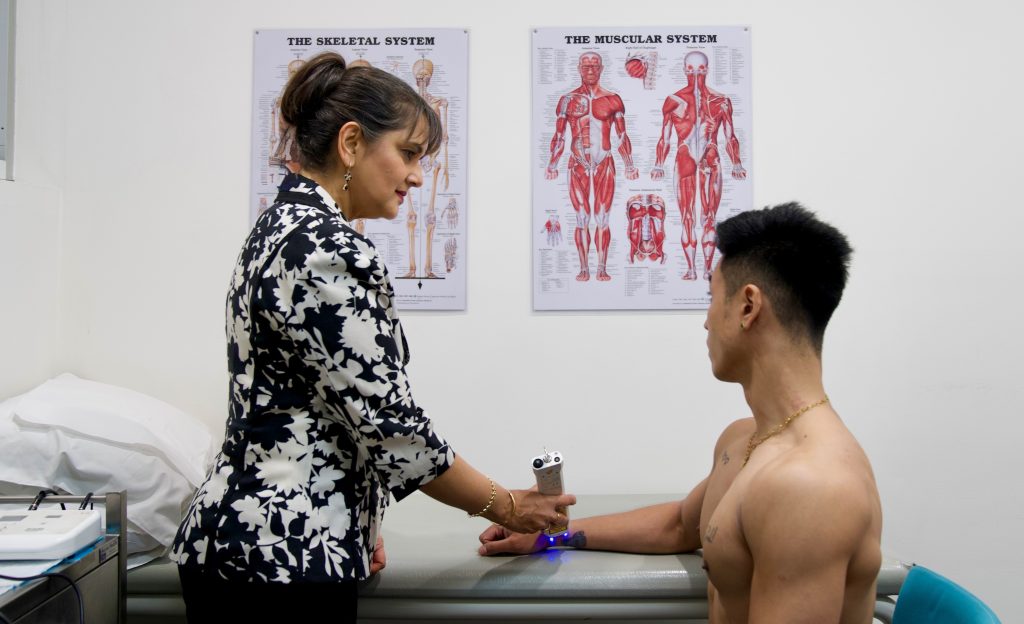
LLLT uses red and near-infrared light to restore balance to the inflammatory process and stimulate tendon and soft tissue repair by:
- Improving circulation and oxygenation
- Enhancing lymphatic drainage
- Reducing inflammation and oxidative stress
- Increasing cellular energy (ATP)
- Supporting collagen production and tissue regeneration
All without loading or stressing the wrist or thumb tendons.
Proven, Safe, and Effective
It is non-invasive, painless, and supported by extensive clinical research. Read more here.
See how LLLT helps restore the cellular environment needed for repair here.
Our Treatment Program
All patients are assessed by Dr Shikha Parmar (GP). Treatment is delivered within a structured six-week program, including:
- Up to 12 LLLT sessions
- Review after 6 sessions
- Individualised advice and activity modification
- Guided rehabilitation for durable recovery
Patients who respond typically show 15–20% improvement within the first 6 sessions, with best-case improvement of 70–90% over the full program.
View the full treatment protocol and expected outcomes here.
Ready for Lasting Relief?
If you are struggling with persistent pain from soft tissue injuries such as wrist tendonitis and De Quervain’s tenosynovitis, we invite you to contact our experienced team at Laser Pain Therapy. Our LLLT treatment offers a safe, effective, and lasting solution to restore your comfort, mobility, and quality of life.
📍 Located in Melbourne
📞 (03) 8529 2225 Contact Us