Treatment of Costochondritis
Low Level Laser Therapy (LLLT), also known as Photobiomodulation Therapy (PBMT), is the application of red and near-infrared light over injuries to stimulate cellular repair. LLLT is a highly effective, completely safe treatment in Melbourne, Victoria. It is painless and has no effect on normal tissues. LLLT treats the underlying cause of the injury, unlike pain medication which just masks the pain. It is a treatment modality supported by research from reputable institutions including Harvard University and NASA. LLLT is an evidence-based therapy for soft tissue injuries, including chest wall and costosternal pain conditions such as costochondritis.
Gentle. Drug-Free. Clinically Proven
Key Points
- Costochondritis is a common cause of chest wall pain that stems from inflammation at the costosternal or costochondral joints.
- Pain typically presents as localised, sharp, or aching pain in the upper anterior chest, often exacerbated by pressure, movement, or deep breathing.
- Unlike cardiac or visceral causes, this pain is musculoskeletal in origin and may persist for weeks or months.
- Standard treatments such as medication, ice, or rest often offer only short-term relief and may aggravate symptoms.
- Low Level Laser Therapy (LLLT), or Photobiomodulation Therapy (PBMT), is a drug-free, non-invasive option that reduces inflammation and promotes tissue repair without mechanical stress.
- LLLT is ideal for persistent costochondritis where inflammation is the key driver.
- Treatment is part of a structured program overseen by Dr Shikha Parmar, combining laser therapy with tailored rehabilitation and activity modification advice.
Understanding Costochondritis
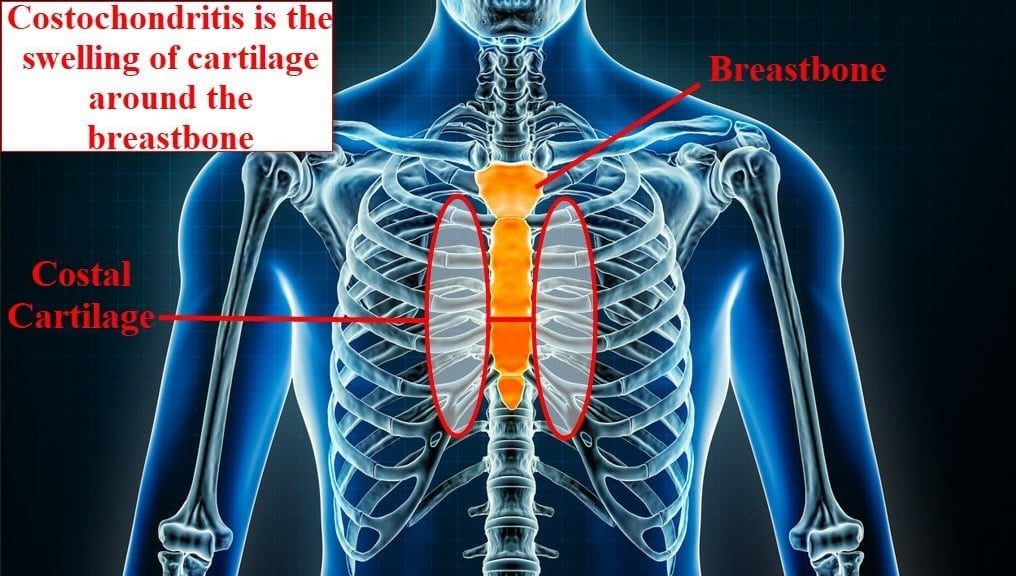
Costochondritis is an inflammatory condition affecting the cartilage that connects the ribs to the sternum (breastbone). It is a common cause of anterior chest wall pain and can mimic cardiac discomfort, but it is purely musculoskeletal.
The pain may develop gradually or follow chest wall strain, coughing, heavy lifting, upper body exertion, or trauma. It may also persist long after the original aggravating factor has settled.
Because this pain arises from soft tissue inflammation at the costosternal junction, conventional treatments frequently provide incomplete relief.
Low Level Laser Therapy (LLLT), also known as Photobiomodulation Therapy (PBMT), offers a highly effective, non-invasive treatment option for both acute and persistent costochondritis.
Causes of Costochondritis
Costochondritis arises from irritation and inflammation at the costosternal or costochondral joints. Triggers are often mechanical or inflammatory rather than cardiac. Common contributors include:
- Repetitive upper-body strain: lifting, pushing, pulling, rowing, throwing, or gym work that loads the anterior chest wall.
- Prolonged or forceful coughing: after respiratory infections, asthma flare-ups, or allergies.
- Sneezing bouts or heavy breathing: marathon training, high-intensity sport, wind instrument use.
- Direct chest wall trauma: falls, seat-belt injury, or impact during contact sport.
- Postural overload: sustained slumped sitting, device use, or workstation set-ups that tighten the upper ribs and pectoral region.
- Post-surgical or procedural strain: after chest procedures or prolonged positioning.
- Inflammatory spill-over from nearby tissues: costovertebral or upper thoracic joint irritation, pectoral or intercostal muscle strain.
- Less common causes: systemic inflammatory arthropathies, infection, or Tietze syndrome (similar presentation but with visible swelling over a rib).
Many cases are idiopathic, meaning no single event is identified. Regardless of the trigger, the common pathway is localised chest wall inflammation, which is why LLLT/PBMT is well suited to settling symptoms and restoring comfortable movement.
Symptoms
- Sharp, aching, or pressure-like pain at the upper chest wall, often near the second to fifth ribs
- Pain worsened by movement, deep breathing, coughing, or pressing over the affected joint(s)
- Frequently one-sided but can be bilateral
- May radiate across the chest or to the back, but not associated with shortness of breath or exertional cardiac symptoms
- Tenderness directly over the costosternal or costochondral junction
- May fluctuate in intensity, persisting for weeks or months if untreated
How is Costochondritis Diagnosed?
Diagnosis is clinical and based on history and examination.
Medical History:
Dr Shikha Parmar will take a detailed history, including recent strain or respiratory illness.
Red flag symptoms (e.g., pain associated with exertion, shortness of breath, or cardiac risk factors) are always evaluated and excluded before treatment begins.
Physical Examination:
A physical examination will assess the chest wall for tenderness and reproduction of pain at the affected joints.
Imaging:
In some cases, imaging (e.g., X-ray or MRI) may be requested to rule out other causes of chest pain.
Costochondritis – Treatment Overview
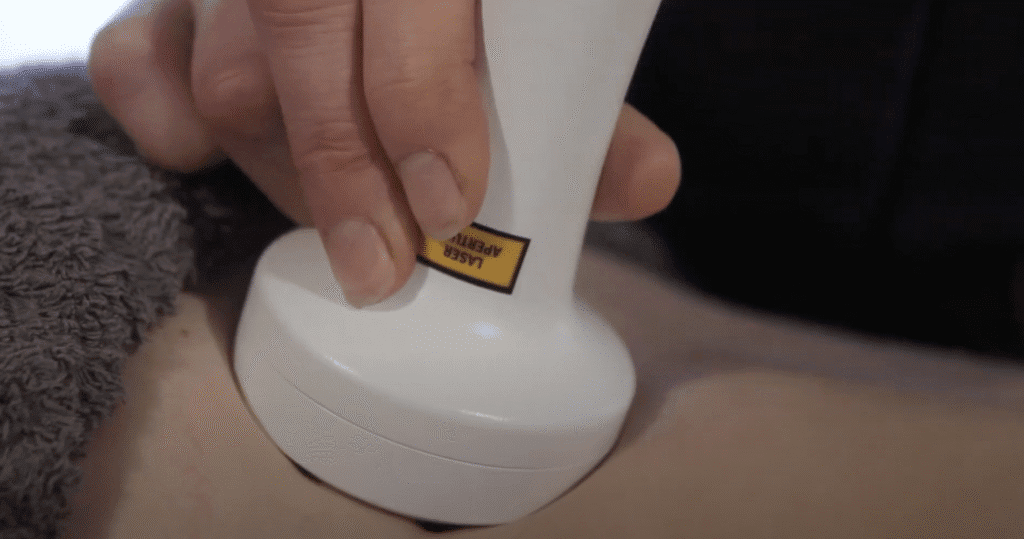
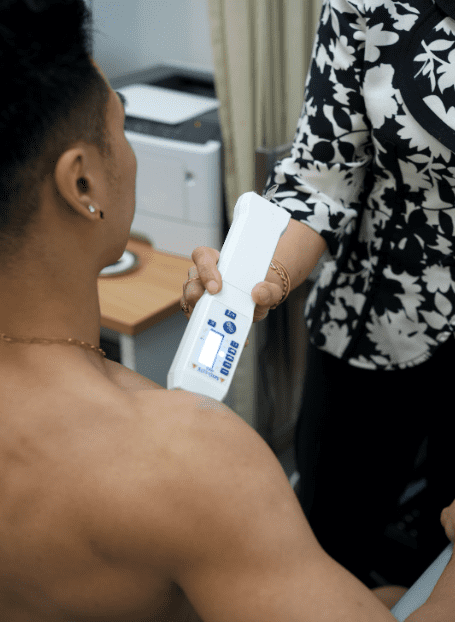
Low Level Laser Therapy (LLLT), also known as Photobiomodulation Therapy (PBMT), is a gentle, evidence-based treatment that targets the underlying cause of costochondritis: persistent inflammation, micro-injury, and soft tissue irritation around the costosternal joints. It promotes healing without mechanical stress to these sensitive areas.
Why Choose Low Level Laser Therapy (LLLT)?
Many patients present after limited relief from rest, ice, pain medications, or corticosteroid injections. These approaches may temporarily ease symptoms but often fail to resolve deeper tissue inflammation and may even weaken tissues or delay healing.LLLT is particularly helpful where inflammation persists and mechanical pressure or movement can worsen pain.
Why ice, anti-inflammatories, cortisone, and PRP may not support long-term recovery. Read more here.
How LLLT Supports Healing
LLLT uses red and near-infrared light to restore balance to the inflammatory process and support nerve and tissue repair by:
- Reducing inflammation and oxidative stress
- Improving circulation and oxygenation
- Enhancing lymphatic drainage
- Increasing cellular energy (ATP) for repair
- Supporting tissue regeneration and modulating pain
All without loading or stressing the costosternal joints.
Proven, Safe, and Effective
It is non-invasive, painless, and supported by extensive clinical research. Read more here.
See how LLLT helps restore the cellular environment needed for repair here.
Our Treatment Program
All patients are assessed by Dr Shikha Parmar (GP). Treatment is delivered within a structured six-week program, including:
- Up to 12 LLLT sessions
- Review after 6 sessions
- Individualised advice and activity modification
- Guided rehabilitation for durable recovery
Patients who respond typically show 15–20% improvement within the first 6 sessions, with best-case improvement of 70–90% over the full program.
View the full treatment protocol and expected outcomes here.
Ready for Lasting Relief?
If you are struggling with persistent chest wall pain from costochondritis, we invite you to contact our experienced team at Laser Pain Therapy. Our LLLT treatment offers a safe, effective, and lasting solution to restore your comfort, mobility, and quality of life.
Contact us today to arrange your consultation and take the first step towards recovery.
📍 Located in Melbourne
📞 (03) 8529 2225 Contact Us